A camera that misses the front porch by three feet can miss the package theft you wanted to prevent. A camera mounted too high might capture motion, but not a face. That is why smart home security camera placement tips matter just as much as the cameras themselves.
Good placement does more than record activity. It helps deter intruders, reduces blind spots, improves video quality, and gives you faster answers when something happens. If you want better protection and fewer weak spots, start with where your cameras are positioned, not just how many you install.
Why camera placement matters more than camera count
It is easy to assume more cameras automatically means more security. In practice, poor placement can leave major gaps even in a larger system. Two well-positioned cameras often outperform four cameras aimed at the wrong angles.
The goal is to cover the places where people approach, pause, enter, or move through your property. That usually means focusing first on entry points, driveways, front walkways, backyards, garages, and any low-visibility side access areas. For most homeowners, the best setup balances visibility, identification, and deterrence.
You also want footage that is actually useful. A camera pointed into direct sunlight, blocked by a porch column, or triggered all day by passing traffic will not give you the level of protection you expect. Placement shapes how reliable your alerts are and how easy it is to review meaningful video later.
Home security camera placement tips for the outside of your home
Outdoor cameras do the heavy lifting because they can catch activity before someone reaches your door. The best exterior coverage starts with the areas an intruder is most likely to use.
Start with the front door
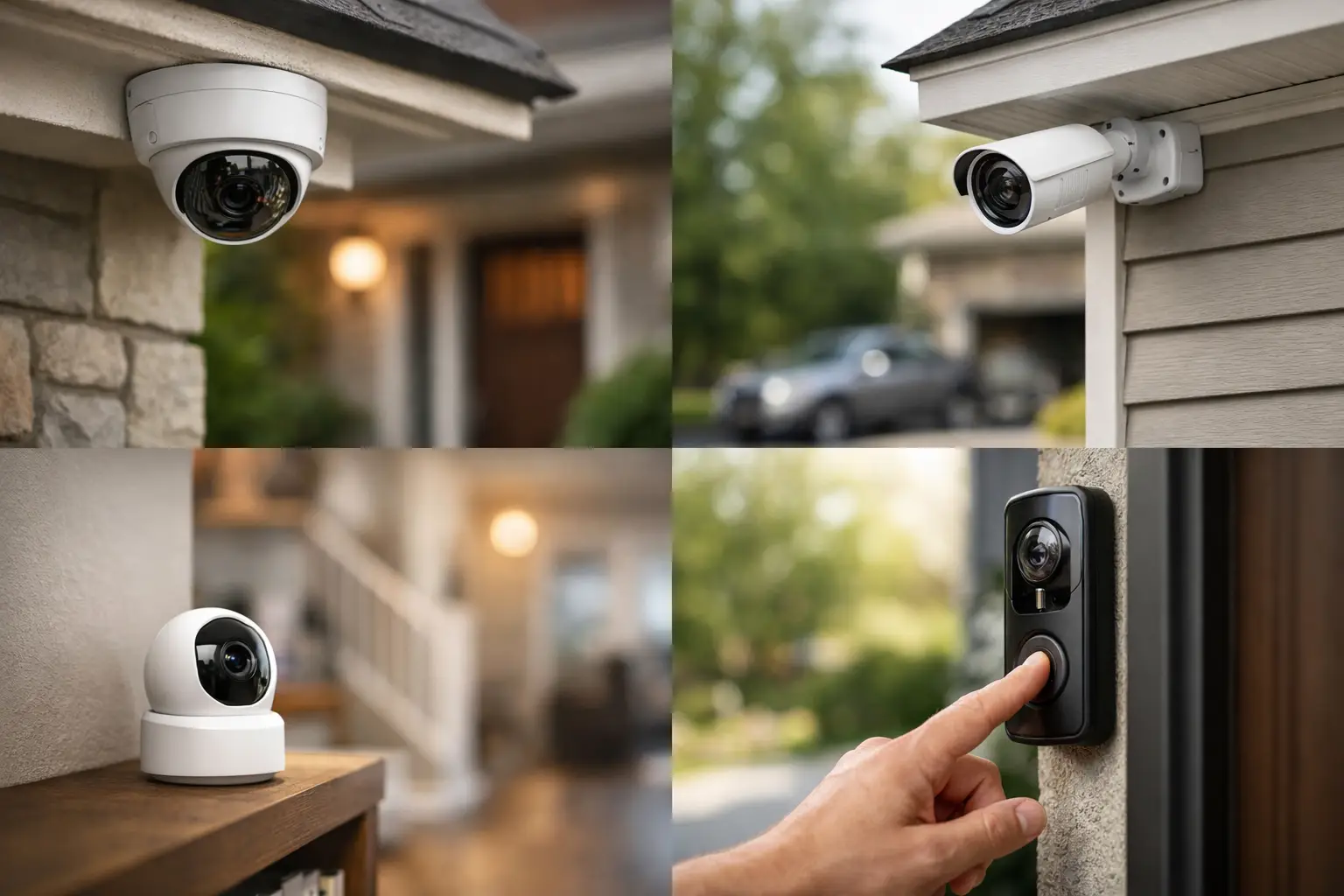
Your front door should almost always be covered. This is one of the most common access points for theft, package tampering, and unwanted visitors. A doorbell camera works well here because it captures activity close to the door and can support two-way communication.
If your front entry sits back under a deep porch or has steps leading up from a sidewalk, angle matters. You want to see faces clearly, not just the tops of heads. Mounting too high can create a nice overview but weak identification. Mounting too low can make the device easier to tamper with. The right height depends on the layout, but the camera should have a clear view of a person approaching and standing at the door.
Watch secondary doors and hidden access points
Burglars do not always choose the most visible entrance. Side doors, back doors, basement entries, and doors between the garage and the home are all worth covering. These areas often have less lighting and less foot traffic, which makes them more attractive as access points.
A common mistake is treating the backyard as private and therefore lower risk. In reality, fencing, landscaping, and reduced street visibility can give intruders more time to work unseen. If your backyard includes a sliding door, patio entrance, or detached structure, camera coverage there is a strong move.
Cover the driveway and garage the right way
A driveway camera can help you track arriving vehicles, monitor garage activity, and verify who is on the property. It is especially useful for homes with attached garages, since the garage door is often used more frequently than the front door.
The trade-off is distance. If a camera is too far from the area you need to identify, you may capture motion without getting usable detail. Wide views are helpful for awareness, but they should be paired with a placement that still provides clear footage near the garage entrance or vehicle area.
Avoid common outdoor placement mistakes
A camera should not face directly into the sun during key times of day if you can help it. Glare and backlighting can wash out faces and make footage harder to use. Night placement matters too. Porch lights, floodlights, reflective surfaces, and even nearby windows can affect image quality after dark.
It also helps to think seasonally. A tree branch that looks harmless in winter may block the lens in summer. Rain runoff from the roofline, decorative flags, and motion from shrubs can all lead to false alerts if the camera is aimed too loosely.
Best indoor camera locations for everyday protection
Indoor cameras add another layer of awareness, especially when they cover the paths someone would take after entering the home. They are also useful for checking in on kids arriving home, verifying that doors were closed, or seeing what happened after an alarm event.
Focus on traffic flow, not every room
The strongest indoor placement strategy is not putting a camera in every space. It is covering the routes a person would move through. Main hallways, entry-adjacent living areas, staircases, and the path between the garage entry and the interior of the home are often more valuable than aiming at random corners.
This approach gives you better visibility while keeping the system practical. You can see who entered, where they went, and when movement occurred, without overloading yourself with unnecessary camera views.
Be thoughtful about privacy
There is a balance between coverage and comfort. Bedrooms and bathrooms are generally not appropriate camera locations. Many homeowners also prefer not to place cameras in spaces where family members expect more privacy, even if those spaces are heavily used.
That is one reason professionally designed systems are helpful. Placement should support security without making the home feel intrusive. The right layout protects the home while still respecting how people actually live in it.
Height, angle, and field of view make a big difference
A camera can be in the right area and still be in the wrong position. Height and angle determine whether you capture general motion or meaningful detail.
For identification, the camera should have a natural line of sight to the area where a person is likely to pause or pass through. Entryways, gates, and walkway choke points are ideal because people naturally slow down there. If a camera is mounted extremely high for tamper resistance, it may lose the facial detail you need.
Field of view matters too. A very wide-angle image covers more area, but it can make people and objects appear smaller. In some cases, a narrower, more targeted view gives better results than trying to see the entire yard in one shot. This is especially true if your goal is to verify faces, clothing, or package handling.
How to reduce blind spots and false alerts
Blind spots usually happen at corners, behind landscaping, near fences, and around architectural features like columns or alcoves. A quick walk around the property from the perspective of someone approaching your home can reveal weak points fast.
False alerts are the other side of the equation. If your camera points toward a busy street, moving tree limbs, or a neighbor’s driveway, you may get too many notifications to take seriously. Smart analytics can help filter motion, but placement still matters. The cleaner the view, the more useful your alerts become.
This is where integrated systems stand out. AI-enhanced deterrence and video analytics can do more when the camera has a strong line of sight and a well-defined activity zone. Good placement supports better detection, faster verification, and more reliable monitoring.
Home security camera placement tips for layered protection
The best systems work in layers. One camera at the front door is helpful. A coordinated setup that covers approach points, entry points, and key interior paths is much stronger.
For example, a front door camera can show who approached. A driveway or floodlight camera can show how they arrived and where they moved outside. An indoor camera near the main living area or garage entry can confirm whether they came inside. That layered view creates a clearer timeline and makes your security system more effective overall.
It also pairs well with other smart protection tools. Cameras are strongest when they work alongside door and window sensors, smart locks, alarms, lighting, and 24/7 professional monitoring. Placement should support the full system, not operate in isolation.
When professional installation is the smarter move
If you are working with unusual rooflines, multiple entry points, detached garages, or large yards, guessing on placement can leave expensive gaps. Professional installation helps you avoid the common problem of having cameras that are technically installed but not strategically positioned.
A customized setup takes your property layout, lighting conditions, daily routines, and security priorities into account. That means better camera angles, cleaner coverage, and equipment that works together through one app. For many households, that is the difference between simply owning cameras and actually feeling protected by them.
Fluent Home approaches camera placement as part of a complete security plan, not a one-device decision. That matters when you want proactive protection, easier control, and confidence that the system is covering the places that matter most.
The right camera location should help you answer real questions fast: Who was there, where did they go, and what happened next? When your system is placed with purpose, peace of mind feels a lot more practical.