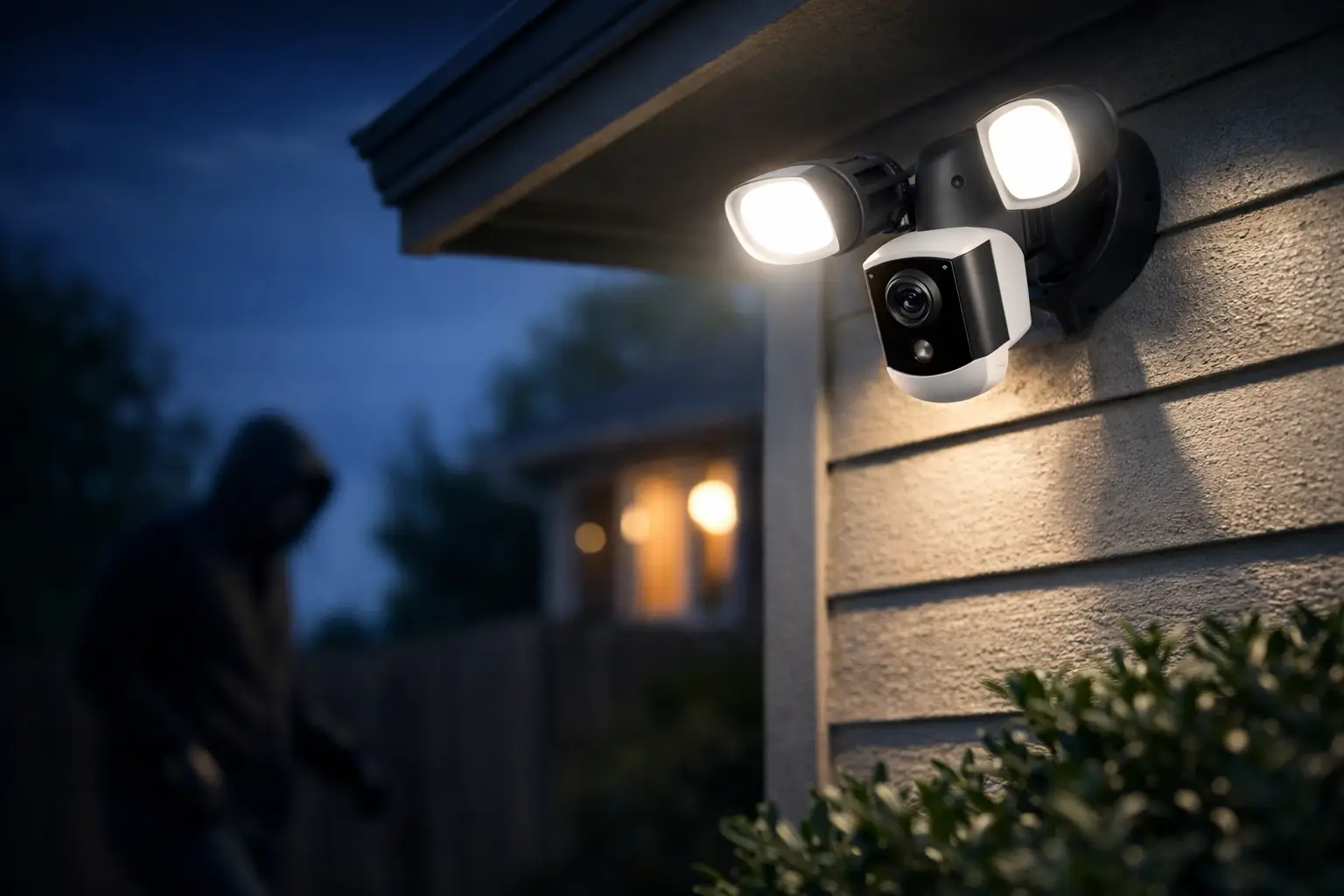
A porch pirate usually does not wait around to compare camera specs. The moment that matters is much simpler: they step onto a driveway or walkway, a bright light snaps on, a voice warning sounds, and they realize they have been seen.
That is what people really mean when they search for the best floodlight camera deterrent. They are not just looking for a camera with a light attached. They want something that changes behavior before a break-in, package theft, or after-hours trespass turns into a real loss.
What the best floodlight camera deterrent actually does
A floodlight camera works best when it creates pressure on an unwanted visitor fast. Good video quality matters, but deterrence starts with visibility, timing, and certainty. If someone approaches a home or small business and immediately faces bright illumination, visible recording, and an active warning, the odds of them backing off go up.
The best floodlight camera deterrent does three things at once. It exposes the person, documents the event, and signals that the property is actively protected. That third piece is where many basic cameras fall short. Recording alone is passive. A true deterrent is designed to interrupt what is happening in real time.
For homeowners, that can mean discouraging someone from checking car doors, stealing a package, or moving toward a side gate. For small businesses, it can mean stopping loitering near an entrance, deterring after-hours activity in a parking area, or catching someone before they get to a back door.
The features that matter most
If your goal is prevention, not just playback, certain features deserve more attention than others.
Bright, targeted lighting
The floodlight itself is not a bonus feature. It is the front line. A weak light may help the camera see, but it may not be strong enough to make someone feel exposed. A stronger, well-aimed floodlight changes the environment instantly.
Placement matters just as much as brightness. A camera over the garage can be effective for the driveway, but it may miss the walkway to the front door. A side-yard installation can help cover a common blind spot, especially for homes with gates, trash enclosures, or ground-level windows.
For businesses, the same rule applies. Loading areas, rear entrances, and employee parking sections often need a different angle than the front entrance. The best setup is built around real access points, not just where wiring is convenient.
Smart motion detection
Not every motion event deserves the same response. If your floodlight camera turns on for every passing car, blowing branch, or neighborhood cat, people start ignoring alerts. That reduces the value of the system fast.
The best floodlight camera deterrent should be able to identify what matters, especially people and vehicles. More advanced analytics can reduce false alerts and help trigger the right response at the right time. That makes the system feel reliable instead of noisy.
This is also where trade-offs come in. Highly sensitive detection may catch more activity, but it can also create more nuisance alerts. Lower sensitivity can feel calmer, but it may miss edge cases. The right balance depends on your property layout, traffic patterns, and tolerance for notifications.
Two-way audio and active warnings
A visible camera is one thing. A direct verbal warning is another.
Two-way audio gives you the option to speak through the camera when someone approaches your property. That can be useful for a delivery issue, but it is even more valuable when you need to interrupt suspicious behavior. Some systems also support automated audio warnings, which can be even faster than waiting for a homeowner to open an app and respond.
For many customers, this is where a floodlight camera starts feeling like security rather than just surveillance. It creates a clear message: this property is not unattended.
Clear video at night
A deterrent has to do more than scare someone off. If an event continues, you still want usable video. Night performance matters because many incidents happen in low light, and a floodlight camera should not depend entirely on the light being active for every frame to be clear.
Look for strong image quality, dependable motion-triggered recording, and a field of view that covers the area you care about without stretching everything so wide that faces and details become less useful.
Mobile control and fast response
Speed matters. If you get an alert 20 seconds after the event, open an app, and can immediately see what is happening, you still have a chance to act. If alerts are delayed, clips are slow to load, or controls are clumsy, deterrence loses its edge.
That is why integrated mobile control matters. The camera should work as part of a larger security experience, not as a standalone gadget that adds one more app to manage.
Why professional installation often gets better results
A floodlight camera can be a strong deterrent, but only if it is installed in the right place, at the right height, with the right settings.
This is where many DIY setups underperform. A camera may be mounted too high to capture faces well, too low to avoid tampering, or pointed at the wrong zone entirely. Lights may trigger too late. Motion zones may be too broad or too narrow. In some cases, people buy a good device and still end up with a weak result.
Professional installation helps solve those problems before they become frustrations. Instead of guessing where a camera should go, you get a setup based on how people actually approach your property. You also get cleaner wiring, better coverage planning, and a system that works with the rest of your security equipment.
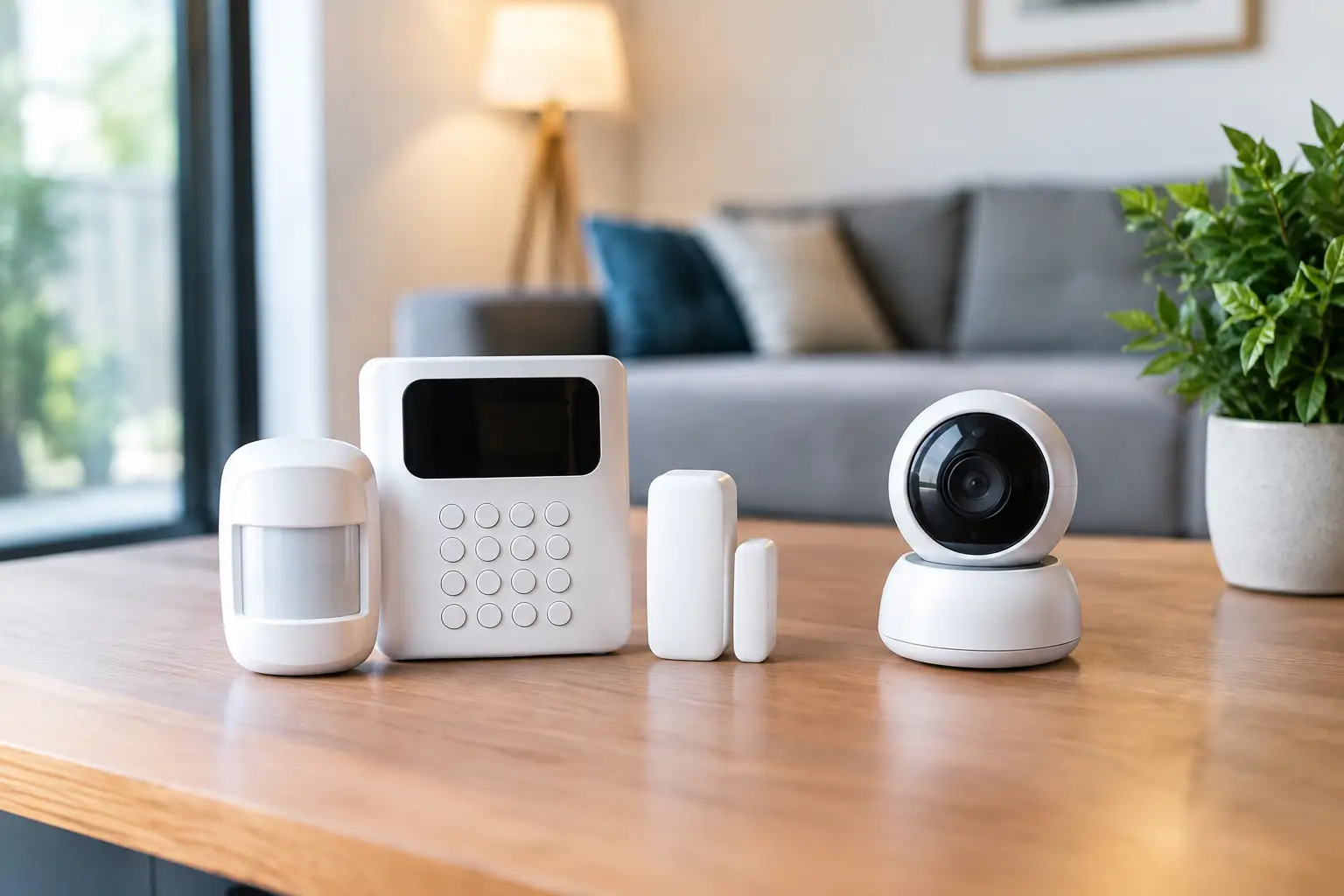
For homes, that often means matching floodlight cameras with doorbell cameras, entry sensors, smart locks, and a central app. For businesses, it can mean combining exterior deterrence with intrusion detection, interior cameras, and access control. The value is not just the camera itself. It is how the whole system works together.
Best floodlight camera deterrent for homes vs. businesses
The answer is not always the same, because the risk patterns are different.
For a homeowner, the best floodlight camera deterrent usually focuses on front-of-home visibility, package protection, driveway coverage, and side-yard awareness. The goal is to stop common opportunistic behavior quickly and give the family a simple way to see and respond from anywhere.
For a small business, the priorities may shift toward broader perimeter coverage, after-hours activity, employee and customer safety, and protecting high-risk areas like rear doors or storage access points. You may need stronger integration with alarms, access control, and monitoring if the property is unattended overnight.
In both cases, deterrence works better when the camera is part of an active security plan. That includes reliable alerts, visible equipment, strong lighting, and a response path when something happens.
What to look for before you buy
Instead of chasing the longest feature list, focus on whether the camera will reliably prevent the kinds of problems you actually face.
Ask simple questions. Where do people approach your property? Where is the lighting weak? Do you need to warn off loiterers, protect deliveries, watch a detached garage, or cover a rear entrance after business hours? Do you want self-monitoring only, or do you want professional support when you cannot respond yourself?
That last question matters more than many people expect. A floodlight camera is strongest when it is not doing the job alone. If your system includes professional monitoring, AI-supported alerts, and video verification, deterrence becomes more than a flashing light and a saved clip. It becomes part of a faster, more coordinated response.
For customers who want a professionally installed solution instead of piecing together devices on their own, a customized system from https://fluenthome.com can help align camera placement, deterrence features, and monitoring around the property you need to protect.
The real standard for a good deterrent
The best floodlight camera deterrent is the one that makes someone stop, reconsider, and leave before damage is done. That usually comes down to visible lighting, smart detection, active audio, fast alerts, and installation that fits the property.
Specs still matter, but behavior matters more. If a camera helps prevent the event instead of just recording it, it is doing the job people actually care about.
When you evaluate your options, think less like a shopper comparing gadgets and more like a property owner looking to remove opportunity. That is where real peace of mind starts.