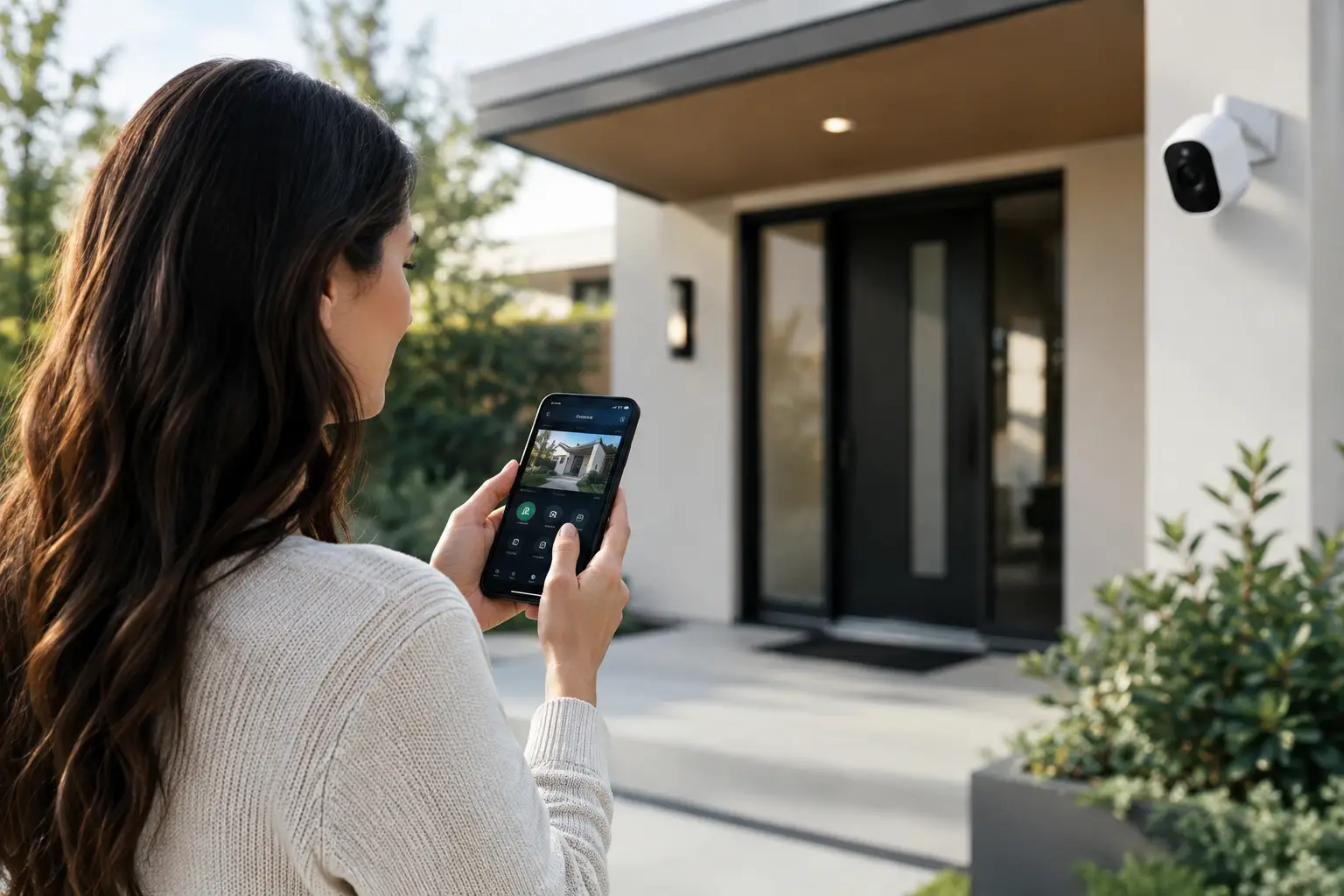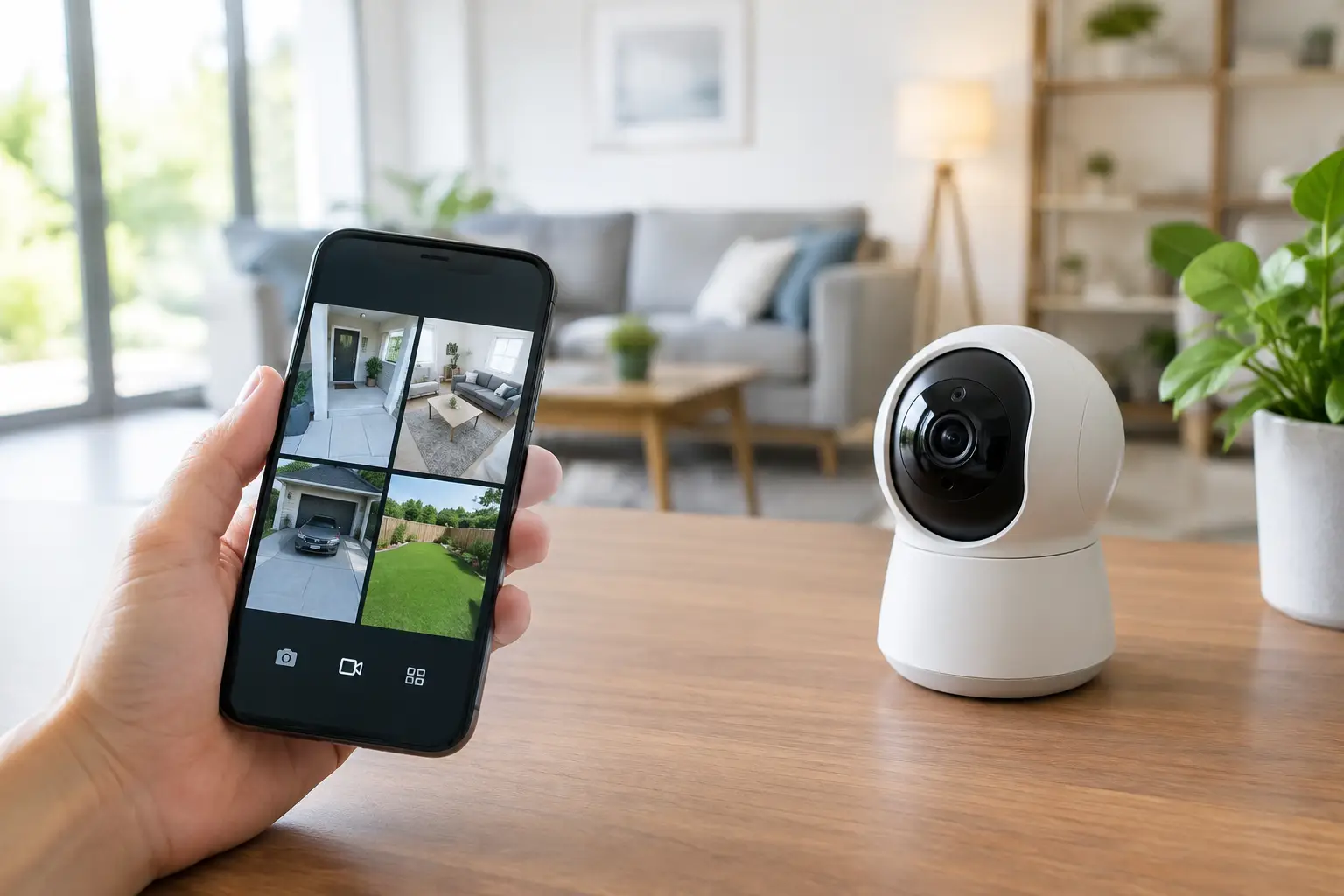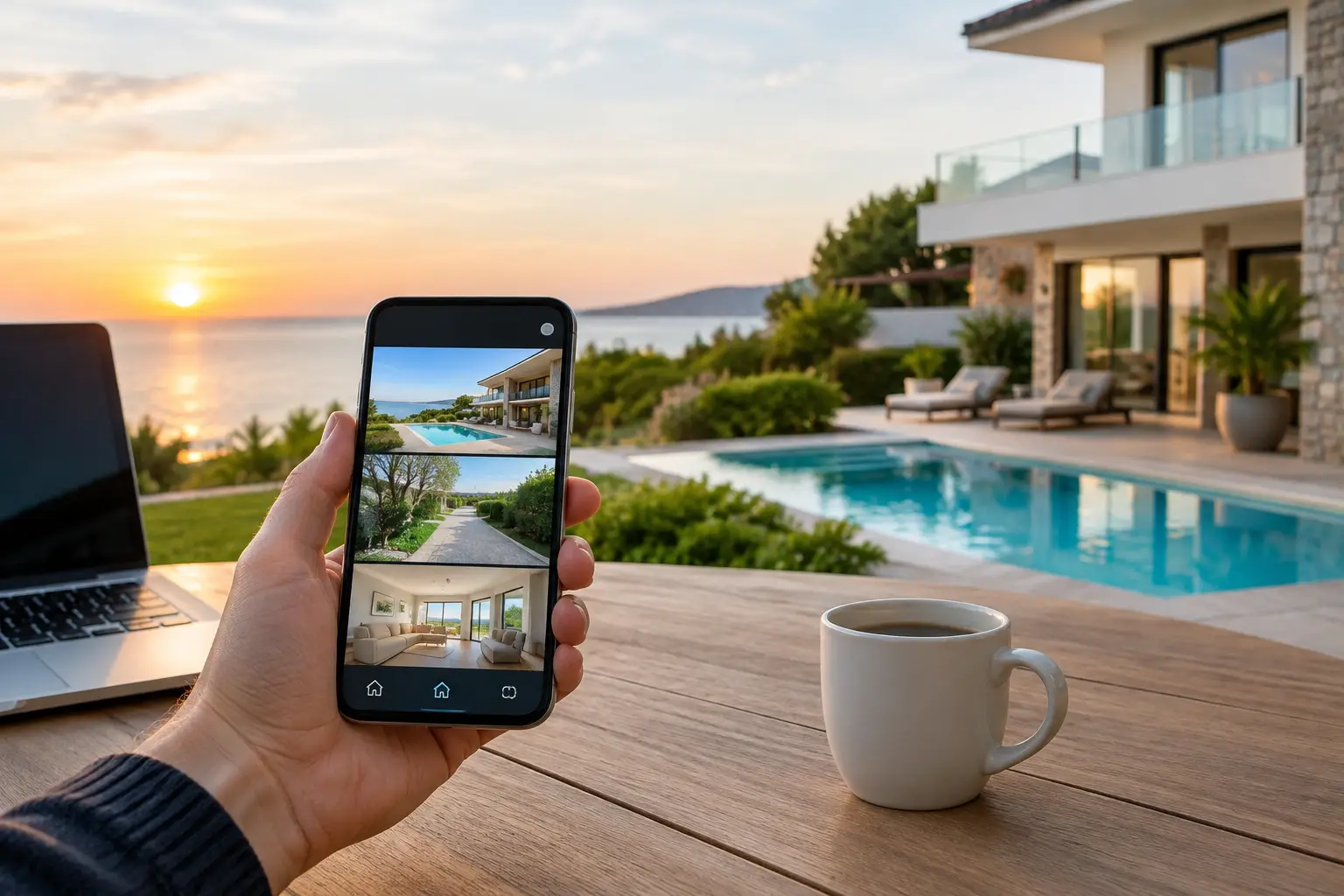
A vacation home can look perfectly normal from the street while a small problem grows inside: a side door left ajar, a pipe leaking behind a wall, or an unexpected person testing the driveway. For owners who are hours away, a vacation property monitoring example is most useful when it shows what happens after an alert – not just which devices are mounted on the home.
Vacation Property Monitoring Example: A Real-World Setup
Consider a family that owns a lake house three hours from their primary home. The property is occupied most weekends in summer, rented occasionally, and empty for long stretches during winter. They want to check on the house remotely without asking neighbors to make frequent drive-bys or relying on a collection of disconnected DIY devices.
Their professionally designed system includes a smart security panel, door and window sensors, motion detection, an outdoor camera covering the driveway, a video doorbell at the front entrance, a camera facing the back patio, smoke and carbon monoxide detection, flood sensors near the water heater and kitchen sink, and smart locks on the main entry. The system is connected to one mobile app and backed by 24/7 professional monitoring.
At 10:42 p.m. on a Tuesday in February, the driveway camera detects a person approaching the property. Video analytics distinguish the person from passing wildlife and send an alert to the owner’s phone. The camera’s visible presence, lighting, and two-way audio create an immediate deterrent. If the person attempts to enter and a protected door opens, the intrusion alarm activates. A monitoring professional can assess the event and follow the established response plan.
That is the difference between simply receiving a notification and having a property protection strategy. The owner can view what is happening, but they are not expected to manage a potential emergency alone from three states away.
Start With the Risks Your Property Actually Faces
Vacation properties do not all need the same equipment. A condo in a resort building has different exposure than a cabin near a wooded trail or a coastal home that sits vacant during storm season. The right system begins with how the property is used, how long it is empty, and which risks would be hardest for you to discover quickly.
For the lake house, forced entry and water damage are the biggest concerns. The owner also wants to know when guests arrive and leave, whether the garage was left open, and whether a package has been sitting outside too long. A home used only by family may prioritize remote access and environmental safety, while a short-term rental may need greater visibility at exterior doors and more controlled access between reservations.
Professional consultation helps turn those concerns into sensible coverage. Instead of installing cameras everywhere, the goal is to cover meaningful approach routes, entry points, and vulnerable areas. Indoor privacy also matters. Exterior video, entry sensors, and environmental devices can provide strong oversight without putting cameras in private living spaces.
Build Layers of Protection, Not a Single Alert
A camera is valuable, but it should not carry the full burden of vacation-home security. Weather can affect visibility, an internet interruption can limit remote viewing, and a camera alone cannot detect a hidden leak or carbon monoxide. Layered protection gives you more than one way to identify and respond to trouble.
Secure doors, windows, and access
Door and window sensors establish the basic perimeter. When the home is armed, an opening can trigger an immediate alarm event. Smart locks add practical control: the owner can confirm a door is locked, create a temporary code for a cleaner or contractor, and remove that code when the work is complete. There is no need to recover a spare key from under a mat or wonder who still has a copy.
Garage control can be equally valuable. An open garage may expose tools, vehicles, or a direct route into the home. Remote status and control let an owner close the door after a guest leaves or after an accidental opening.
Use video where it can make a decision easier
The driveway, front door, rear door, patio, and side gate are often better camera locations than a wide shot of an empty yard. Each view should answer a useful question: Who approached? Did a delivery arrive? Did a contractor enter? Is a gate or garage open?
AI-enhanced video analytics can reduce nuisance alerts by helping identify people, vehicles, and other meaningful activity. No system eliminates every false alert, especially in changing weather or busy neighborhoods. But better filtering means the owner spends less time reacting to blowing branches and more time addressing events that deserve attention.
For a vacation property, two-way audio can also be practical. It allows an owner to speak to a delivery driver, direct a service technician, or warn an unknown visitor that the home is monitored. In a suspicious situation, speaking through the camera is not a substitute for emergency services. It is one more deterrent and a way to make the property feel actively watched.
Watch for damage that theft alarms cannot see
A break-in is not the only costly event at an empty house. A burst supply line can spread water for days. A failing furnace can create freezing conditions. Smoke and carbon monoxide can go undetected if no one is there to hear a standard alarm.
Flood sensors placed near water heaters, washing machines, sinks, and other risk areas provide early warning. Pairing them with a compatible water valve control can help limit damage by shutting off the water when a leak is detected. Smoke and carbon monoxide detectors add essential life-safety coverage, while smart thermostats can help owners check temperatures and adjust settings from away.
These devices do not remove the need for seasonal maintenance. Pipes still need winterization when appropriate, roofs still need inspection, and a local contact is still helpful for physical repairs. They do give you a much better chance of learning about a problem before a routine visit reveals major damage.
Decide What Happens Before an Alert Arrives
The strongest vacation property plan includes clear decisions made in advance. When an alert arrives, you should not be searching for a neighbor’s number, debating whether a guest was expected, or trying to remember which door a contractor uses.
For the lake house owner, the plan is simple. The owner receives mobile alerts for selected events. A trusted local contact is authorized to inspect non-emergency issues. Smart lock codes are assigned by person and purpose. For alarm events, 24/7 professional monitoring follows the account’s response instructions and can contact emergency responders when needed.
This is where professionally monitored security is especially valuable. A vacation home may be empty precisely when something serious happens. If you are in a meeting, asleep, traveling, or without cell service, a notification alone may not lead to action. Professional monitoring provides another layer of response when you cannot respond yourself.
Keep your contact list current, including any property manager, cleaner, maintenance professional, and nearby family member. Review it before peak rental season, before extended travel, and after any staffing change. A well-designed system works best when the people connected to it know their role.
Make Remote Oversight Part of Normal Property Care
Remote monitoring should make ownership easier, not turn your phone into another source of stress. Set meaningful notification preferences. You may want an immediate alert for an armed door opening, smoke, carbon monoxide, flood detection, or a person at the front door. You may not need an alert every time a camera sees motion near a road.
Before leaving the property, use a short departure routine: arm the system, confirm doors and windows are closed, check the garage, set the thermostat, verify water protection, and review camera views. After guests leave, confirm that access codes have expired and that the home is returned to its normal vacant setting.
Professional installation also matters here. Device placement, signal reliability, camera angles, and system configuration affect whether a system is convenient or frustrating. Fluent Home can help tailor protection around the property, your travel habits, and the risks that matter most to you.
The best result is not a phone full of alerts. It is the confidence to leave your vacation property knowing that if a door opens, water appears, smoke is detected, or suspicious activity occurs, you have visibility, control, and a plan for what happens next.