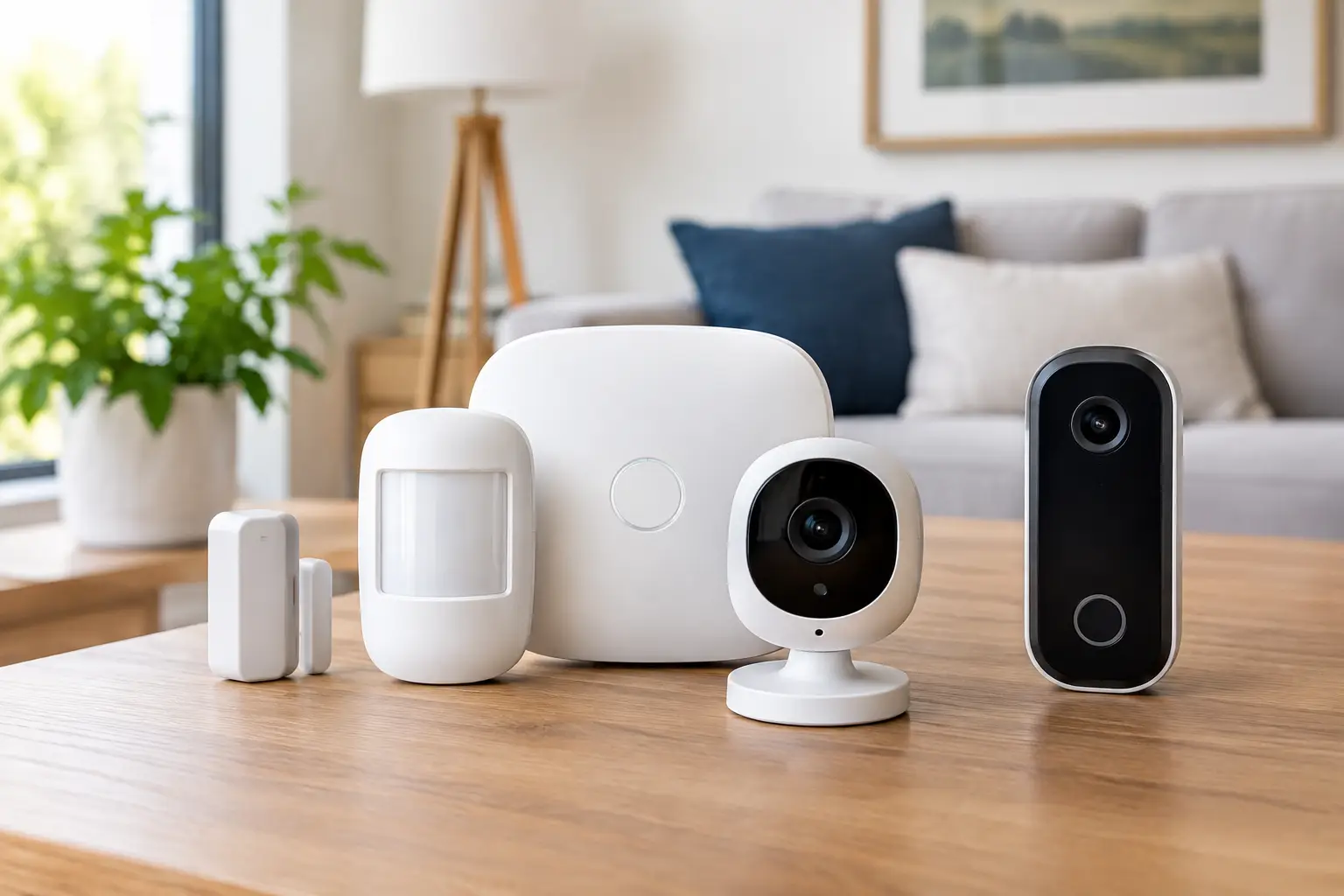

A camera that records a break-in is useful. A system that helps prevent one is better. That is the real value of smart deterrence for home security – using connected devices, video intelligence, automation, and professional monitoring to make your property a harder target before a crime escalates.
For many homeowners, the old model of security was simple: put sensors on doors, sound an alarm if something opens, and review footage later. That approach still has a place, but it is reactive by design. Smart deterrence shifts the goal from documenting an incident to interrupting it. When lights turn on, cameras detect unusual activity, a floodlight activates, a doorbell camera captures a clear face, and a monitoring team can verify what is happening in real time, the odds change quickly.
What smart deterrence for home security actually means
Smart deterrence for home security is not one device. It is a coordinated approach where multiple tools work together to discourage unwanted activity, alert you faster, and support a response while there is still time to act.
At the front end, that might include visible outdoor cameras, video doorbells, motion-triggered lighting, smart locks, and floodlight cameras. Behind the scenes, it can include analytics that distinguish between routine movement and suspicious behavior, mobile alerts that let you check your property right away, and 24/7 professional monitoring that adds a human layer when you are asleep, busy, or away.
The point is not to make your home feel complicated. The point is to make protection more active. A smart system can create enough friction, visibility, and uncertainty that a would-be intruder decides your home is not worth the risk.
Why visible prevention matters more than passive recording
Most property crime is based on opportunity. If a house looks easy to approach, easy to access, and unlikely to trigger attention, it becomes more attractive. If it looks monitored, well lit, and actively managed, it becomes less appealing.
That is why visible prevention matters. A doorbell camera at eye level, a camera above the garage, smart exterior lighting, and signs of a professionally installed system all send a message. They do not guarantee a person will never test the property, but they often push that person to move on.
This is also where many DIY setups fall short. A single camera pointed at the porch may help with package theft evidence, but it does not create a full deterrence strategy. The most effective systems cover likely entry points, connect devices through one platform, and support a coordinated response rather than isolated notifications.
The technology behind smarter deterrence
A modern security system can do much more than detect whether a door is open. It can evaluate patterns, automate actions, and help verify events faster.
Cameras with active deterrence features
Outdoor cameras and floodlight cameras are often the first layer. They make surveillance visible, but they also support immediate action. Bright lights, clear two-way audio, sharp video, and app-based access can help you respond quickly when someone approaches your property after hours or lingers where they should not.
The advantage here is speed. Instead of finding out later that someone walked up your driveway, you can know when it happens and assess whether it looks routine or suspicious.
Video analytics and AI support
Not every motion event matters. Cars passing by, delivery drivers, neighborhood pets, and tree movement can create noise if your system is not intelligent enough to filter them. Video analytics and AI-enhanced detection help reduce that clutter.
This matters because too many false alerts train people to ignore alerts altogether. Smarter detection improves the odds that when your phone buzzes, it is worth checking. For homeowners, that means less alert fatigue. For monitored systems, it can mean faster verification and more confident escalation when something truly looks wrong.
Smart lighting, locks, and automation
Deterrence works best when devices are connected. If motion is detected near a side gate, exterior lights can activate. If you are away, lights can follow a schedule that makes the home look occupied. If a child forgets to lock the front door, you can fix it from your phone. If someone rings the bell while a package is dropped off, you can check the camera and respond from anywhere.
These are convenience features, but they also tighten daily security gaps. Most homes are not vulnerable because of one dramatic failure. They are vulnerable because of ordinary moments – an unlocked door, a dark side yard, a missed alert, a package left in plain sight.
Professional installation changes the outcome
Good equipment matters, but setup matters just as much. Camera placement, sensor coverage, Wi-Fi strength, lighting angles, and app configuration all affect how well a system performs when it counts.
A professionally installed system is built around the property, not just the product box. That means cameras can be positioned to capture useful angles instead of empty sky or glare. Entry points can be prioritized based on how the home is actually used. Automation can be configured around real routines instead of generic defaults.
This is one of the biggest differences between buying devices and building a security strategy. Smart deterrence for home security is most effective when every piece has a job and every job supports the next layer of protection.
Where 24/7 monitoring fits in
Technology can detect a lot, but there are moments when human oversight makes the difference. If suspicious activity happens at 2:00 a.m., while you are on a flight, or while your phone is buried in a bag during a meeting, a professionally monitored system keeps working.
Monitoring adds continuity. It helps bridge the gap between detection and response. In more advanced setups, video verification can help determine whether an event is likely a real threat, which supports faster, better-informed action.
For families, that means more peace of mind during vacations, workdays, and overnight hours. For small business owners, it means the property is not relying on one missed push notification to stay protected.
Smart deterrence at home versus at a small business
The core strategy is similar, but the priorities can shift. At home, people often focus on front-door visibility, package protection, garage access, interior safety devices, and keeping the property looking occupied. Convenience matters because security has to fit daily life.
At a small business, the focus may lean more toward after-hours intrusion, employee access control, entry logs, interior and exterior surveillance, and reducing losses tied to deliveries, restricted spaces, or multiple users. Business owners also tend to value centralized control because they may need to manage the site remotely.
The shared principle is simple: the sooner a threat is seen, verified, and disrupted, the better the outcome.
What to look for in a smart deterrence system
If you are evaluating your options, look beyond the camera count. Ask whether the system is designed to deter, not just record. That usually means integrated cameras, smart lighting, mobile control, intrusion detection, environmental sensors, and professional monitoring working through one platform.
It is also worth asking how customizable the setup is. A condo, a suburban family home, and a small storefront do not need the same layout. A strong provider will design around your property, your routines, and your risk points rather than pushing a one-size-fits-all package.
You should also pay attention to ease of use. Advanced protection only helps if it is simple enough to use every day. One app, clear alerts, reliable automation, and expert support make a difference over time.
Fluent Home builds around that idea – giving customers professionally installed systems that combine deterrence, smart control, and ongoing monitoring without pushing the technical burden onto the homeowner.
The trade-off to keep in mind
Smart deterrence is powerful, but it is not magic. No system can eliminate all risk, and more features do not automatically mean better protection. If alerts are poorly configured, cameras are placed badly, or automation feels frustrating, people stop using the system as intended.
That is why the best security plan is not the most complicated one. It is the one that covers the right areas, fits your routine, and responds fast when something is off. For some households, that means a focused setup with a doorbell camera, smart lock, indoor sensors, and monitoring. For others, it means broader coverage with outdoor cameras, floodlights, garage control, smoke detection, and water protection layered into one app.
A safer home usually starts with a simple question: if someone approached your property tonight, would your system just capture it, or would it help stop it? That answer tells you a lot about whether your security is keeping up with the way people live now.