A break-in rarely happens at a convenient time. It happens after closing, during a holiday weekend, or in the short gap between the last employee leaving and the first one arriving. That is exactly why small business alarm monitoring matters – not just as a siren on the wall, but as an active layer of protection that keeps watch when your team cannot.
For many business owners, the real question is not whether security matters. It is whether the monitoring behind the system can actually help stop losses, reduce response time, and make daily operations easier. The answer depends on how the system is built, how it is monitored, and whether it fits the way your business runs.
What small business alarm monitoring actually does
At a basic level, small business alarm monitoring means your security system is connected to a professional monitoring center that can respond when something triggers an alarm. That could be a forced door, broken glass, motion after hours, smoke, carbon monoxide, or water where it should not be.
The difference between a monitored system and a stand-alone alarm is simple. A stand-alone system makes noise and hopes someone reacts. A professionally monitored system is designed to trigger a response even when no one on-site sees the problem.
That matters for more than burglary. Small businesses also deal with employee safety concerns, false alarms, environmental risks, and the cost of downtime. A freezer failure, water leak, or after-hours smoke event can be just as disruptive as a break-in. Good monitoring helps cover those risks from the same connected platform.
Why many small businesses outgrow basic alarms
A local shop, office, salon, warehouse, or restaurant does not usually need an enterprise-level security stack. But many do need more than a keypad and a loud siren.
Basic alarm systems often create two problems. First, they rely too heavily on the owner to manage every alert. If your phone is on silent, you are on a flight, or you miss a notification during business hours, valuable time can be lost. Second, they tend to operate in isolation. Intrusion sensors, cameras, access control, and environmental devices are often disconnected, which makes it harder to understand what is actually happening.
Professional monitoring closes that gap. Instead of pushing every decision back onto the business owner, it creates a layer of expert response. When monitoring is paired with video, smart alerts, and professionally installed devices, the system becomes much more useful. It can help verify events, reduce guesswork, and support faster action.
What to look for in small business alarm monitoring
Not every monitored system offers the same level of protection. If you are comparing options, focus on how the system performs when something goes wrong, not just how it looks in a sales brochure.
24/7 professional response
Round-the-clock monitoring is the baseline. If a sensor trips after hours, there should be trained professionals ready to review the event and follow the response plan. That gives you coverage during nights, weekends, and holidays without depending on whoever happens to notice an alert first.
Video verification
This is where monitoring becomes more effective. If an alarm signal can be paired with video evidence, responders can often assess the situation more quickly and with more confidence. For business owners, that means less uncertainty about whether a signal was caused by a real threat, an employee mistake, or a harmless event.
Smart intrusion detection
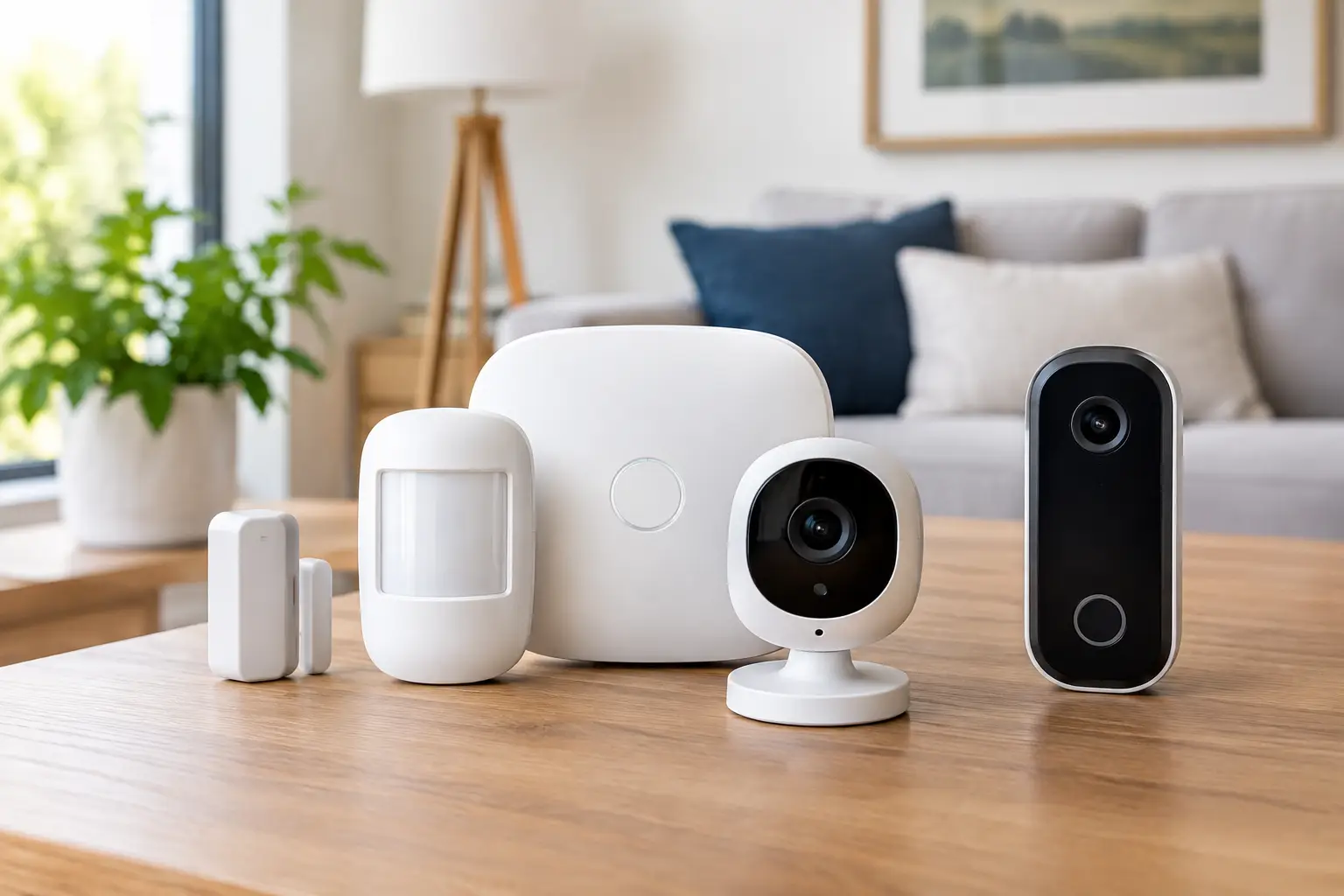
Door contacts, motion sensors, glass break detectors, and panic buttons all have a place, but placement and setup matter. A professionally designed system accounts for your entry points, blind spots, traffic patterns, and closing procedures. That is one reason custom installation often outperforms one-size-fits-all kits.
Environmental protection
Many business owners think about theft first, but environmental damage can be just as expensive. Smoke detection, carbon monoxide alerts, flood sensors, and temperature-related safeguards can help you catch a problem before it turns into property loss or extended closure.
Mobile control and visibility
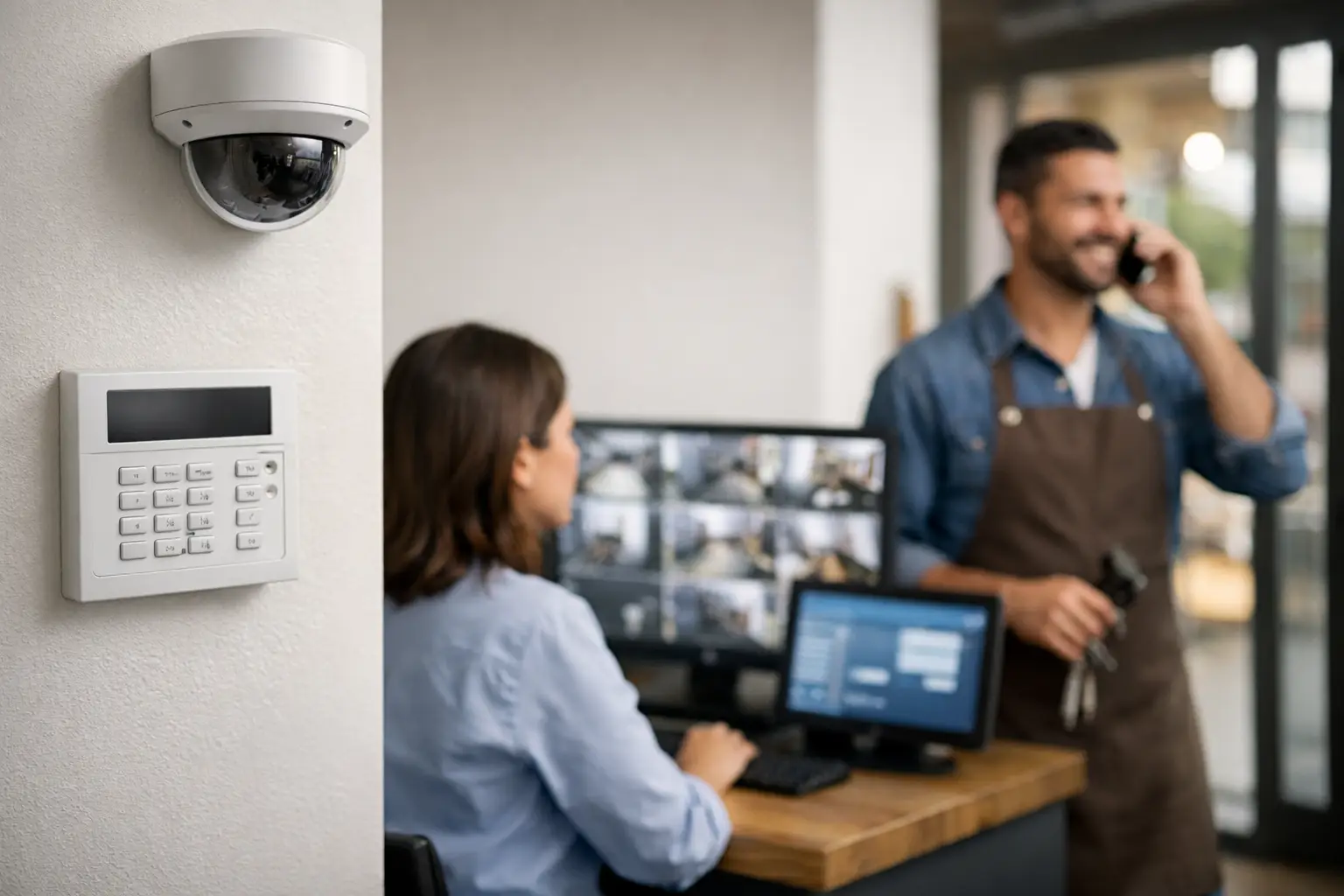
You should still have direct visibility into your system. A strong platform lets you arm or disarm the system, check cameras, review alerts, manage users, and monitor activity from one app. That is especially useful for owners managing multiple employees, multiple entrances, or more than one location.
The trade-off between DIY and professional installation
Some businesses are tempted by DIY systems because the upfront cost looks lower. In some cases, that may be enough for a very small office with limited risk. But for most small businesses, the trade-off becomes clear pretty quickly.
DIY systems can be harder to scale, easier to install incorrectly, and more likely to leave coverage gaps. Sensor placement may be off. Camera angles may miss key entrances. Notifications may not be configured in a way that matches how the business actually operates.
Professional installation costs more upfront, but it removes much of that risk. It also tends to produce a cleaner, more reliable setup that employees can use consistently. For businesses that want dependable protection without managing all the technical details themselves, that difference matters.
How monitoring supports day-to-day operations
The best security systems do more than react to emergencies. They also make it easier to run the business.
Access control is a good example. If managers can grant or revoke entry permissions, track door activity, and manage who enters certain areas, security becomes part of everyday operations instead of a separate burden. The same goes for remote arming, event history, and live camera access. These tools can help owners confirm opening and closing routines, review unusual activity, and stay connected even when they are off-site.
That is one reason many businesses are moving toward integrated systems. When alarms, cameras, locks, and alerts work together, you spend less time juggling separate apps and more time actually using the system.
False alarms, real costs, and better verification
False alarms are frustrating. They interrupt operations, waste time, and in some areas can lead to fees or strained relationships with local responders. But the answer is not to avoid alarms. It is to make them smarter.
Good small business alarm monitoring reduces false alarm headaches through better setup, better training, and better verification. If a system includes video, event review becomes more informed. If employees are trained on arming and disarming procedures, common mistakes drop. If the installation is done properly, the sensors are less likely to trigger for the wrong reasons.
There is still no system that eliminates false alarms completely. Cleaning crews, early deliveries, user error, and unusual movement can all create noise. But a professionally managed system gives you a much better chance of separating a nuisance event from a real security issue.
Choosing the right system for your business size
The right monitored system depends on your layout, hours, staffing, and risk level. A retail store may prioritize entry sensors, indoor cameras, and after-hours motion detection. A restaurant may need intrusion protection plus smoke, flood, and temperature monitoring. A professional office may care most about access control and remote management.
That is why cookie-cutter packages often fall short. A small business security plan should be built around how your business opens, closes, stores assets, and handles employee access. The goal is not to load the building with unnecessary devices. It is to cover the risks that could actually disrupt your operations.
For many owners, the best path is a customized system with room to expand. You might start with intrusion detection and monitoring, then add cameras, access control, or environmental sensors as needs grow. That keeps the system practical now without limiting what it can do later.
When it is time to upgrade your current setup
If your current alarm only makes noise, sends unreliable alerts, or leaves you guessing about what happened, it may be time to upgrade. The same is true if you have added employees, extended hours, taken on more inventory, or opened another location.
Security needs change as a business grows. What worked when you had one storefront and two employees may not work now. A modern system should help you protect people, property, and daily operations from one place.
Fluent Home approaches that with professionally installed security, smart business devices, and 24/7 monitoring designed to give owners clearer visibility and faster response without adding complexity.
Small business alarm monitoring is not just about reacting to break-ins. It is about creating a dependable layer of protection that helps your business stay open, stay informed, and stay in control when you cannot be there yourself.