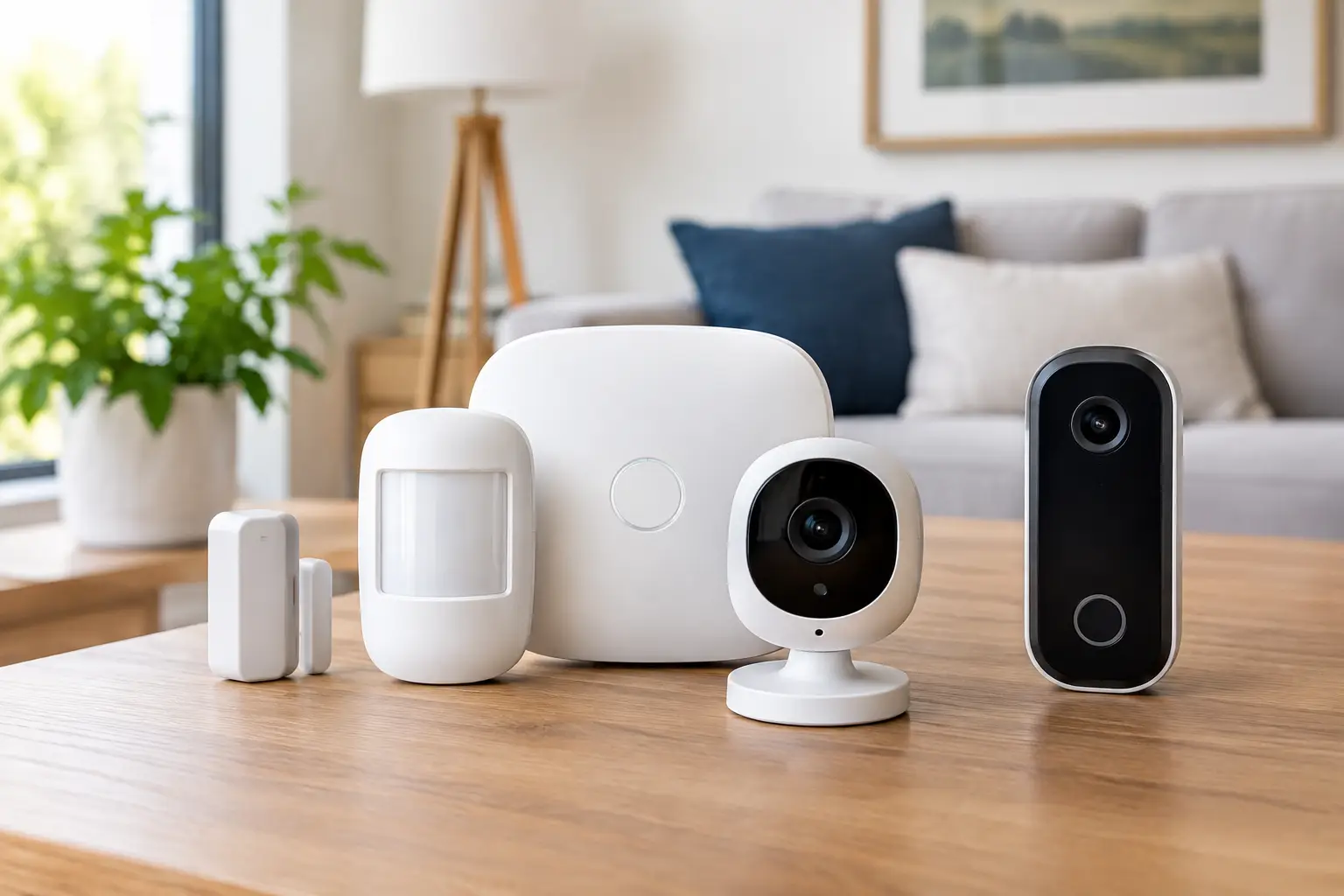
A missed delivery, an unfamiliar car in the driveway, a side gate left open – these are the moments when the question of doorbell camera vs security camera stops being theoretical. Homeowners usually are not asking which device is more impressive. They want to know which one will actually help protect the front door, cover blind spots, and make daily life easier.
The short answer is that both devices serve different jobs. A doorbell camera is designed to watch and manage activity at your front door. A security camera is built to monitor broader areas like driveways, backyards, garages, hallways, or business entry points. If you are choosing between the two, the better answer is usually not one or the other. It is the right mix of both, installed where they can do the most good.
Doorbell camera vs security camera: what is the real difference?
At a glance, these devices can seem similar. Both record video. Both let you check activity from a mobile app. Both can send alerts when motion is detected. But their purpose, placement, and coverage are not the same.
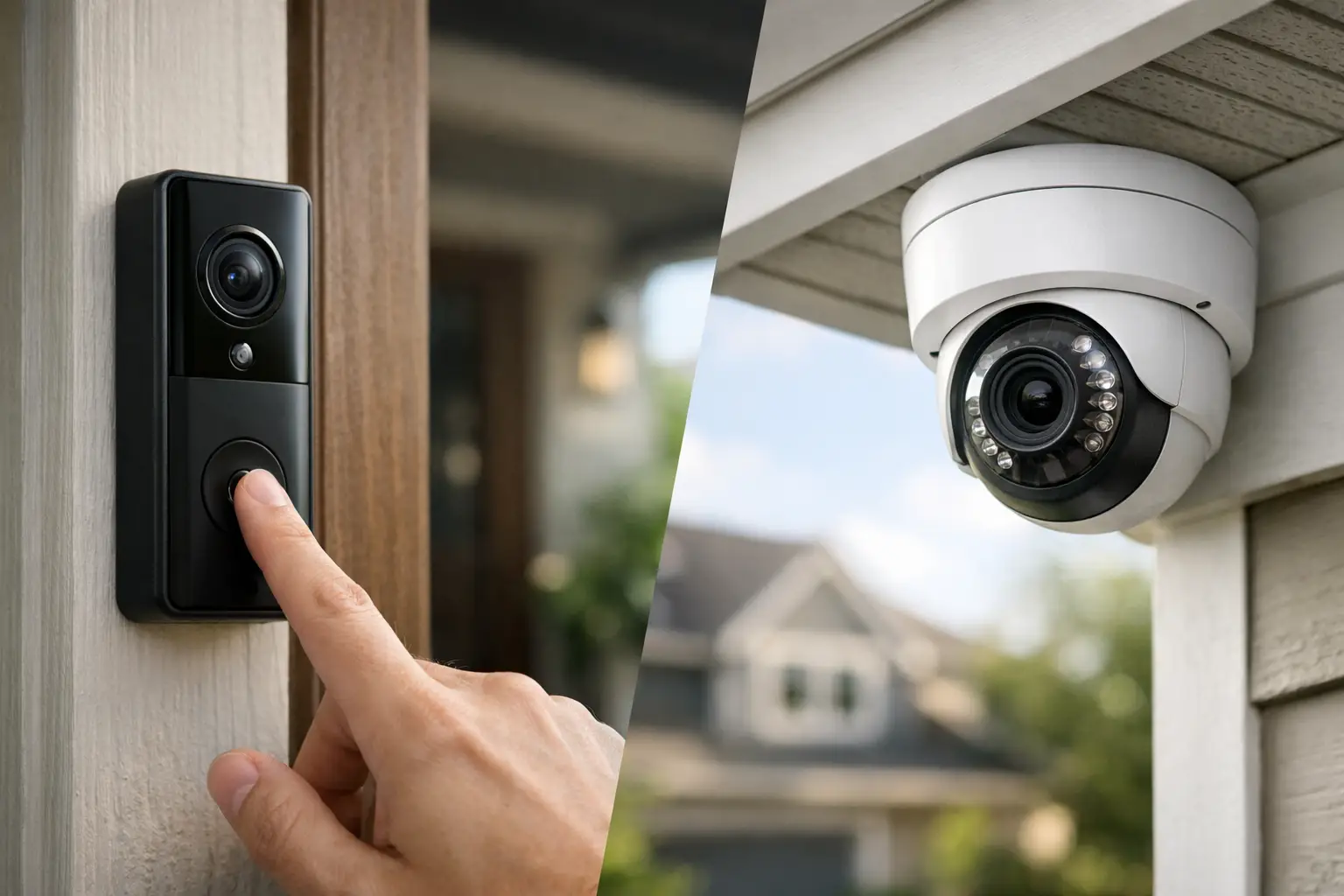
A doorbell camera is front-entry focused. It is mounted at the doorbell position, aimed at the porch, front steps, and immediate approach to the home. Its main value is seeing who is at the door, speaking with visitors, tracking deliveries, and discouraging package theft or front-door tampering.
A security camera gives you more flexibility. It can be placed outdoors or indoors and positioned to watch larger or more vulnerable areas. That might include the driveway, detached garage, backyard fence line, side entrance, retail storefront, office reception area, or stockroom. In most cases, it is the better tool for wider visibility.
That difference matters because most property threats do not happen in only one spot. A package thief may approach the porch, but a burglar may first test a side door, backyard gate, or first-floor window. If your only camera watches the front step, you may get a clear view of one area while missing the path someone took to get there.
When a doorbell camera is the better choice
If your top concern is the front entrance, a doorbell camera is often the smartest first step. It gives you immediate visibility into the area where deliveries arrive, guests approach, and unexpected visitors show up. For many households, that alone solves a daily problem.
This is especially useful for families who receive frequent packages, homeowners who travel during the day, or anyone who wants to answer the door without opening it. Two-way audio adds convenience, but it also adds a layer of control. You can speak to a delivery driver, tell a visitor you are not available, or respond if someone lingers too long on the porch.
Doorbell cameras also fit naturally into daily routines. You do not have to remember to check a separate system. Alerts come to your phone, and the camera is already positioned at the most used entry point in the home.
That said, there are limits. A doorbell camera usually has a narrower role. It may not fully cover vehicles in the driveway, activity near a garage door, the side of the home, or backyard access points. If someone avoids the front door entirely, a doorbell camera may never capture them.
When a security camera makes more sense
A security camera is the better option when your goal is broader property awareness. If you want to see the entire driveway, monitor backyard access, watch over a business parking area, or check on multiple entry points, a standard security camera is built for that job.
This becomes more important on larger properties or homes with several vulnerable access areas. A single front-door view does not do much for a corner lot, a fenced backyard, or a detached structure. The same is true for small businesses that need visibility beyond one customer entrance.
Security cameras also give you more strategic placement options. Mounted high and aimed correctly, they can cover open areas, create overlapping views, and reduce blind spots. That matters for both deterrence and evidence. If a person moves from one side of the property to another, you want a system that follows that activity instead of losing it after a few feet.
For businesses, this flexibility is even more valuable. You may need to monitor deliveries at the back door, employee access points, customer-facing spaces, or inventory-sensitive areas. A doorbell camera alone is rarely enough.
Doorbell camera vs security camera for deterrence
Visible cameras change behavior. That is one of their most practical benefits. A doorbell camera can discourage porch theft or unwanted visitors at the front entrance because it is obvious and close to eye level. People know they are being recorded.
A security camera expands that deterrent effect across the property. When placed at driveways, side yards, rear doors, garages, or commercial entrances, it signals that the property is being actively watched, not just the front porch.
This is where a professionally designed system stands apart from a piecemeal setup. Camera placement is not just about sticking a device on a wall. It is about understanding approach paths, likely points of entry, lighting conditions, and how to create useful coverage instead of random footage. Stronger systems also go beyond recording after the fact. With features like video analytics, smart alerts, and active deterrence, the right setup can help interrupt suspicious activity before it becomes a break-in.
What homeowners often get wrong
The most common mistake is treating a doorbell camera as a complete security system. It is a valuable device, but it is not full-property protection by itself. It covers one important zone. That is not the same as covering your home.
Another mistake is focusing only on hardware instead of response. Clear video matters, but so does what happens next. If a camera captures suspicious movement at 2:00 a.m., will someone see it in time? Will there be an alert you can act on? Will the system work with intrusion sensors, smart locks, lighting, and professional monitoring?
That is why homeowners who want more than basic visibility often move toward integrated systems. A camera should not operate in isolation. It should support the bigger goal of protecting the home, simplifying control, and reducing the chances that something gets missed.
Doorbell camera vs security camera: which setup is best for most homes?
For most homes, the strongest answer is a layered approach. Use a doorbell camera for the front door, then add security cameras where the property has more exposure. That might mean one at the driveway, one covering the backyard, and another near a garage or side entrance.
This creates practical coverage where people actually move. It also gives you better context. If a package goes missing, you can see whether someone approached from the street, entered from the side, or drove onto the property. If there is late-night motion near the garage, you can view the full sequence instead of one clipped moment.
The same logic applies to small businesses. A front entry camera helps manage visitors and deliveries, while security cameras cover the register area, rear access doors, storage rooms, and exterior approach routes. Better visibility supports better decisions.
For many property owners, convenience matters almost as much as coverage. Managing cameras, locks, alarms, and alerts through one app is simpler than juggling disconnected devices. Professional installation also removes guesswork around camera angles, wiring, Wi-Fi limitations, and whether the system is truly covering the areas that matter.
How to choose without overbuying
Start with your actual risk points, not just the most popular device. If porch theft is your main issue, a doorbell camera may be the right first move. If your concern is break-ins through side doors, backyard gates, or detached garages, security cameras deserve priority.
Then think about how you want the system to work day to day. Do you want basic recordings, or do you want real-time alerts, smart automation, and professional monitoring support? Do you need one camera, or do you need a coordinated system that helps verify activity and respond faster?
For households that want simple control and stronger protection, a custom setup usually delivers more value than buying device by device. Fluent Home helps homeowners and small businesses build systems that match the property, the routine, and the level of protection they actually need.
The best camera is not the one with the longest feature list. It is the one placed in the right spot, connected to the right system, and ready when something happens.