A smart lock should make arriving home with groceries easier, not give you another security concern to manage. So, can smart locks be hacked? Yes, like any connected device, a smart lock can be targeted. But that does not mean every smart lock is easy to compromise or that a traditional key is automatically safer.
The real question is whether the lock, its installation, and the system around it are designed to reduce risk. A professionally selected smart lock paired with secure mobile controls, video surveillance, intrusion detection, and 24/7 monitoring can give homeowners and business owners more visibility and control than a mechanical lock alone.
Can Smart Locks Be Hacked? Understanding the Real Risks
Smart locks use wireless technology, such as Wi-Fi, Bluetooth, Z-Wave, or another encrypted protocol, to communicate with an app, control panel, keypad, or access credential. That communication creates a potential attack surface. However, a criminal generally cannot simply stand near a home, press a button, and gain entry.
Most real-world smart-lock security issues come down to weak account protection, outdated software, poor installation, or physical vulnerabilities. A lock is part of a larger entry point. If the deadbolt is poorly installed, the door frame is weak, or someone has access to a shared account password, even advanced features cannot do their full job.
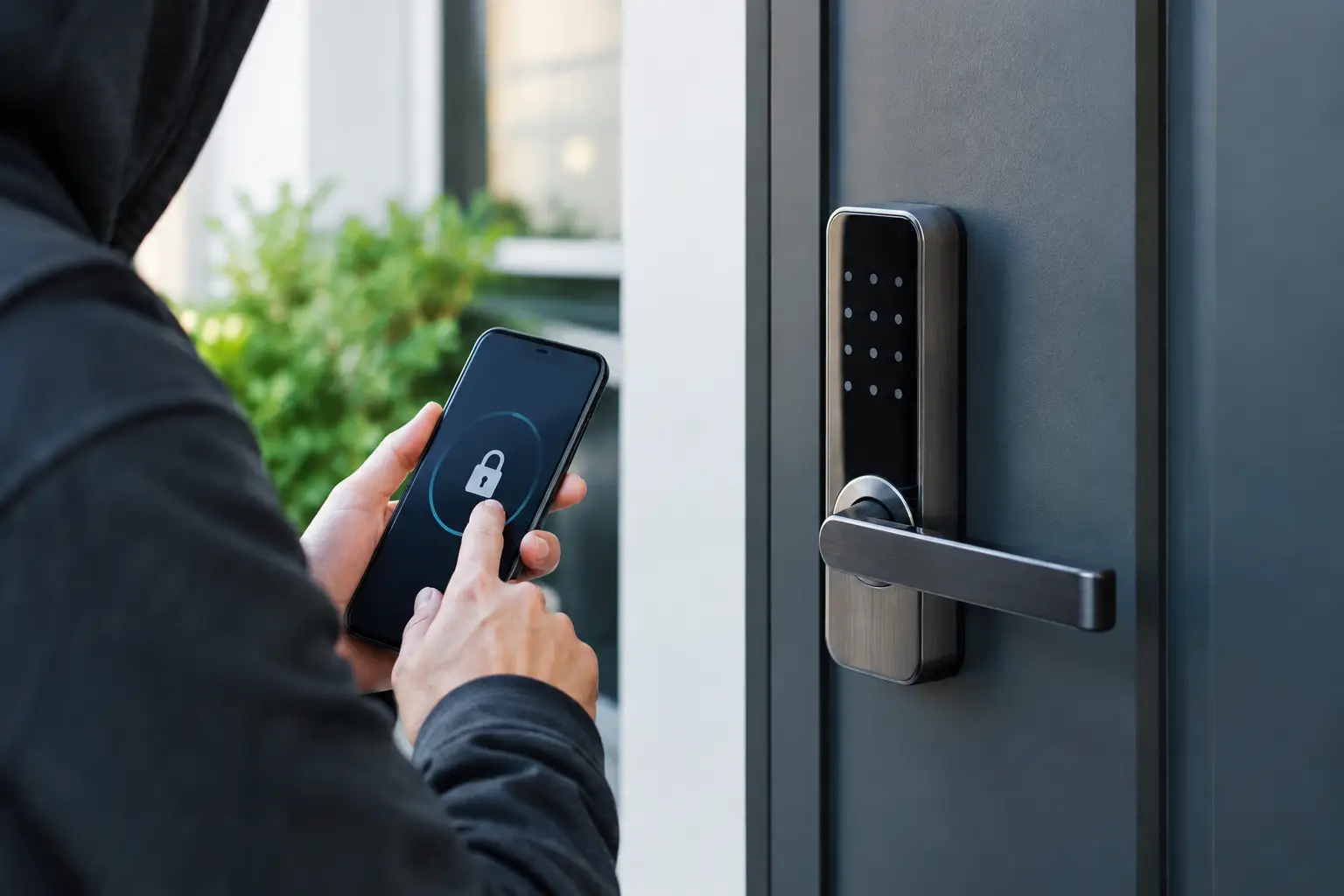
There are several ways a smart lock could be compromised. An attacker may try to guess or steal account credentials, exploit an old software vulnerability, gain access to an insecure home network, or use a lost phone that remains signed in to the app. A lock with a weak or exposed keypad code can also create an avoidable problem.
Physical attacks remain a concern as well. A burglar may attempt to force a door, defeat weak hardware, or target an unsecured side entrance. That is why the strongest approach combines a quality smart lock with properly installed door hardware, sensors, cameras, lighting, and professional monitoring.
The Biggest Smart Lock Threats Are Often Preventable
For most properties, account security deserves just as much attention as the lock on the door. Reusing a password from another website, sharing one code with multiple people, or leaving former employees and contractors in an access list can create more risk than the wireless signal itself.
Bluetooth range is another common concern. Bluetooth-enabled locks are designed to work at close range, but reputable devices use encryption and authentication to help prevent unauthorized commands. The greater issue is usually phone security. If a phone is lost without a screen lock, or if the lock app account uses a weak password, someone may have a path to control connected devices.
Wi-Fi-connected locks depend on the security of the network they use. A router with an old password or outdated firmware can expose more than a smart lock. It can put cameras, thermostats, computers, and other connected devices at risk. Keeping the router updated and using a unique, strong Wi-Fi password is a practical first line of defense.
Software updates matter because manufacturers use them to fix known issues and improve device performance. Delaying updates indefinitely can leave a smart lock running older protections. A professionally managed security setup helps remove much of the guesswork by ensuring compatible devices are selected, installed correctly, and connected to a central system.
Smart Lock Security Depends on More Than the Lock
A smart lock works best when it is not expected to carry the full burden of property security. Consider what happens if someone repeatedly enters incorrect codes, lingers near a side door, or tries to force entry. A standalone lock may not provide enough awareness. An integrated security system can respond with door sensors, cameras, recorded video, alerts, lighting, and professional monitoring.
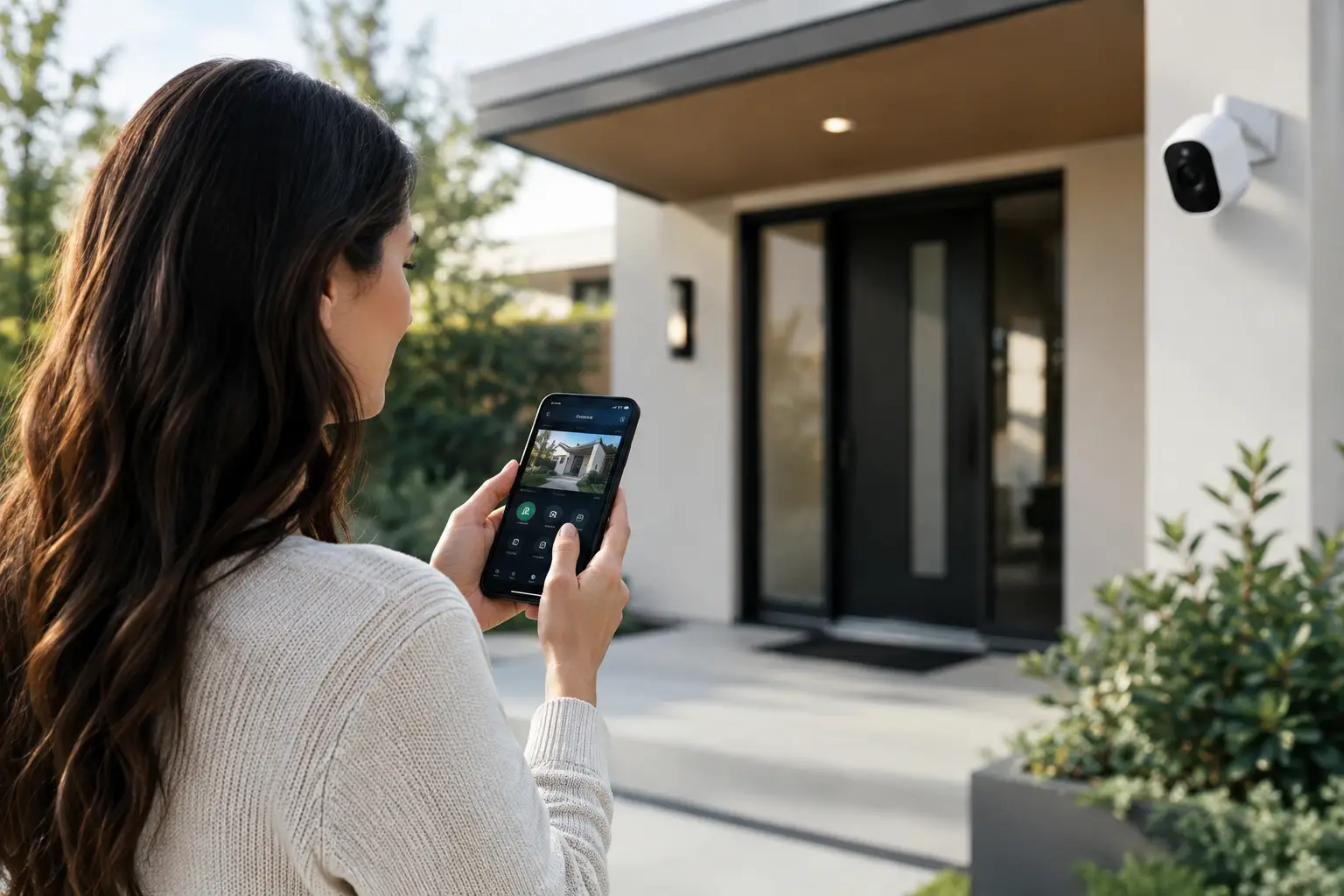
For a homeowner, that can mean receiving an alert when a child gets home, checking whether the front door is secured after leaving, or providing a temporary code for a dog walker instead of hiding a spare key. For a small business, it can mean assigning individual access credentials, reviewing entry activity, and removing access immediately when staffing changes.
Video verification and active deterrence add another layer. A visible camera and exterior lighting can discourage opportunistic behavior before someone reaches the door. When an alarm event occurs, verified video can give monitoring professionals clearer information to assess what is happening and respond appropriately.
This layered approach also protects against everyday mistakes. If a door is left unsecured, a mobile alert allows you to act quickly. If a keypad code is used at an unusual time, connected cameras can help you check the activity. Smart security is not about assuming technology is flawless. It is about building multiple safeguards that work together.
How to Make a Smart Lock More Secure
The best protections are straightforward, but they need to be used consistently. Start with a smart lock from a trusted security provider and make sure it is installed on a solid door with a properly aligned deadbolt and reinforced strike plate. A high-tech lock cannot compensate for loose hardware or a damaged frame.
Use a unique, long password for the account that controls your security system. Turn on multi-factor authentication when it is available, and protect every phone or tablet that has access to the app with a passcode, biometric login, and current operating system updates.
Access codes should be assigned to people, not shared across an entire household or staff. Give each family member, employee, cleaner, or contractor their own code. That makes it easier to see who entered and to remove access when circumstances change. Temporary codes are especially useful for short-term visitors and service appointments.
Keep the smart lock, control panel, app, and home router current. Review connected users periodically, particularly after a move, staffing change, breakup, tenant transition, or lost phone. If someone no longer needs access, remove it rather than assuming they will not use an old code.
Finally, connect the lock to a broader protection plan. Door and window sensors can detect unauthorized entry, while cameras and smart lighting provide useful context and deterrence. Professional monitoring means a security event does not rely entirely on you noticing a notification while you are sleeping, driving, or in a meeting.
Are Smart Locks Safer Than Traditional Locks?
It depends on the lock quality and how it is used. A traditional deadbolt avoids connected-device risks, but it has limitations of its own. Keys can be copied, lost, stolen, hidden outside, or retained by former occupants. You also may not know whether a door was left unsecured until you return to the property.
Smart locks add digital access management, activity visibility, and remote control. Those benefits can improve security when the lock is configured carefully and supported by a reliable system. They can also reduce common problems, such as leaving a spare key under a planter or giving one key to too many people.
A smart lock is not the right fit for every door or every property. Some locations need commercial-grade access control, certain doors require specialized hardware, and areas with unreliable connectivity may need a different setup. A security consultation can identify those details before equipment is installed.
Professional Installation Reduces the Guesswork
A smart lock has to fit the door, align correctly, communicate reliably, and work with the rest of the security system. Professional installation helps prevent the frustrating issues that can happen with a rushed DIY setup, including misaligned bolts, unreliable connections, weak signal placement, and incomplete app configuration.
With Fluent Home, smart locks can be part of a customized security system that brings entry control, cameras, alarms, environmental devices, and mobile management together in one place. That gives you practical control without asking you to become your own security technician.
The goal is not to promise that any device is impossible to attack. No security product can make that claim honestly. The goal is to make your property a harder target, detect problems earlier, and ensure you have dependable support when something needs attention.
If you are considering a smart lock, think beyond the front door. A free custom security quote can help you build protection around the way your family or business actually operates, with expert installation and the peace of mind of professional monitoring.