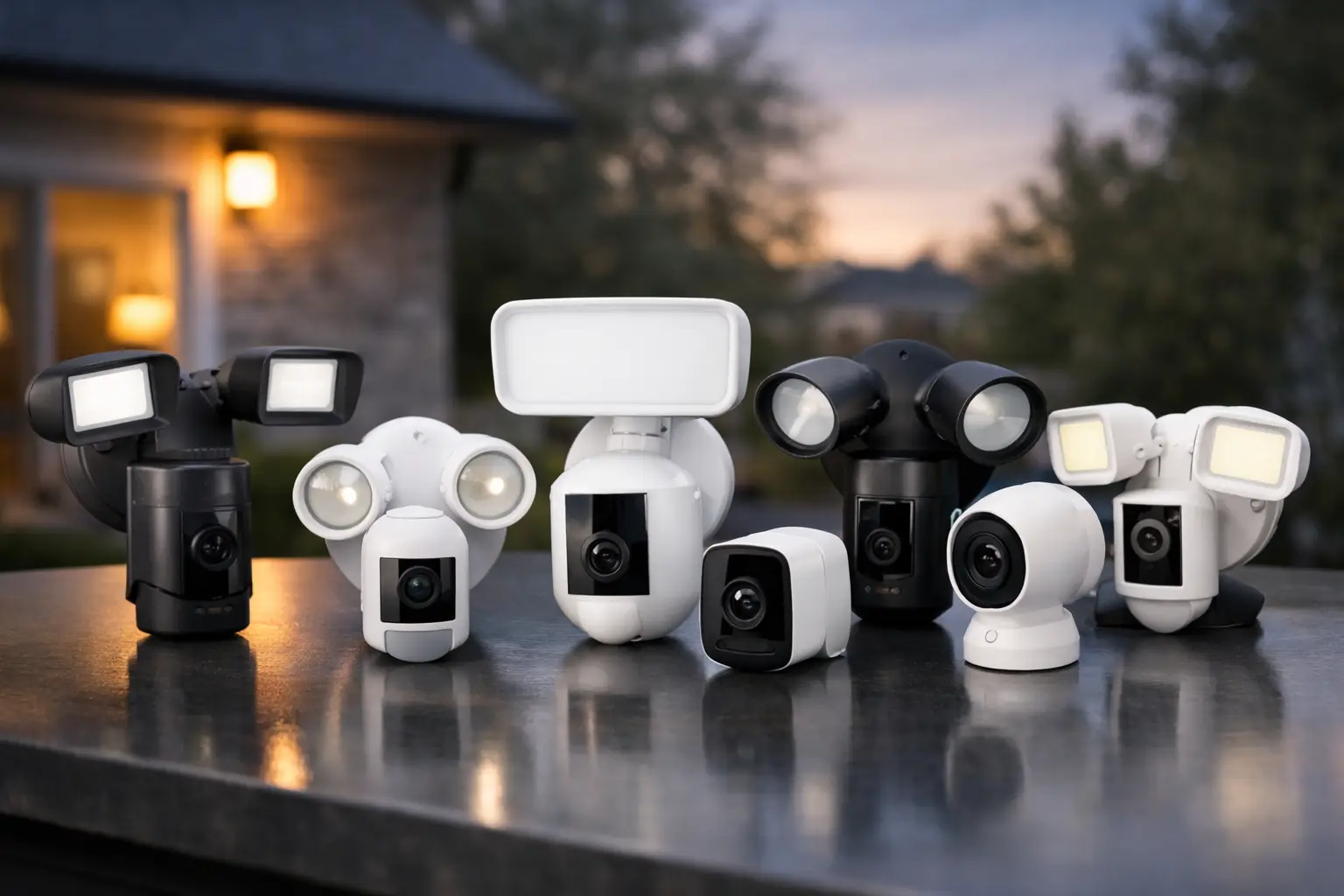
A porch light can help you see who’s outside. A floodlight camera helps you decide what to do next. When homeowners start comparing the best smart floodlight cameras, they are usually trying to solve a real problem – dark corners near the garage, motion alerts that do not tell the full story, or a side yard that feels too exposed after sunset.
That is why this category matters. A good floodlight camera does more than switch on when something moves. It gives you usable video, clear alerts, two-way talk, and enough lighting to make a person think twice before coming closer. The best option depends on your property, your tolerance for false alerts, and whether you want a simple standalone device or a professionally installed system that works with the rest of your security setup.
What makes the best smart floodlight cameras worth buying
The difference between an average floodlight camera and a strong one usually comes down to what happens after motion is detected. Bright lights alone are not enough if the video is blurry, alerts are delayed, or the app makes it hard to respond quickly.
For most homes, the essentials are clear night video, motion detection that can tell the difference between a person and a passing car, reliable mobile access, and lights bright enough to cover a driveway, walkway, or backyard. Two-way audio is also useful, especially for package deliveries, visitors at a side gate, or suspicious activity near an entry point.
There is also the question of how the camera fits into the bigger picture. If you already have door sensors, indoor cameras, a smart lock, or professional monitoring, a floodlight camera is more valuable when it works as part of one system. That is often where professionally installed solutions stand apart from off-the-shelf devices. They are not just adding a light and a camera. They are adding another active layer of protection.
Best smart floodlight cameras for different needs
Best for integrated home security
A professionally installed floodlight camera tied into a broader smart security system is often the strongest choice for homeowners who want dependable protection without managing every setting on their own. This approach makes sense when you want the floodlight camera to work alongside intrusion detection, mobile app control, smart locks, indoor and outdoor cameras, and 24/7 monitoring.
The main advantage is coordination. If motion is detected outside late at night, the system can do more than record a clip. It can trigger deterrence features, send a more useful alert, and support faster response through professional monitoring and video verification, depending on the setup. That is a different experience from receiving a basic motion notification and then figuring it out yourself.
This option is not always the cheapest up front, and it is not aimed at people who want a pure DIY install. But for families and property owners who care more about reliability than tinkering, it is often the best fit.
Best for DIY simplicity
Battery and wired DIY brands have made floodlight cameras more accessible, especially for homeowners who want a quick upgrade over standard motion lights. These models are popular because setup is faster, the apps are familiar, and the price can look appealing compared to a full security package.
The trade-off is consistency. Some DIY floodlight cameras are excellent for basic awareness, but performance can vary depending on Wi-Fi strength, mounting position, subscription requirements, and weather exposure. If your main goal is seeing who pulled into the driveway or whether a delivery has arrived, a DIY model may be enough. If your goal is stronger perimeter protection, the conversation changes.
Best for wide driveway coverage
Driveways create a specific challenge because you need enough brightness and enough field of view to capture both movement and context. A camera may detect motion, but if the angle misses the license plate area or overexposes the scene with its own lights, the footage is less helpful.
For this use case, look for adjustable light panels, a wide viewing angle, strong HDR performance, and person detection that can reduce unnecessary alerts from traffic. Mounting height matters here. A good camera placed too high may show you what happened in broad strokes, but not the details you need.
Best for backyards and side yards
These areas often have less ambient light and fewer natural sightlines from inside the home. A floodlight camera for a backyard or side yard should prioritize night clarity and motion zones you can customize. Otherwise, you may get endless alerts from trees, pets, or neighboring activity.
This is also where deterrence features become more useful. Bright lighting, a visible camera, and two-way talk can help stop a situation before it gets closer to the home. For families with gates, detached garages, or storage areas outside, this placement can add meaningful peace of mind.
Key features to compare before you decide
Video quality
Resolution matters, but not in isolation. A 2K or higher camera sounds impressive, but image processing, night performance, and dynamic range are what make footage useful. If the camera cannot handle headlights, deep shadows, or fast motion, the extra pixels will not solve much.
For most households, the goal is simple: recognize faces, identify movement clearly, and review clips without guessing what you are looking at.
Motion detection and analytics
Smarter alerts make a big difference in day-to-day use. Basic motion sensing can flood your phone with updates that do not matter. Person detection, vehicle detection, and adjustable activity zones help narrow your attention to the events that actually matter.
If you are protecting a business entrance or a home with frequent street traffic, this becomes even more important. Better analytics mean less noise and faster decision-making.
Brightness and light control
Not every property needs maximum brightness. A compact patio area may need focused lighting, while a long driveway or corner lot may need broad illumination. Look for cameras that let you adjust brightness and activation settings so the lights work for your home rather than against it.
Too much light can wash out video or annoy neighbors. Too little light defeats the point.
Wired vs. battery power
Most floodlight cameras are wired, and for good reason. Floodlights draw more power, and a hardwired installation generally offers stronger long-term performance. Battery-powered options can work in some situations, but they tend to involve more compromise around brightness, recording time, or maintenance.
If you want a floodlight camera to be a dependable part of your security plan, wired usually makes more sense.
App control and system integration
A floodlight camera should be easy to use when it matters most. Live view, saved clips, two-way talk, custom notifications, and automation settings should all feel straightforward in the app.
This is where integrated systems stand out. Managing cameras, alarms, locks, and lighting from one place reduces friction. It also makes the system easier for everyone in the household to use consistently.
Should you choose DIY or professional installation?
This is usually the real question behind searches for the best smart floodlight cameras. Not which camera has the longest spec sheet, but which setup will actually protect the property better.
DIY can work well for a single problem area. If you have solid Wi-Fi, realistic expectations, and no need for broader system integration, it can be a practical starting point. Many homeowners take this route because it feels quick and familiar.
Professional installation makes more sense when the floodlight camera is part of a larger security goal. That could mean covering vulnerable entry points, tying video into monitored security, improving deterrence with smarter automation, or simply avoiding the trial-and-error that comes with self-installation. For homeowners who want smart control without technical hassle, that approach often delivers more lasting value.
For small business owners, the case for professional installation is even stronger. Exterior lighting and video need to work reliably around entrances, loading areas, and parking spaces. False alerts, poor placement, and inconsistent coverage create risk. A properly designed system reduces those gaps.
How to pick the right floodlight camera for your property
Start with the area you are trying to protect. A front driveway, backyard gate, and side entrance each call for a slightly different camera angle, light spread, and alert setup. Then think about how you want to respond when something happens. Do you just want a clip saved to your phone, or do you want the camera to play a role in a monitored security system?
It also helps to think past the device itself. A floodlight camera is strongest when it supports a clear security plan. If your home has dark access points, frequent package deliveries, detached structures, or limited visibility from inside, your camera placement and system design matter as much as the hardware.
That is why many homeowners benefit from expert guidance instead of comparing specs in isolation. A custom setup can account for lighting conditions, property layout, app control, and how the floodlight camera works with the rest of your security devices. For people who want a solution that feels simple once it is in place, that support is worth a lot.
The best smart floodlight cameras are the ones that fit your property, respond reliably, and make it easier to protect what matters without adding more work to your day. If you are thinking beyond a single camera and want smarter protection from the start, a professionally designed system is often the better move.