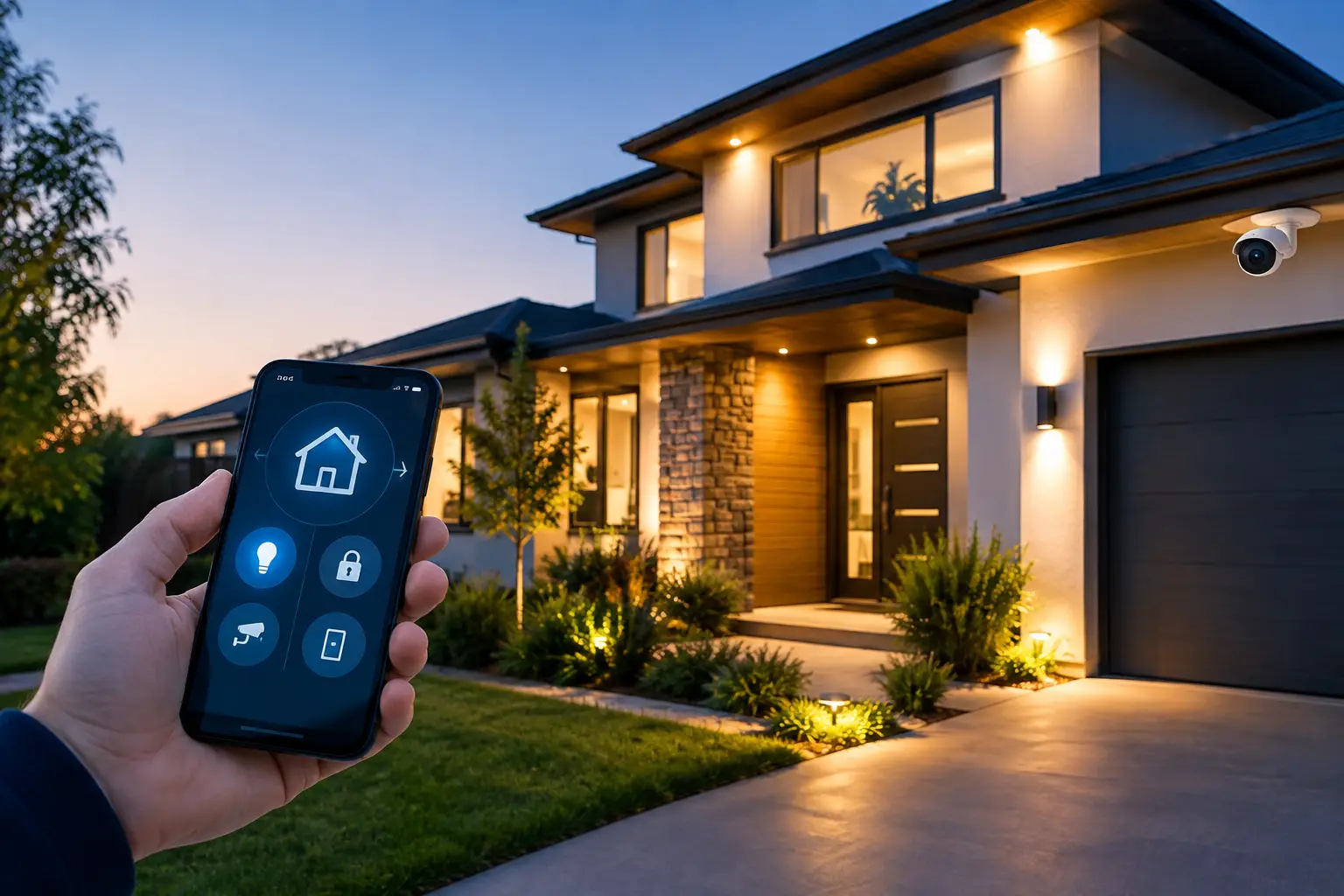
A dark driveway, side gate, or storefront gives someone a place to approach unnoticed. That is where smart lighting earns its place in a security system. Understanding how smart lighting improves security starts with a simple idea: light can make a property look occupied, expose unexpected activity, and give you a faster, clearer view of what is happening outside.
Unlike a basic porch light that stays on or off all night, smart lights can follow schedules, respond to motion, and work with the rest of your security devices. You stay in control from one app, whether you are upstairs, at work, or away for the weekend.
How Smart Lighting Improves Security Before an Incident
Most burglars and trespassers look for low-risk opportunities. A property that appears dark, empty, and unmonitored can feel easier to approach. Smart lighting helps change that impression without requiring you to leave every light on around the clock.
Scheduled lighting can turn interior lamps on and off at selected times, helping your home look lived in when you are traveling. The strongest approach is not a rigid pattern that repeats at the exact same minute every day. Varying schedules between rooms and evenings creates a more natural appearance while still keeping energy use under control.
Outdoor lighting provides a second layer of deterrence. A well-lit front entry makes it harder for someone to linger near packages, vehicles, or doors without being seen. Lighting along side yards, back doors, garages, and walkways reduces the dark areas where unwanted activity can go unnoticed.
For a small business, lighting can signal that the property is actively managed after closing. Parking areas, delivery doors, rear entrances, and dumpster areas are common blind spots. Smart controls let business owners establish consistent lighting rules while retaining the ability to make changes remotely when hours or conditions change.
Motion-Activated Light Creates Immediate Visibility
Motion-triggered lighting is most effective when it serves a purpose beyond simply turning on. When a light activates near a camera, the camera may capture a clearer image of a person, clothing, vehicle, or direction of travel. A sudden light can also make an intruder aware that they have entered a monitored area.
This response is especially valuable at locations that are not constantly active, such as a side yard, detached garage, loading entrance, or backyard gate. Instead of flooding the entire property with light all night, you can focus illumination where movement should be rare.
Placement matters. Aim lights toward paths of approach and entry points rather than directly into a neighbor’s windows or toward the street. A professionally designed system can account for camera angles, landscaping, rooflines, and the areas where people naturally walk. That helps reduce glare and makes motion events more useful.
Motion lighting also needs sensible settings. A sensitivity level that activates every time a branch moves or a neighborhood cat passes by can become frustrating. On the other hand, a setting that is too narrow may miss activity near the edge of a driveway. The right configuration depends on your property, local wildlife, and the zone you want to protect.
Smart Lighting Works Better With Cameras and Monitoring
Lighting is a valuable security tool on its own, but it becomes more capable when it is integrated with video surveillance, intrusion detection, and professional monitoring. A light turning on can coincide with a camera recording an event, sending an alert, or helping verify that activity is routine or suspicious.
For example, a person approaching the front door after dark may trigger a light and appear clearly on a doorbell camera. If they are dropping off a package, there may be nothing more to do. If they remain at the door, test the handle, or move toward another access point, you have better visibility and can respond through your security system.
This is where professionally monitored and video-verified security can make a meaningful difference. Lighting helps reveal activity. Cameras provide visual context. Monitoring professionals can help assess a verified event and support a faster response when help is needed. Each component has a role, rather than relying on one device to do everything.
At Fluent Home, smart lighting can be designed as part of a connected security setup, so it supports the devices already protecting your entry points, outdoor spaces, and daily routine.
Use Lighting to Support Everyday Safety
Security is not limited to burglary prevention. Smart lighting can make ordinary routines safer for your household and visitors. A scheduled entry light can make it easier to unlock the door after work. Path lighting can reduce trip hazards when taking out the trash or walking a dog after dark. Garage and mudroom lights can activate when you arrive home.
These small conveniences matter because a system is more valuable when people use it consistently. If lighting controls are easy to manage from the same mobile app as your cameras, locks, garage door, and alarm system, you are less likely to overlook them.
Remote control is useful when plans change. Maybe your teenager gets home before you do, a contractor is arriving, or you forgot to turn on an exterior light before leaving town. App-based control gives you the ability to check and adjust your lighting without returning home.
Avoid the Common Smart Lighting Mistakes
Smart lighting should reinforce your security plan, not create a false sense of protection. A light alone cannot secure an unlocked door, replace a camera’s view, or contact emergency services. It is most effective as one visible layer in a system that includes protected doors and windows, cameras, alerts, and professional monitoring.
Avoid placing every light on one schedule. If the entire home goes dark at 10 p.m. every night, the routine can be predictable. It is also wise to avoid relying only on a front porch light. Side entrances, rear doors, gates, garages, and areas around ground-floor windows deserve attention too.
Color temperature is another practical consideration. Extremely harsh lighting can create glare and make some camera images less comfortable to review. Warm white light is often pleasant near entrances, while brighter, carefully aimed lighting may be better for driveways and backyards. The best choice depends on the camera coverage, the size of the area, and the amount of existing ambient light.
Finally, make sure your smart lighting has a dependable foundation. Devices should be installed where they have appropriate power, coverage, and weather protection. For exterior lighting, professional installation can prevent issues with placement, wiring, or angles that only become obvious after the system is in use.
Build a Lighting Plan Around Your Property
Start by walking around your home or business after dark. Notice where visibility drops off: the path from the driveway, the side gate, the back patio, the garage door, or the space near outdoor equipment. Then consider which lights should operate on a schedule, which should respond to motion, and which should be tied to a camera or alarm event.
A family home may prioritize the front door, package delivery area, driveway, and backyard. A business may place greater emphasis on employee entrances, customer parking, stock rooms, and closing procedures. There is no one-size-fits-all setting because the right plan depends on the property, your routine, and the risks you want to address.
The goal is not to turn your property into a brightly lit fortress. It is to create purposeful visibility, make unexpected activity harder to hide, and give yourself useful control when it matters. A custom security consultation can help turn that goal into a lighting plan that fits the way you live or run your business.