

Business Fire Monitoring Guide for Safer Operations
Published
- Blog
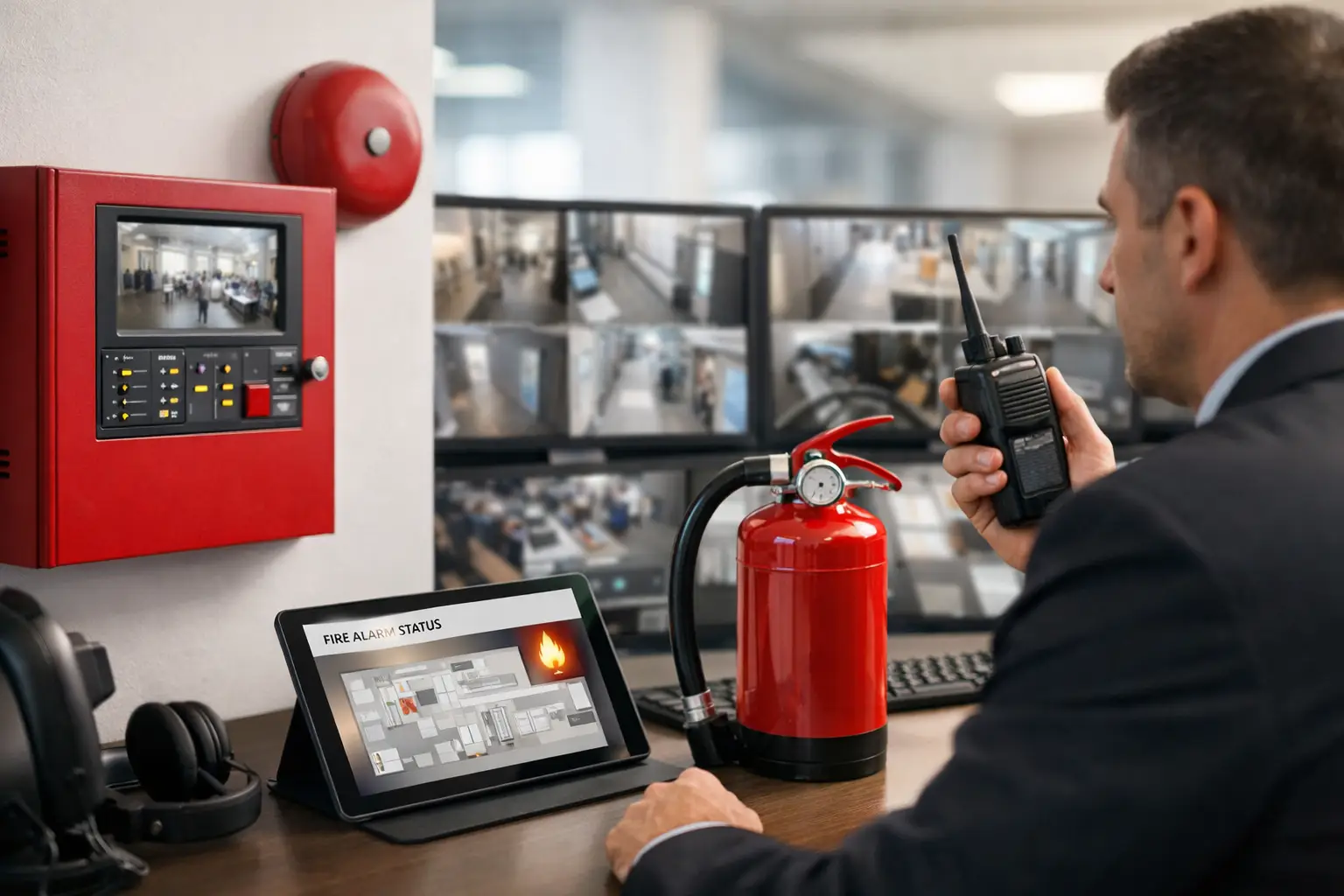
A smoke alarm that sounds after everyone has left for the day is only useful if someone can respond. This business fire monitoring guide helps small business owners understand how connected detection, professional monitoring, and a clear emergency plan work together to protect people, property, inventory, and business continuity.
A fire can create serious damage in minutes, but the disruption often lasts much longer. Lost equipment, smoke damage, closures, insurance claims, and interrupted customer service can all affect your bottom line. The right system is not simply about installing detectors. It is about creating a dependable path from early detection to fast action.
What Business Fire Monitoring Actually Does
Fire detection and fire monitoring are related, but they are not the same thing. Detection devices identify signs of danger, such as smoke, rising heat, or carbon monoxide. Monitoring adds a professional response layer. When a connected device sends an alarm signal, a 24/7 monitoring center can follow established procedures to notify the appropriate contacts and request emergency response when needed.
That matters when your business is closed, when employees are busy serving customers, or when an alarm occurs in an area no one is currently occupying. A local siren can alert people nearby. Professionally monitored fire protection extends that awareness beyond the building.
For many small businesses, monitoring also creates greater confidence during weekends, holidays, and overnight hours. Instead of relying on one manager to answer every alert, you have a planned response process that continues around the clock.
Fire monitoring does not replace required fire suppression systems, inspections, evacuation procedures, or local code compliance. It supports them. Your building type, occupancy, square footage, local regulations, and insurer requirements may determine which devices and systems you need.
Start Your Business Fire Monitoring Guide With Risk
Every business has a different fire profile. A retail shop with a stockroom faces different risks than a restaurant kitchen, auto shop, salon, warehouse, office, or medical practice. Before choosing devices, walk through your property with an experienced security and life-safety professional.
Look at where a fire could start, how quickly it could spread, and whether employees or customers might have difficulty exiting. Pay close attention to electrical panels, server rooms, storage areas, utility closets, break rooms, commercial cooking equipment, laundry areas, and locations where flammable materials are kept.
You should also consider what happens after closing. A fire in an unoccupied building can grow unnoticed if the only alert is a local alarm. If your operation stores valuable inventory, customer records, specialized equipment, or temperature-sensitive materials, early notification can make a meaningful difference.
A practical risk review should answer three questions: What needs to be detected? Who needs to be alerted? Who has authority to make decisions after an alarm? When those answers are clear, a system can be designed around the way your business actually operates.
Build Protection in Layers
A dependable business system uses multiple layers rather than asking one device to do every job. The right combination depends on your property and local requirements, but a professionally designed solution may include:
- Smoke detectors in appropriate interior areas to identify smoke conditions early.
- Heat detectors for locations where smoke, steam, or dust could cause unwanted alarms.
- Carbon monoxide detectors where fuel-burning equipment, attached garages, or other CO risks are present.
- Professional monitoring that sends alarm signals for immediate action when your business is unattended.
- Security cameras and access control that help provide broader visibility and control across the property.
Smoke detectors are often the first device people think about, but they are not always the best fit for every area. A kitchen, workshop, or loading environment may need heat detection or another code-appropriate solution because airborne particles can create false alarms. False alarms are disruptive, expensive, and can lead employees to take real alerts less seriously. That is why device placement and selection should be based on the environment, not guesswork.
Integrated security can add useful context around a fire event. Cameras may help a business owner see activity around an entrance or parking area, while access control can show who entered specific areas. These tools are valuable for oversight, but they should never be treated as a substitute for certified fire detection equipment or emergency response procedures.
Why Professional Monitoring Changes the Response
A connected fire device can send an alert to your phone, which is useful when you are available and able to respond. But mobile notifications alone create a gap. Your phone may be on silent, out of service, or unattended. You may be traveling, in a meeting, or unsure whether an alert is real.
Professional monitoring is designed to reduce that dependence on a single person. With a properly configured system, alarm signals are handled through a response protocol that identifies the property and contacts the appropriate parties. Your account should include current emergency contacts, clear call order preferences, and instructions that are reviewed whenever managers, tenants, or business hours change.
This is especially helpful for owners with multiple responsibilities. You should not have to choose between managing a customer issue, getting home to your family, and deciding how to handle an urgent after-hours alarm. Monitoring provides a dependable layer of support when time matters.
Create a Fire Response Plan People Can Follow
Technology is only one part of fire preparedness. Employees need simple instructions they can follow under pressure. A good plan should identify exit routes, assembly points, who calls 911 when appropriate, and who accounts for staff and visitors once outside.
Keep the plan visible and specific to the building. A generic emergency binder in a back office is not enough if new employees have never seen it. Review procedures during onboarding, conduct drills at appropriate intervals, and make sure supervisors understand that people come before property. No employee should reenter a building to retrieve cash, products, devices, or personal belongings.
Assign responsibility for practical follow-up as well. One person may be responsible for contacting the monitoring provider after an event, while another communicates with the landlord, insurance carrier, or restoration company. For a business with several locations, each site should have its own contacts, access instructions, and evacuation details.
Your plan should also account for customers, contractors, and visitors. This is particularly important in retail, hospitality, healthcare, fitness, and service businesses where people may not know the exits or may require assistance.
Test, Maintain, and Update Your System
A fire monitoring system needs ongoing attention to remain dependable. Dust, environmental changes, renovations, disconnected equipment, dead batteries, and outdated contact information can all weaken protection over time.
Schedule regular testing and maintenance based on your equipment, applicable standards, and local requirements. Keep records of inspections, service visits, alarm events, and device replacements. If you remodel, add equipment that produces heat or steam, change your floor plan, or expand into a new suite, have your fire protection plan reviewed.
It is also smart to test the human side of the system. Are emergency contacts still current? Does the monitoring center have the correct suite number, gate code, and after-hours instructions? Do managers know how to arm, disarm, and confirm the status of connected security equipment through the mobile app?
Professional installation helps avoid common issues such as poor device placement, unreliable communication paths, and confusing control panel setup. A consultation-led design also makes it easier to add protection as your business changes, whether that means adding cameras, access control, environmental detection, or another monitored location.
Choose a Partner Built for Your Business
The best fire monitoring provider is not necessarily the one offering the most devices. Look for a company that starts with your property, your risks, and your daily operations. Ask how alarms are monitored, how service and installation are handled, what happens during communication disruptions, and how easily the system can grow with your business.
For small and midsize businesses, an integrated solution can simplify daily management. Fluent Home combines professionally installed security, environmental safety devices, video surveillance, access control, mobile control, and 24/7 professional monitoring in a system designed around your needs.
A safer business starts with a clear plan, not a one-size-fits-all package. Request a custom assessment, review your fire risks, and put reliable protection in place before an emergency forces the decision.
Talk with Fluent Home
Tell us about your home. A Fluent Home specialist can help you plan a residential security system.