
A forced back door, an unsecured storage room, or a former employee’s working access code can create the same costly problem: your business is exposed when no one is there to respond. This guide to business intrusion protection explains how small and midsize businesses can combine professionally installed alarms, video, access control, and monitoring into a security plan that works around the clock.
The goal is not simply to record a break-in after it happens. The right system helps deter unauthorized entry, alerts the right people quickly, and gives you clear visibility into what is happening at your property from your phone.
Start With the Risks Unique to Your Business
A retail store, office, restaurant, warehouse, and professional service business do not need identical equipment. A storefront may need stronger coverage for glass entry points and cash-handling areas. A warehouse may need perimeter awareness, coverage for loading doors, and restricted access to inventory. An office may be more concerned with employee access, sensitive records, and after-hours entry.
Walk through the property as if you were trying to get in unnoticed. Look at every exterior door, window, loading entrance, roof access point, rear hallway, and storage area. Then consider the less obvious risks: a door propped open for deliveries, shared keys that were never returned, an employee working late alone, or a water leak that damages inventory overnight.
This review should also account for your operating hours. A business open late may need a different arming schedule than one that closes at 5 p.m. A location with multiple managers needs clear alerts and user permissions so responsibility does not fall on one person’s phone.
Build Business Intrusion Protection in Layers
An effective security system uses several layers because no single device covers every situation. An intrusion alarm detects unauthorized entry. Cameras provide visual context. Access control limits who can enter. Professional monitoring creates a response path when you cannot answer an alert yourself.
Secure doors, windows, and high-value areas
Door and window sensors are the foundation of intrusion detection. When a protected entry opens while the system is armed, the system can sound an alarm and send an alert. Glass-break sensors add coverage for windows or glass doors that could be bypassed without opening the frame.
Motion sensors protect interior paths such as hallways, sales floors, offices, and stockrooms. Their placement matters. A properly designed system covers the routes an intruder is likely to use while minimizing unnecessary alarms caused by normal activity. For businesses with pets, frequent deliveries, or areas that remain active after closing, professional planning is especially valuable.
Do not overlook rooms that contain cash, controlled products, computers, tools, or customer information. A separate protected zone can notify you if someone enters a restricted area, even when the main business is open. This gives owners more control without making daily operations difficult for staff.
Add cameras that help you act, not just review footage
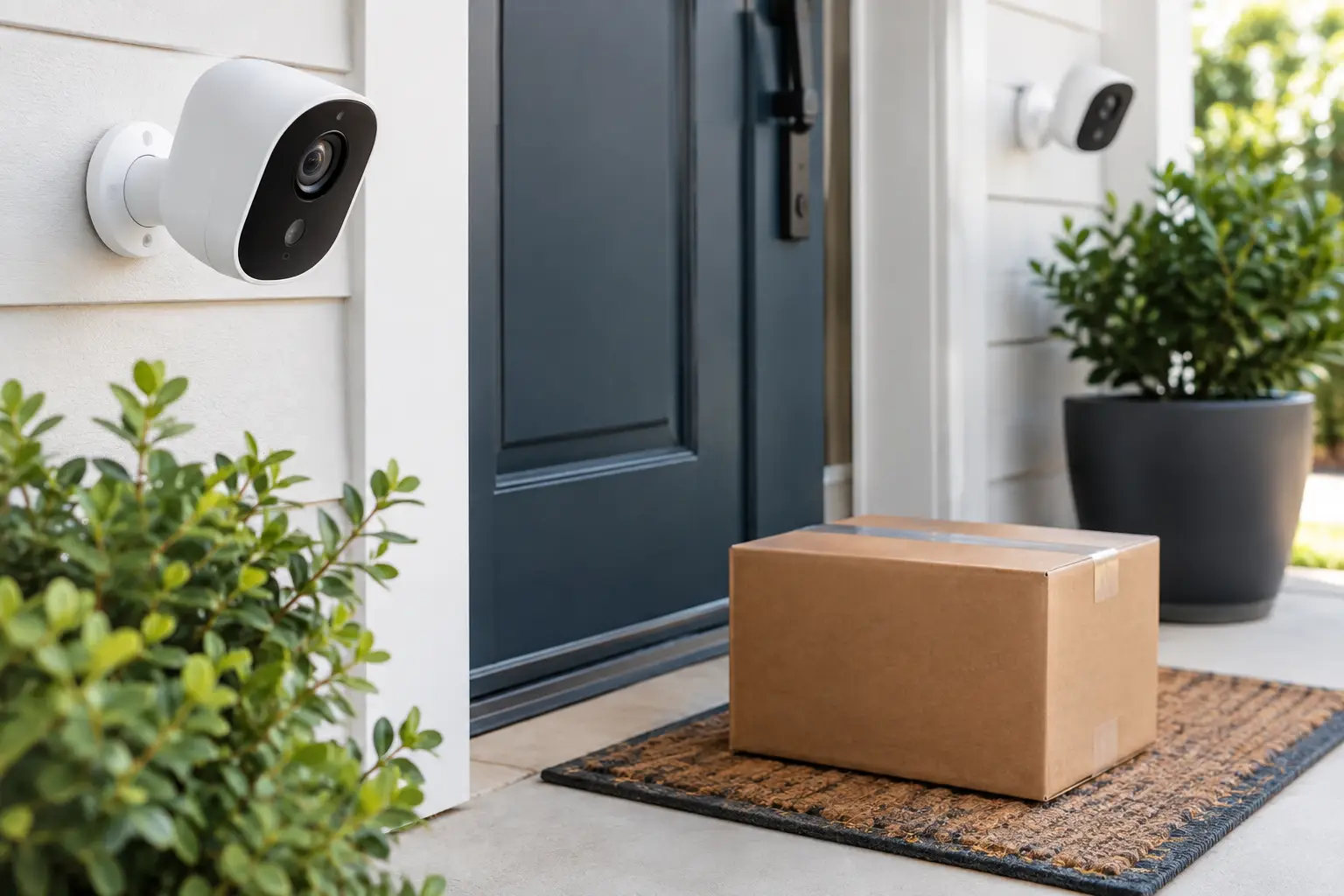
Video surveillance changes an alarm from a simple notification into useful information. Outdoor cameras can watch entrances, parking areas, loading zones, and rear doors. Indoor cameras can help verify activity near registers, inventory, or restricted offices. A video doorbell can give you a view of deliveries and visitors before someone opens the door.
Camera placement should answer practical questions. Can you see a person’s face at the entrance? Is the loading door visible at night? Can you identify activity around high-value equipment? Is there enough lighting for clear footage after hours? A camera pointed generally toward a parking lot may be helpful, but it may not provide the detail needed to verify an incident.
AI-enhanced video analytics can help distinguish meaningful activity from routine movement. That can reduce the noise of constant notifications and focus attention on a person approaching a protected entrance or lingering where they should not be. Some systems can also provide proactive deterrence through visible alerts, lights, or audio warnings, which may encourage a trespasser to leave before damage occurs.
Control access without chasing keys
Physical keys are easy to copy, lose, or forget to collect when someone leaves the company. Business access control gives you a more manageable alternative. You can assign individual codes or credentials, set schedules, and remove access without changing locks every time staffing changes.
For many small businesses, this is less about creating a complicated enterprise system and more about everyday control. Give managers access to open and close. Limit vendor access to specific times. Keep the stockroom restricted. Review who entered after hours when a question comes up.
Access control also works best when it is connected to your security system. If the last authorized person leaves, the business can be armed according to your procedures. If someone enters a restricted area, you can receive an alert with video context rather than trying to piece together events later.
Make Monitoring Part of the Response Plan
A loud alarm can draw attention, but it should not be your only line of defense. Owners cannot watch their phones every minute, especially during meetings, travel, family time, or overnight hours. Professional 24/7 monitoring helps ensure alarm events have a response path even when you are unavailable.
Video verification adds another layer of confidence. When an alarm and video work together, trained monitoring professionals may be able to assess the event and provide more actionable information to responding authorities, depending on the service and local procedures. That is a meaningful difference from receiving an alert hours later and finding a broken door in the morning.
Your internal plan still matters. Decide who receives alerts, who can disarm the system, and who should be contacted first after an event. Keep contact details current and make sure managers understand the opening and closing process. Technology is most effective when everyone knows what to do with it.
Avoid the Gaps That Cause False Confidence
Business owners often install an alarm after a specific incident, then assume the work is finished. But protection can weaken over time if the system is not reviewed as the business changes. New inventory, an expanded suite, altered floor plans, additional employees, or a new delivery process can all create gaps.
A few practical issues deserve regular attention:
- Verify that every employee has an individual code or credential, rather than sharing one common code.
- Remove access immediately when an employee, contractor, or vendor no longer needs it.
- Test sensors, backup power, and communications on a schedule recommended by your security provider.
- Keep cameras clear of signs, displays, vegetation, and seasonal decorations that block the view.
- Review notification settings so urgent events reach the right person without overwhelming your team.
False alarms deserve attention too. Repeated false alarms can create frustration, disrupt operations, and reduce confidence in the system. They are often caused by rushed closing procedures, poor sensor placement, unlocked doors, or staff who have not been trained. The answer is not to turn off protection. It is to correct the process and adjust the system to fit how your business actually operates.
Choose Professional Design Over a Patchwork Setup
A collection of disconnected cameras, locks, and alarms can appear less expensive at first. The trade-off is often more apps, inconsistent alerts, blind spots, and no clear response process. A professionally designed system brings your core protection into one managed experience, with expert installation to help ensure devices are placed where they can do their job.
Fluent Home can help business owners build a customized system that brings intrusion detection, video surveillance, access control, environmental protection, mobile control, and professional monitoring together. The right package depends on your building, hours, staffing, valuables, and budget, which is why a consultation is more useful than a one-size-fits-all kit.
Protection should also extend beyond burglary. Smoke, carbon monoxide, flood detection, and connected water controls can help identify threats that may interrupt operations or damage property when the building is empty. For a business, preventing one overnight leak or catching a fire event early can matter just as much as stopping an unauthorized entry.
A secure business is not one that feels complicated to run. It is one where owners and managers can check in, manage access, respond to alerts, and leave at the end of the day knowing the property is protected. Start with a custom assessment of your highest-risk entry points, then choose a system that gives you clear control when you are on-site and dependable support when you are not.