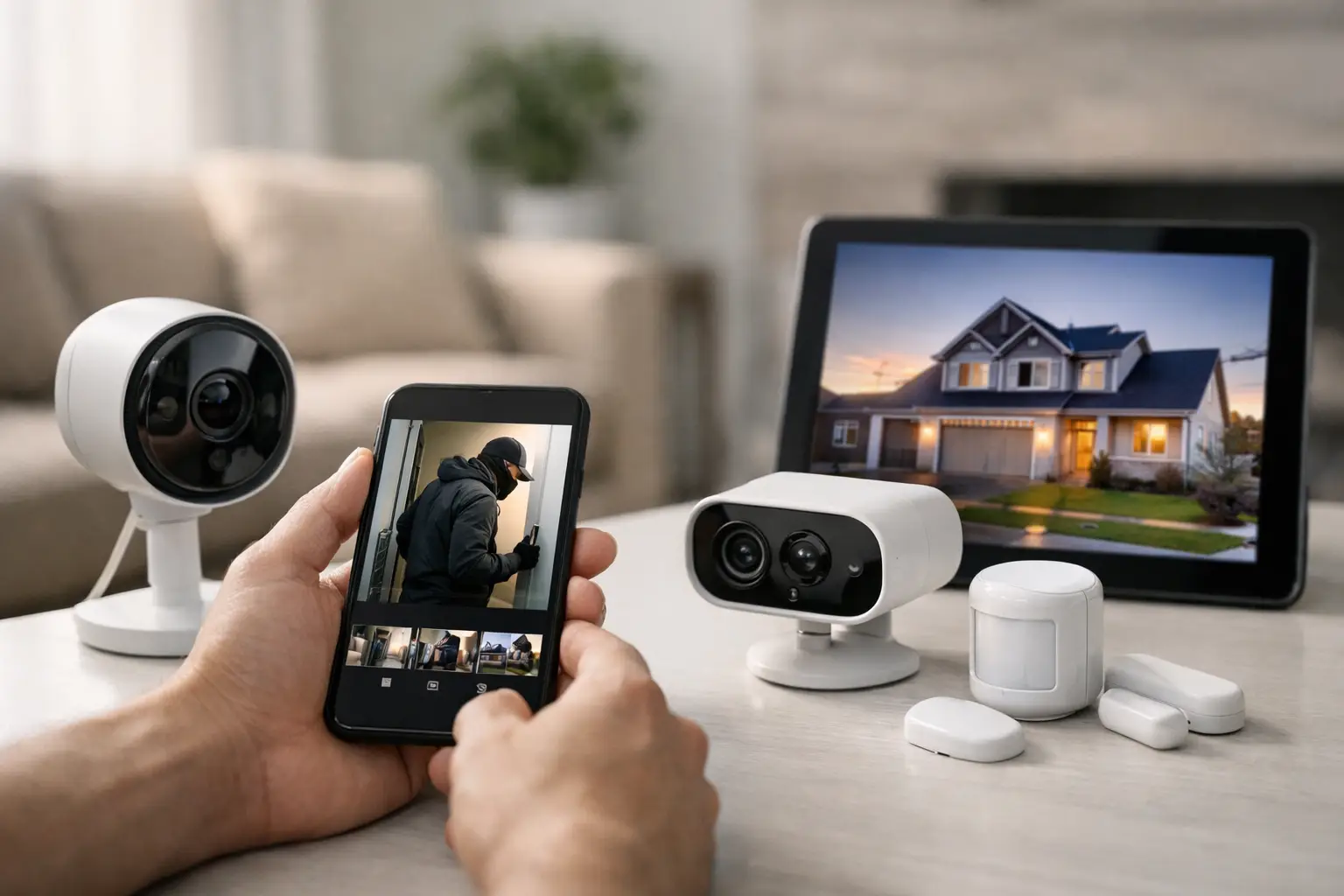
A break-in rarely starts with a dramatic smashed window. It may begin with someone testing a back door after closing, lingering near a delivery entrance, or entering an employee-only area unnoticed. The best small business surveillance helps you see these moments, respond faster, and create a stronger deterrent before loss occurs.
For a retail shop, office, restaurant, warehouse, or service business, cameras should do more than collect footage you may need later. The right system gives you a clear view of your property, smart alerts that matter, and professional support that removes the burden of building and maintaining security on your own.
What Makes the Best Small Business Surveillance System?
The best system is not necessarily the one with the most cameras or the longest feature list. It is the one designed around how your business operates. A storefront with customer traffic has different needs than a contractor yard, medical office, or small distribution space.
Start with the areas that create the most risk: public entrances, cash-handling locations, inventory rooms, back doors, parking areas, loading zones, and employee-only spaces. A professional security consultation can identify blind spots that are easy to miss when you are focused on daily operations.
A complete business surveillance system should combine clear video coverage with intrusion protection, intelligent notifications, and simple mobile control. When these tools work together, you can check activity remotely without constantly watching a live camera feed.
Clear video where it counts
Camera quality matters, especially when an event happens at night or at the edge of your property. Look for high-definition video, night vision, wide viewing angles, and weather-resistant outdoor cameras where needed. Good placement is just as important as camera specifications. A poorly positioned camera can leave faces, vehicle details, or points of entry unclear.
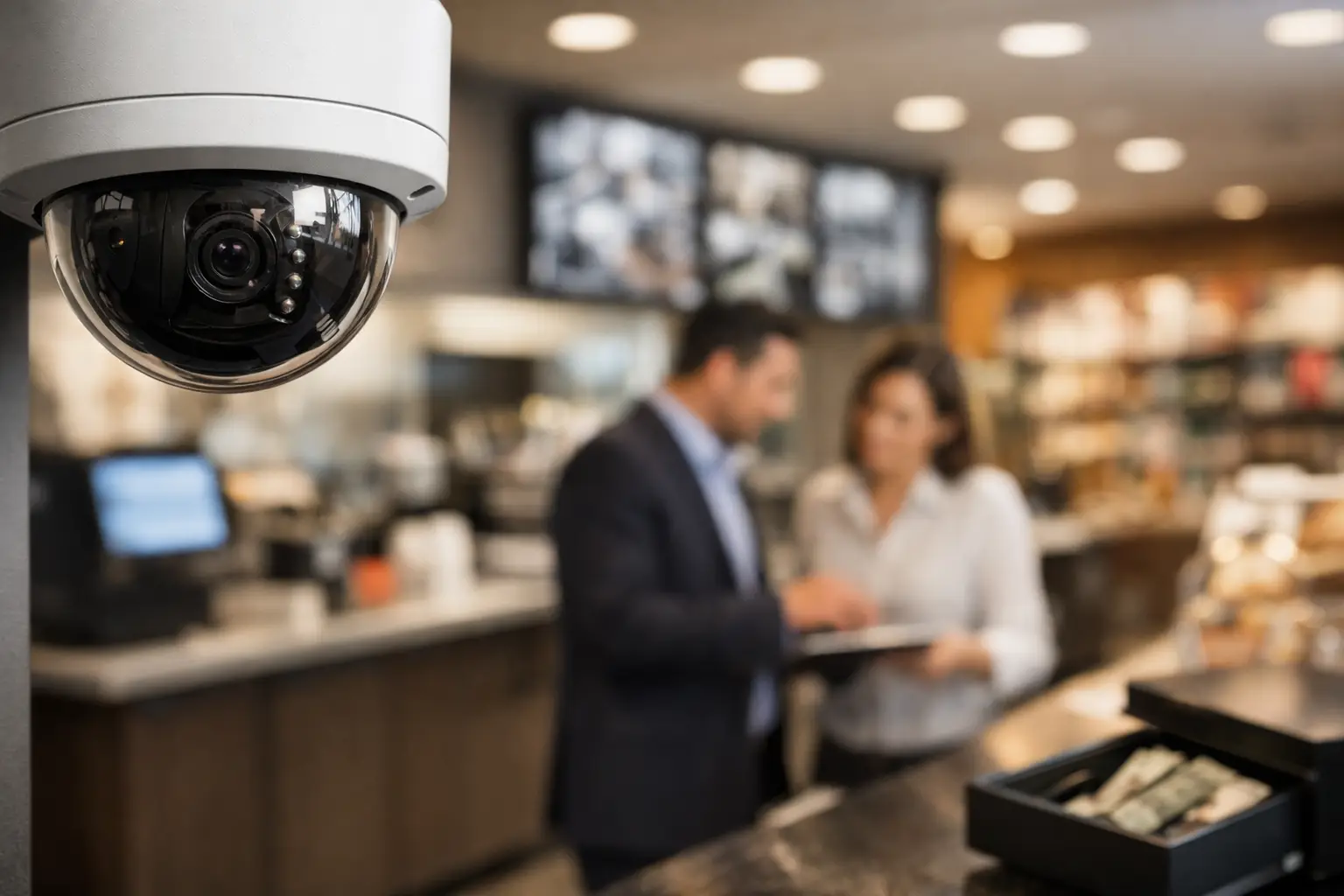
Indoor cameras can help protect inventory, register areas, and restricted rooms. Outdoor and floodlight cameras add visibility around entrances, side gates, driveways, and parking lots. A video doorbell can also give you a direct view of deliveries and visitors at a front entrance.
The goal is not to record every inch of the building. It is to create dependable coverage at the places where people enter, valuables move, and problems are most likely to begin.
Smart alerts that reduce noise
Small business owners do not have time to sort through dozens of meaningless motion notifications. A useful surveillance system should help distinguish relevant activity from routine movement.
Video analytics can identify activity in selected zones and notify you when someone approaches a protected entrance, crosses a boundary, or remains in an area after hours. This is especially valuable for businesses with outdoor inventory, rear entrances, or properties that sit empty overnight.
There is a trade-off to consider. Very broad motion settings can create too many alerts from passing cars, weather, or nearby foot traffic. Settings that are too narrow may miss useful activity. Professional setup helps balance sensitivity with the real conditions around your business.
Active deterrence, not just recorded evidence
Recorded video can be valuable after an incident, but prevention is the better outcome. Cameras with visible deterrence features, including lights and two-way audio, can make an intruder think twice before attempting to enter.
AI-enhanced deterrence and video verification take that protection further by helping confirm potential threats and support a faster response when action is needed. This approach moves security beyond passive recording. Rather than discovering a problem the next morning, you have tools designed to bring attention to suspicious activity while it is happening.
Build Surveillance Into a Complete Security Plan
Cameras are a central part of business protection, but they work best as part of an integrated system. If a camera sees someone approach a rear door, an intrusion sensor can detect an attempted entry. If smoke or carbon monoxide is detected, you can receive an alert and have a record of activity around the building. If a door is left unsecured, smart access tools can help you address it quickly.
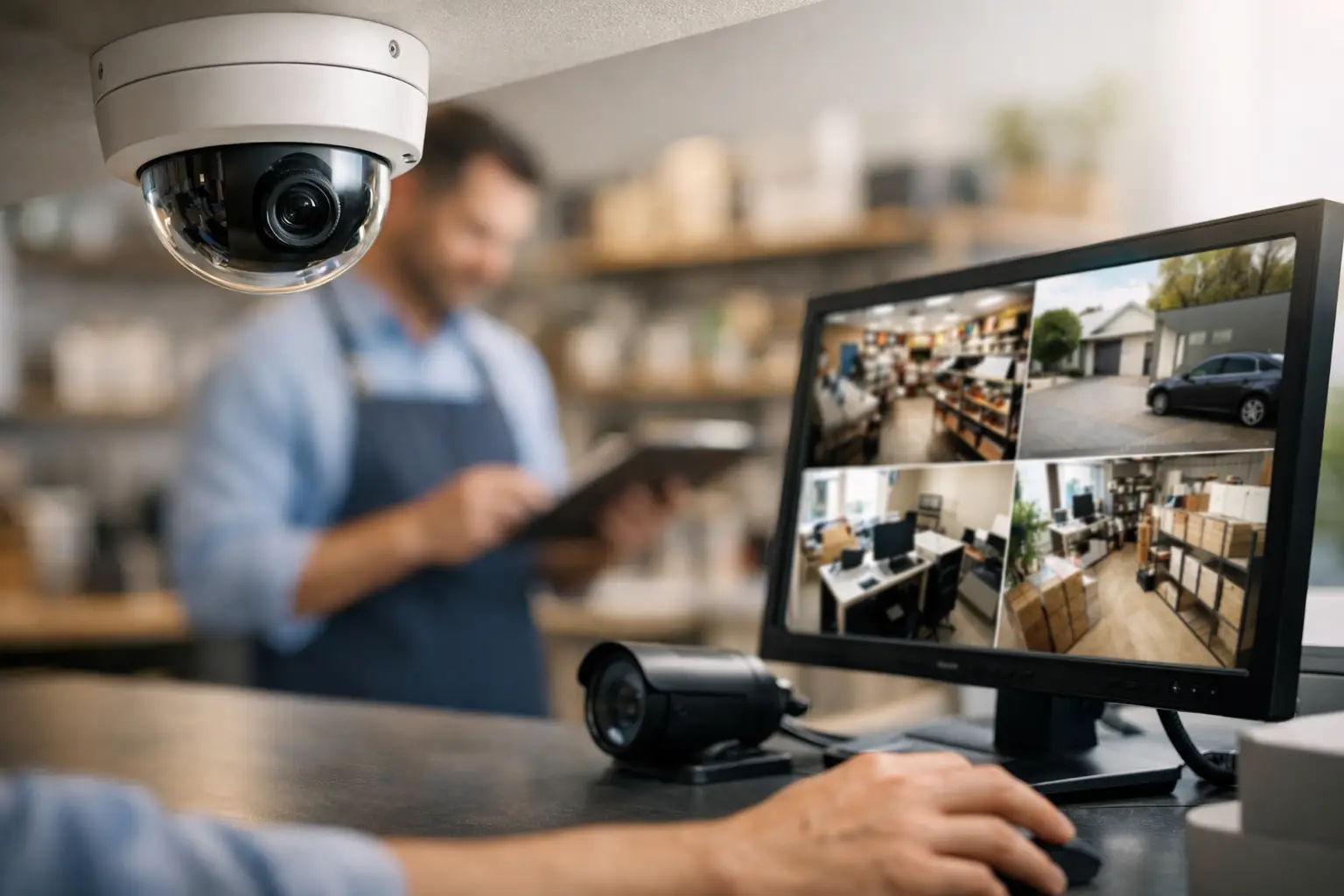
This connected approach is particularly useful when you manage more than one responsibility at once. You may be serving customers, meeting vendors, supervising employees, or traveling between locations. One mobile app can give you access to live video, event clips, alarm status, smart locks, and other connected devices from wherever you are.
Add intrusion detection for after-hours protection
Door and window sensors, motion detectors, glass break detection, and a professionally monitored control panel help protect the spaces cameras cannot fully secure. Cameras may show you what happened, while intrusion detection can trigger an alarm when someone tries to enter.
For many businesses, 24/7 professional monitoring is an important layer of confidence. You are not expected to be awake, available, or staring at a phone every night. When an alarm event occurs, trained monitoring professionals can follow the response plan established for your business.
Control who can enter and when
Keys are easy to copy, lose, or forget to collect when an employee leaves. Business access control and smart locks give owners a more practical way to manage entry. You can create user codes, set schedules, and know when designated doors are opened or locked.
Access control is especially helpful for businesses with changing staff, contractors, cleaning crews, shared office suites, or inventory rooms that should remain restricted. It also supports better accountability without making daily operations feel complicated.
How Many Cameras Does a Small Business Need?
There is no universal number. A compact office may need coverage at the main entrance, reception area, and rear exit. A retail location may also need cameras for registers, sales floor aisles, stockrooms, and exterior doors. A larger property may require outdoor coverage for parking, gates, storage areas, and loading zones.
Instead of choosing a package based only on camera count, map the path someone would take through the property. Where would they enter? Where are your highest-value assets? Which areas are isolated or difficult for staff to monitor? This exercise often reveals that a few well-placed cameras are more valuable than many cameras aimed at low-risk areas.
Privacy should also guide the plan. Cameras should protect business operations without being placed in private areas where employees or customers reasonably expect privacy. Clear internal policies and appropriate signage can help set expectations and support responsible use.
Professional Installation Makes a Practical Difference
DIY cameras can seem appealing at first, particularly for a small space. But a system that is difficult to install, unreliable on your network, or poorly positioned can create gaps when you need protection most. Battery maintenance, inconsistent wireless coverage, and disconnected apps can also add ongoing frustration.
Professional installation helps ensure cameras are mounted at useful heights, pointed toward critical activity, and connected correctly to the rest of your security system. It also means you have support for configuring notifications, testing equipment, and adding devices as your business changes.
Fluent Home provides customized commercial security solutions that can combine video surveillance, intrusion detection, access control, smart automation, and 24/7 professional monitoring in one easy-to-manage system. That flexibility matters when your needs grow from protecting one front door to managing a larger operation.
Questions to Ask Before Choosing a System
Before committing to a surveillance provider, ask how video is stored, how long clips remain available, and whether you can view live and recorded footage from a mobile device. Confirm which cameras are designed for outdoor use, how the system performs at night, and what happens if your internet connection is interrupted.
You should also ask how alerts are configured, whether professional monitoring is available, and how the system can expand. A business may begin with cameras and door sensors, then later add access control, flood detection, smoke alarms, or additional outdoor coverage. Choosing a system that can grow with you helps protect your investment.
Price matters, but the lowest upfront equipment cost is not always the lowest long-term cost. Consider installation quality, ongoing support, monitoring options, device reliability, and whether the system will still fit your needs a year from now.
A well-designed surveillance system lets you close up at night with more confidence and spend less time wondering what is happening when you are away. A free custom quote can turn your property layout, daily routines, and security concerns into a plan built for the way your business actually works.