
Key Takeaways
- Fire monitoring is a 24/7 service where trained professionals watch over your business’s fire alarm system, ensuring an immediate response to any alert.
- When smoke or heat is detected, an alert is instantly sent to a monitoring center. An agent verifies the emergency and dispatches the fire department immediately.
- This service drastically reduces response times, minimizes property damage, ensures employee safety, and helps your business meet critical fire code compliance requirements.
- Unlike unmonitored alarms that only make noise on-site, a monitored system guarantees that help is on the way, whether you are there or not.
As a business owner, you juggle countless responsibilities, from managing inventory and staff to ensuring customer satisfaction. But one of the most significant threats to your hard work is one you might not think about daily: the risk of a fire. A fire can devastate a business in minutes, destroying assets, halting operations, and endangering lives. While a standard smoke detector is a start, it’s a passive device that relies on someone being nearby to take action. This is where professional fire monitoring becomes an indispensable layer of protection.
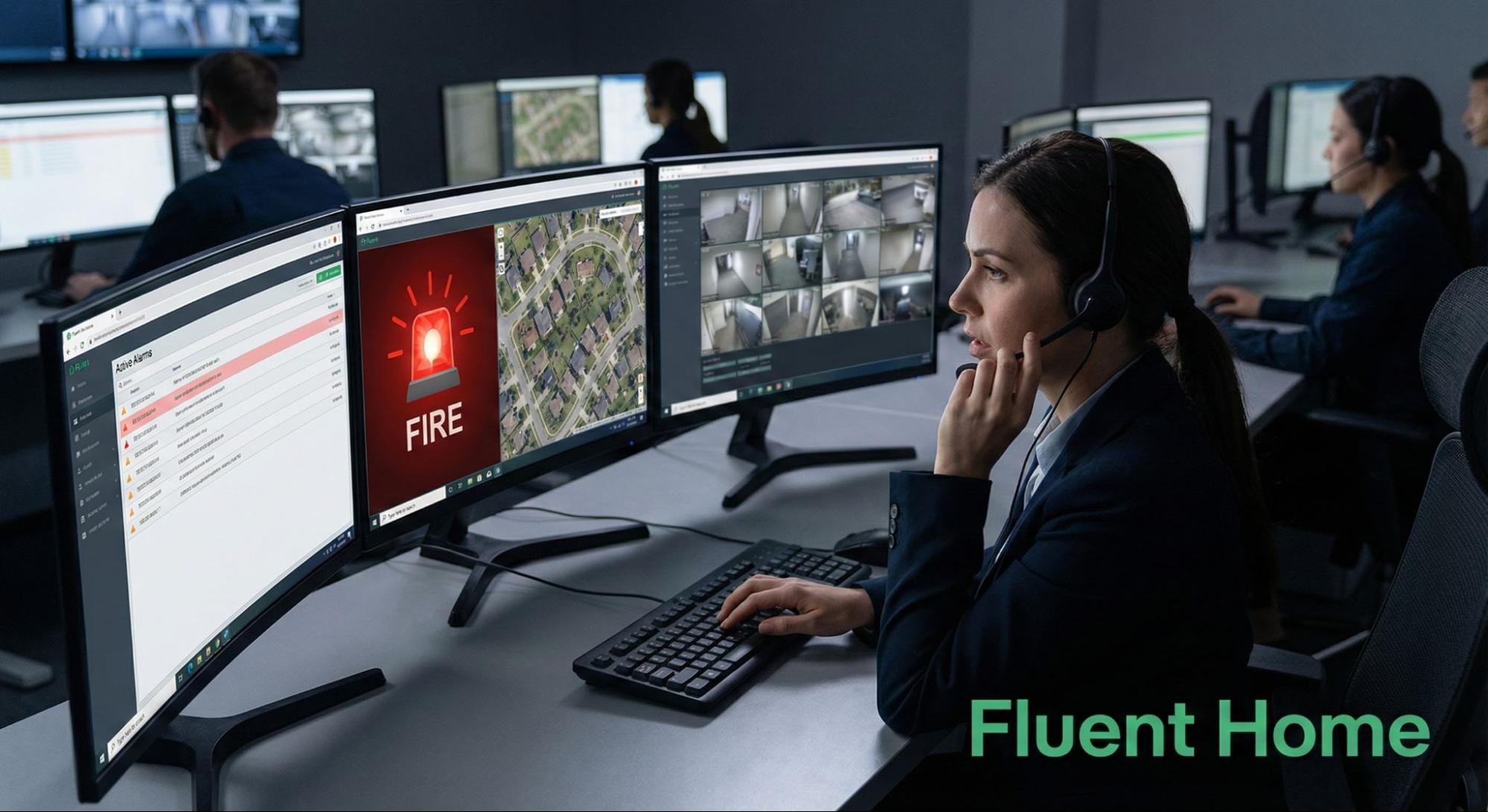
So, what is fire monitoring? It is an active, 24/7 service that connects your business’s fire alarm system to a team of trained professionals. When an alarm is triggered, these experts are instantly notified and can dispatch emergency services on your behalf, whether you’re on-site, at home, or on vacation. This proactive approach transforms your fire alarm from a simple noisemaker into a direct line to the fire department.
Unmonitored vs. Monitored: Understanding the Critical Difference
The distinction between a monitored and an unmonitored fire alarm system is the difference between hoping for help and guaranteeing it arrives. An unmonitored alarm is a standalone device. When it detects smoke or extreme heat, it sounds a loud siren within your building. Its effectiveness stops there. It depends entirely on someone hearing the alarm, correctly identifying it as a real fire, and calling 911. If a fire breaks out after hours, on a holiday, or when the building is empty, the alarm could ring for hours with no one to respond, leading to catastrophic damage.
In contrast, a monitored fire alarm system is an integrated part of your comprehensive commercial security systems. It doesn’t just make noise; it sends an immediate, automated signal to a dedicated monitoring center. This ensures that a potential disaster is never ignored. Trained professionals are always watching, ready to act the moment a sensor is triggered. This constant oversight provides a level of security that an unmonitored system simply cannot match, offering true protection for your investment and your people.
How a Monitored Fire Alarm System Works, Step-by-Step
Understanding the process behind business fire monitoring reveals its efficiency and reliability. The system works seamlessly to turn detection into a rapid emergency response, typically in under a minute. It’s a simple but powerful sequence designed to save property and lives.
Detection: Smoke, Heat, and Manual Pull Stations
The first step is detection. Your system is equipped with a network of strategically placed sensors. Advanced smoke and heat detectors are the frontline defenders, identifying the earliest signs of a fire. Smoke detectors are designed to sense airborne particles, while heat detectors react to rapid temperature increases, making them ideal for environments like kitchens or workshops. Additionally, manual pull stations allow employees or customers to trigger the alarm instantly if they see a fire before the sensors do.
Alert: The Signal to the 24/7 Monitoring Center
Once a device is triggered, it doesn’t just activate an on-site siren. It instantly sends a signal to a secure, off-site location: our 24/7 professional monitoring center. This communication happens over a reliable cellular connection, ensuring the signal gets through even if your internet or phone lines are down. This is the critical handoff from automated detection to human-led emergency response.
Verification & Dispatch: How Professionals Ensure a Rapid Response
When the signal arrives at the monitoring center, a trained agent immediately acts. Their first step is often to verify the alarm, which may involve calling the business premises to rule out a false alarm from something like burnt food. This verification step is crucial for preventing unnecessary emergency dispatches. If the agent cannot reach anyone or if the emergency is confirmed, they immediately contact and dispatch the local fire department, providing them with your address and critical information. This professional verification and rapid dispatch protocol can shave precious minutes off the response time.
The Top 5 Benefits of Professional Fire Monitoring for Your Business
Investing in a monitored fire alarm system delivers tangible returns that go far beyond basic safety. It’s a strategic decision that protects your assets, ensures compliance, and provides invaluable peace of mind. For business owners seeking robust protection, professional fire monitoring solutions offer a multifaceted defense against the threat of fire.
1. Faster Emergency Response Times
In a fire, every second counts. A monitored system ensures the fastest possible dispatch of the fire department. By eliminating the reliance on a bystander, the system automates the call for help, which is then verified and executed by a professional. This rapid intervention is the single most important factor in containing a fire and preventing a small incident from becoming a total loss.
2. Protection of Assets and Reduced Downtime
The financial impact of a fire extends beyond the immediate destruction of property. It includes lost inventory, damaged equipment, and costly operational downtime. By ensuring a faster response, fire monitoring significantly minimizes the extent of the damage. This allows you to get your business back up and running more quickly, reducing revenue loss and protecting your bottom line.
3. Enhanced Employee and Customer Safety
Your greatest asset is your people. A monitored fire alarm system provides a safer environment for everyone in your building. Knowing that help is automatically on the way allows for a more orderly and focused evacuation, prioritizing human safety above all else. This commitment to safety not only protects lives but also boosts employee morale and customer confidence.
4. Fire Code Compliance and Lower Insurance Premiums
Many local and national fire codes require commercial buildings to have monitored fire alarm systems, especially in certain industries or for buildings of a certain size. Adhering to these regulations helps you avoid fines and legal liabilities. Furthermore, most insurance companies recognize the risk-reducing value of monitored alarms and offer significant discounts on premiums to businesses that have them installed.
5. 24/7 Peace of Mind, Even When You’re Away
Business ownership doesn’t stop when you lock the doors for the night. The anxiety of what could happen when no one is around can be a heavy burden. With 24/7 fire monitoring, you can rest assured that your business is protected around the clock. This peace of mind is invaluable, allowing you to focus on growing your business knowing that a dedicated team is always watching over it.
What Types of Businesses Need Fire Monitoring Most?
While every business can benefit from monitored fire protection, certain industries face elevated risks that make it an absolute necessity. Whether you’re running a bustling restaurant in Las Vegas or managing a warehouse in Dallas, the need for rapid fire department dispatch is universal. At Fluent Home, we understand these unique challenges. The team at Fluent Home has over a decade of experience designing and installing smart security for small businesses across North America.
Here are a few examples of businesses where fire monitoring is critical:
- Restaurants and Commercial Kitchens: With open flames, hot cooking equipment, and flammable materials, the risk of fire is constant.
- Retail Stores: High-value inventory and significant foot traffic make fire a major threat to both assets and public safety.
- Warehouses and Storage Facilities: Large stocks of goods, often including flammable materials, can fuel a fire that spreads rapidly without immediate intervention.
- Offices and Commercial Buildings: Electrical systems, server rooms, and dense occupancy loads create significant fire risks. A comprehensive security plan often pairs fire monitoring with systems for including intrusion detection and smart access control.
- Healthcare Facilities: Protecting vulnerable patients is the top priority, making immediate and professional emergency response non-negotiable.
From the busy commercial hubs in Denver and Salt Lake City to growing enterprises in Edmonton and Toronto, proactive fire protection is a cornerstone of responsible business management. Don’t wait for a disaster to highlight a gap in your safety plan.

Protect Your Business Around the Clock with Fluent Home
Don’t leave your business’s safety to chance. A fire can happen at any time, but with 24/7 professional monitoring, you’re always prepared. Protect your business with a free quote today.
FAQs
What is the main difference between monitored and unmonitored fire alarms?
An unmonitored alarm only makes a loud noise on-site, relying on someone nearby to hear it and call for help. A monitored alarm automatically sends a signal to a 24/7 professional monitoring center, which verifies the emergency and immediately dispatches the fire department for you.
Is professional fire monitoring required for my business?
Fire code requirements vary by location, industry, and building size. However, many jurisdictions and insurance providers require professional monitoring for commercial properties to ensure public safety and minimize risk. We can help you understand the requirements in your area.
How much faster is the response with a monitored system?
A monitored system ensures the fire department is dispatched within moments of a confirmed alarm. This can save critical minutes compared to an unmonitored system that depends on a bystander’s response, significantly reducing potential damage and risk to life.
Can Fluent Home monitor an existing fire alarm system?
In many cases, we can integrate our professional monitoring services with existing compatible fire alarm systems. Contact our team for a free assessment to determine if your current equipment is eligible for an upgrade to 24/7 monitoring.