
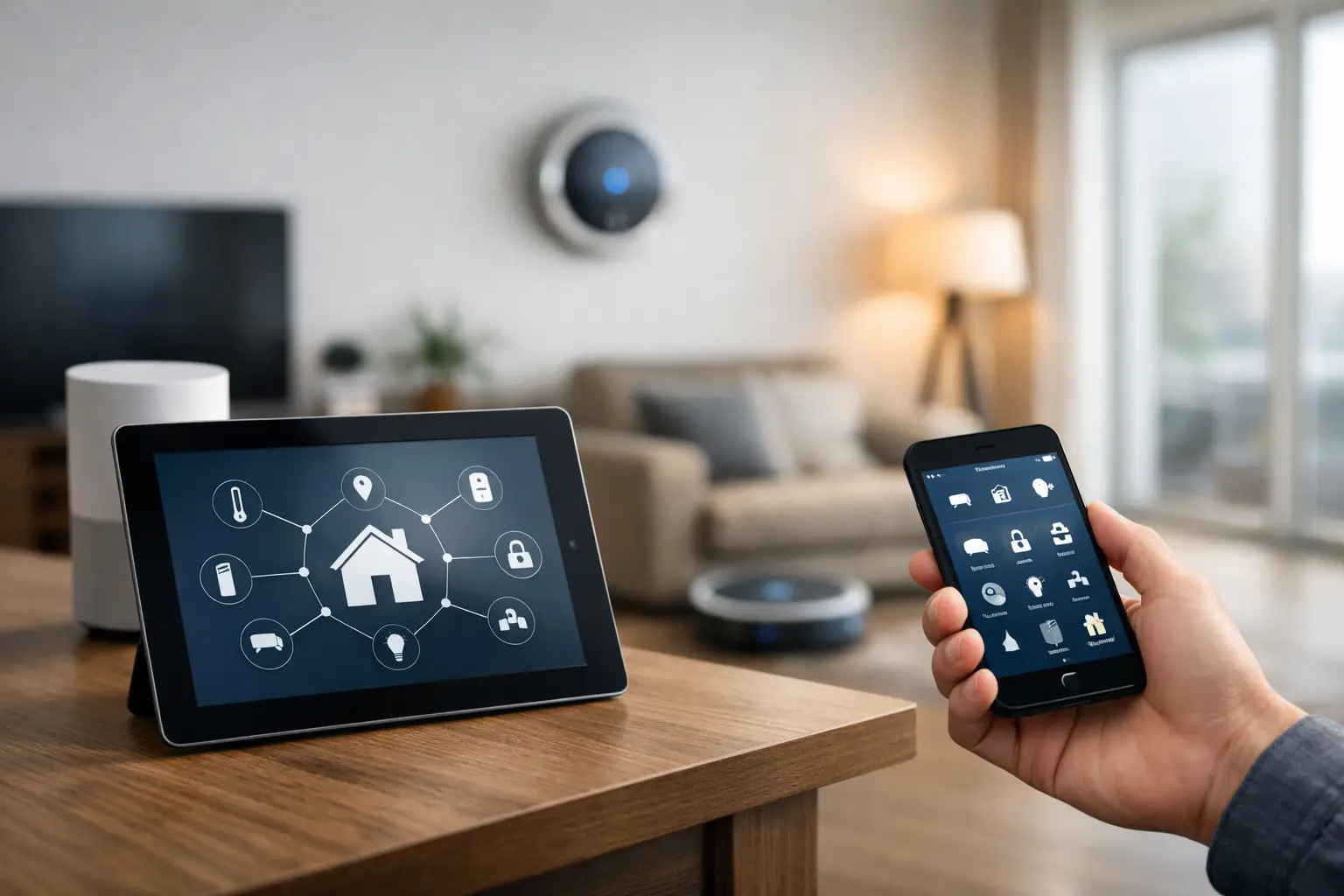
Picture pulling into your driveway after dark and having the porch lights turn on, the garage open, the front door lock behind you, and the thermostat shift to your evening setting – all without touching a switch. That is the real value of a complete guide to home automation. It is not about filling your house with gadgets. It is about making your home safer, easier to manage, and more responsive to the way you live.
For many homeowners, the biggest question is not whether smart devices are useful. It is where to start, what matters most, and how to avoid ending up with a patchwork of apps and devices that do not work well together. A good home automation setup should simplify daily routines while strengthening security, not add one more thing to manage.
What home automation actually means
Home automation is the ability to control and schedule connected devices from a central system, usually a mobile app, smart panel, or both. That can include lights, locks, thermostats, garage doors, cameras, smoke detectors, carbon monoxide sensors, flood sensors, and water shutoff controls.
The best systems do more than allow remote control. They create actions based on time, motion, door activity, temperature, or security events. For example, your system can turn on exterior lights when a camera detects motion late at night, lock the doors when the security system is armed, or send an alert if water is detected near a water heater.
That is where automation becomes practical. It moves from novelty to prevention, convenience, and peace of mind.
The complete guide to home automation starts with priorities
Most people do not need every smart device available. They need the right devices for their home, routines, and risks. A family with school-age kids may care most about door locks, video doorbells, and app alerts. A frequent traveler may prioritize cameras, smart lighting, and professional monitoring. A homeowner with an older water heater or finished basement may put flood detection and automatic water shutoff at the top of the list.
The smartest place to begin is with three questions. What do you want to protect? What do you want to control remotely? What daily tasks do you want to make easier?
If security is the main goal, start with a smart security panel, door and window sensors, motion detection, cameras, and 24/7 monitoring. If convenience matters just as much, add locks, thermostats, lighting, and garage control. If property protection is a concern, environmental sensors should not be treated as optional. Smoke, carbon monoxide, flood, and temperature alerts can prevent damage that is every bit as disruptive as a break-in.
The core devices that make the biggest difference
A strong home automation system usually starts with a few categories working together instead of one device operating alone.
Smart security control
The control panel is the center of the system. It is where security, automation, and alerts come together. When that panel is backed by professional monitoring, it becomes more than a touchscreen. It becomes a direct line to help during break-ins, fire events, carbon monoxide alarms, or other emergencies.
For homeowners who want reliability, this matters. A single disconnected device might send a notification. A professionally monitored system can trigger a response.
Smart cameras and video doorbells
Cameras help you see what is happening, but their real value is broader than visibility. Front door cameras help with package protection. Outdoor cameras help cover entry points, driveways, and blind spots. Indoor cameras can help you check on kids, pets, or a vacation property.
Video becomes even more useful when paired with analytics, deterrence features, and verification services. Instead of simply recording an event after the fact, advanced systems can help identify suspicious activity sooner and support a faster response.
Smart locks and garage control
These devices solve everyday problems. You can let in a family member, confirm that the garage door closed after leaving, or lock the house remotely if someone forgot on the way out.
They also help create better security habits. Automations can lock doors at a set time each night or when the security system is armed away. That reduces the chance of human error, which is still one of the most common security gaps.
Smart lighting and thermostats
Lighting and climate control are often the first things people think of with automation, and for good reason. Scheduled lighting can make a home look occupied, improve visibility at entry points, and support nighttime safety. Smart thermostats help manage comfort and energy use without constant manual adjustment.
The trade-off is that these devices are most valuable when they are integrated into a broader system. A thermostat on its own is convenient. A thermostat connected to occupancy states, schedules, and remote access is much more useful.
Environmental protection devices
Smoke detectors, carbon monoxide sensors, flood sensors, and water valve controls do not get the same attention as cameras, but they deserve it. Water damage can become expensive fast. Smoke and carbon monoxide events are time-sensitive by nature.
A connected environmental safety setup can alert you immediately and, in some cases, help limit the damage before it spreads. That is not just smart home convenience. That is serious property protection.
DIY vs. professionally installed automation
This is where many buyers get stuck. DIY systems look simple at first because the entry cost can seem lower. But lower upfront cost does not always mean lower long-term frustration.
DIY can make sense for small apartments, tech hobbyists, or single-device needs. But larger homes, families, and security-focused buyers often need a system that is designed to work together from day one. That includes device placement, signal reliability, professional monitoring, user setup, and ongoing support.
Professional installation also matters when you want integrated security and automation rather than disconnected products. Cameras, locks, sensors, lighting, garage controls, and environmental devices should behave like one system. When they do, the app is easier to use, alerts are clearer, and automations are more dependable.
That is one reason many homeowners choose a provider like Fluent Home. Instead of piecing together products and troubleshooting compatibility issues, they get a customized setup built around protection, convenience, and expert support.
How to build a system that fits your home
A complete home automation plan should match the property, not just the product catalog. A one-story home has different camera angles and motion detection needs than a two-story suburban house. Homes with pets may need different motion sensor settings. Detached garages, basement utility rooms, and back patio doors all affect equipment placement.
Start by identifying your entry points, visibility gaps, and daily routines. Then think about where automation can remove friction. Maybe that means creating a morning scene that adjusts lighting and temperature before the day starts. Maybe it means getting alerts when kids arrive home and the front door unlocks. Maybe it means having outdoor lights respond automatically to motion after midnight.
The right setup usually grows in phases. Security first, then convenience upgrades, then deeper automation. That is often a better approach than trying to add everything at once.
What home automation costs and what affects pricing
Cost depends on the size of the property, the number of devices, and whether the system includes professional monitoring, video storage, analytics, or advanced deterrence features. A basic setup may include a control panel, sensors, and a video doorbell. A larger system may add multiple cameras, smart locks, thermostats, garage controls, flood detection, and water shutoff.
The better question is not just what it costs, but what it replaces or prevents. A connected thermostat may help with energy management. A flood sensor may help prevent major water damage. A monitored system may reduce the risk of delayed emergency response. Convenience matters, but protection is where the long-term value often becomes clear.
If budget is a concern, modular systems are worth considering. They let you begin with the essentials and expand over time without rebuilding the entire setup.
Common mistakes to avoid
The most common mistake is buying devices one by one without a plan. That often leads to too many apps, inconsistent performance, and features that never get fully used.
Another mistake is focusing only on cameras. Cameras matter, but they work best as part of a larger system that includes intrusion detection, locks, lighting, and professional monitoring. Video alone does not secure a home.
It is also easy to underestimate environmental protection. People tend to act after a flood, smoke event, or carbon monoxide scare, not before. A stronger approach is to include those protections from the start.
Choosing a system you will actually use
The best home automation system is not the one with the longest feature list. It is the one your household can use every day without friction. The app should be simple. Alerts should be meaningful. Automations should solve real problems instead of creating new ones.
If you want a smart home that supports security, convenience, and peace of mind, keep the goal practical. Choose a system that helps you know what is happening, respond quickly, and manage your property from anywhere. When home automation is built around those outcomes, it stops feeling like extra technology and starts feeling like a better way to live.