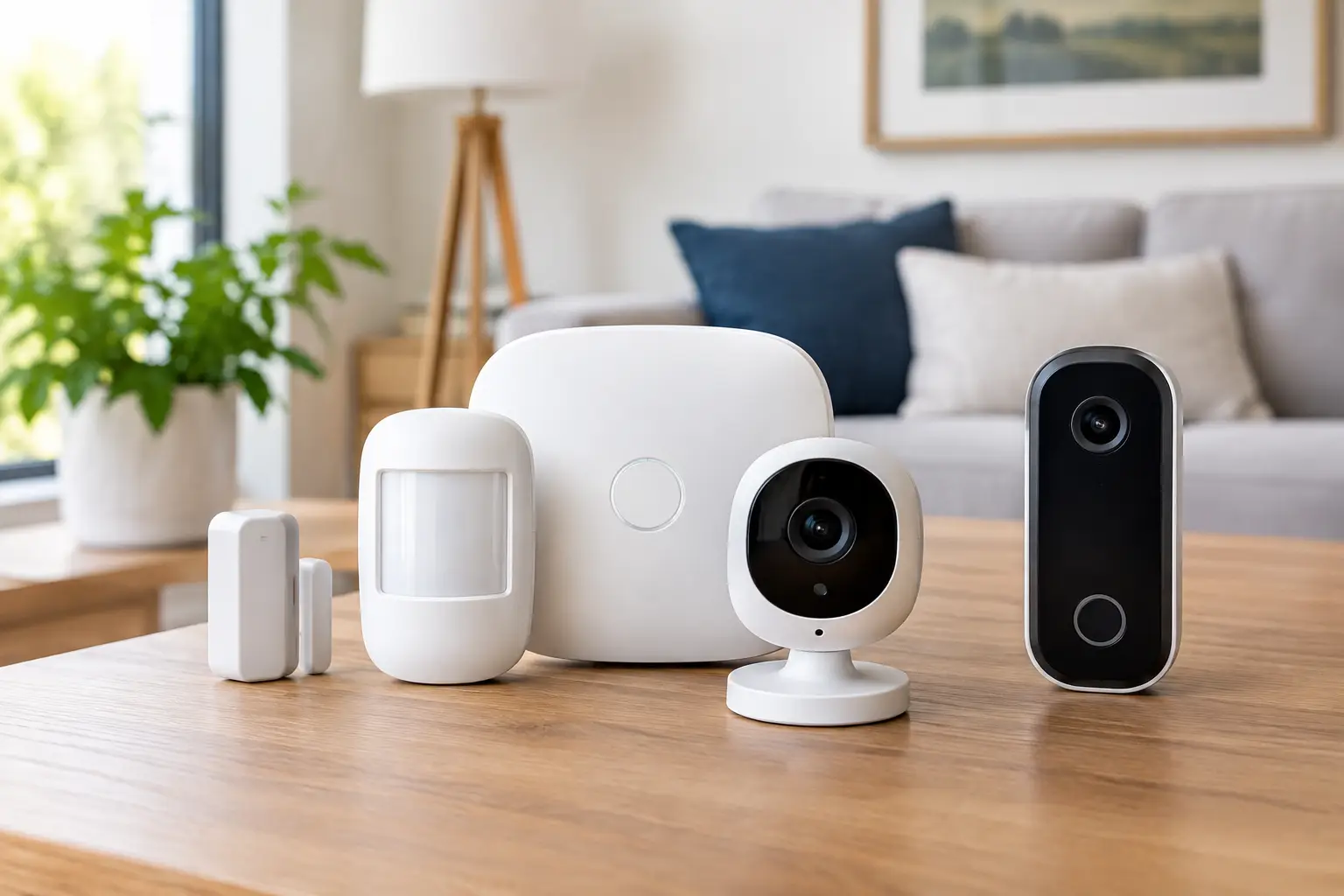
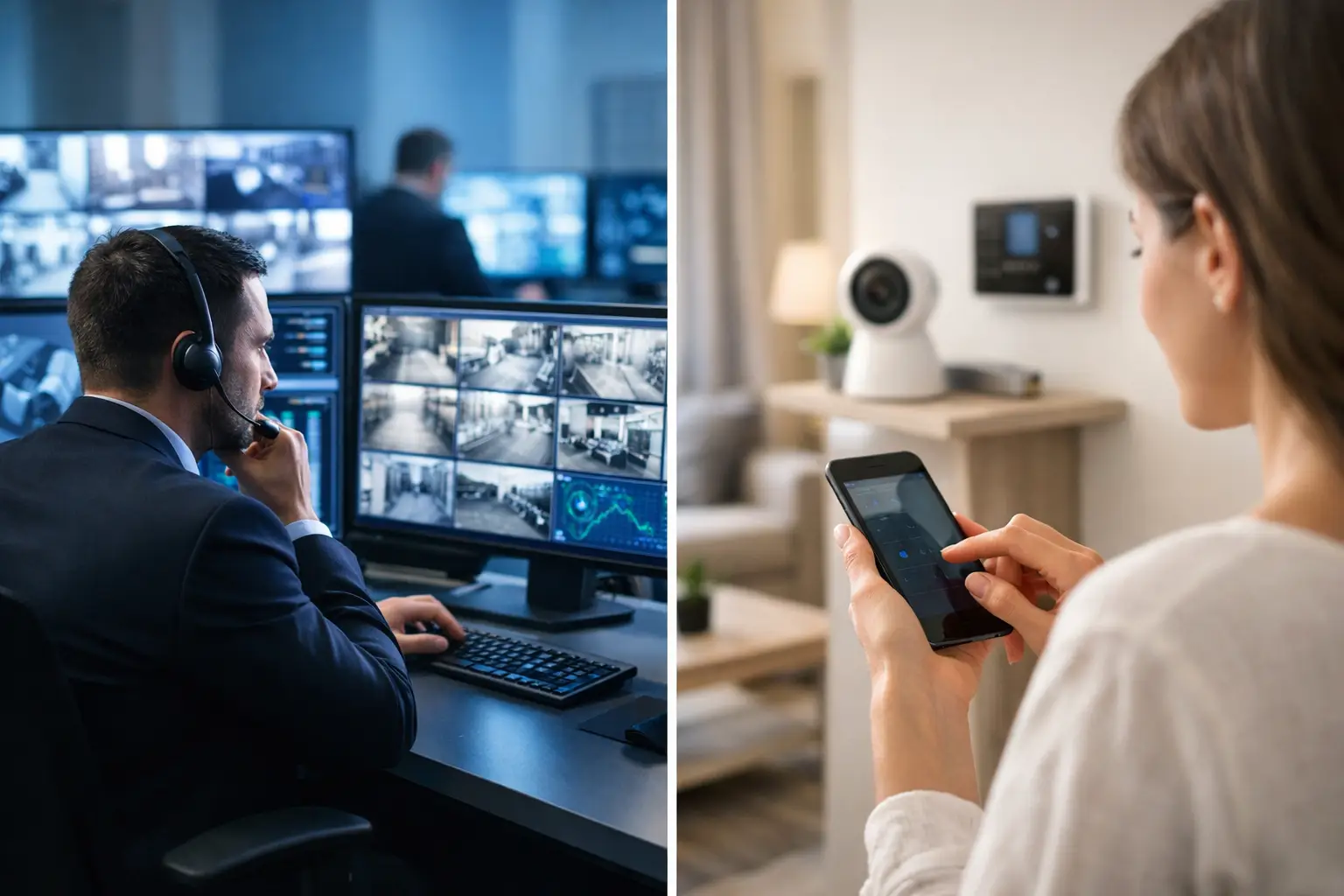
A security alert at 2:13 a.m. feels very different when you are asleep, in a meeting, or on a flight. That is where the real gap between professional monitoring vs self monitoring shows up. On paper, both can send alerts to your phone. In real life, the better option depends on who is expected to notice the problem, verify it, and take action fast.
For homeowners and small business owners, this is not just a pricing question. It is a question of responsibility. If you choose self monitoring, you are the one watching for alerts, reviewing footage, deciding whether a threat is real, and contacting help. If you choose professional monitoring, a trained team takes over when alarms or verified events occur. That difference matters more than most people realize.
What professional monitoring vs self monitoring really means
Self monitoring means your security system sends notifications directly to you through an app, text, or email. If a door opens, a motion sensor trips, a camera detects movement, or a smoke detector goes off, you get the alert and decide what happens next. Some people prefer that control, especially if they are comfortable checking cameras and managing everything themselves.
Professional monitoring adds a 24/7 response layer. Instead of relying only on your phone, your system is connected to a monitoring center staffed by trained specialists. When a serious event happens, they can review the signal, attempt to verify what is happening, and escalate to emergency contacts or dispatch when appropriate. You are still connected through your app, but you are not carrying the full burden alone.
That distinction becomes even more important with newer systems that include video verification, smart deterrence, and environmental protection. Security is no longer just a siren on the wall. It can include break-in alerts, camera clips, smoke and carbon monoxide signals, flood detection, and even automation rules designed to reduce risk before a situation gets worse.
The biggest difference is who acts when you cannot
The strongest argument for self monitoring is simple: lower monthly cost and direct control. If you are always available, comfortable with technology, and willing to be the first line of response, self monitoring can work. Many people like checking live video, managing notifications, and deciding for themselves whether an alert needs attention.
But self monitoring assumes you are reachable and ready to respond every time. That is a big assumption. Phones get silenced. Notifications get missed. Meetings happen. Sleep happens. Cell service drops. If an alarm is triggered while you are unavailable, delayed action can turn a manageable incident into a much larger problem.
Professional monitoring is built for those moments. It is there when you are working, traveling, coaching a game, or simply not staring at your phone. That does not just help with burglary concerns. It also matters for smoke alerts, carbon monoxide events, flooding, and after-hours business activity, where every minute can make a difference.
Response time and verification are where the stakes rise
When people compare professional monitoring vs self monitoring, they often focus on subscription cost first. A better place to start is response flow. What happens after the sensor is triggered?
With self monitoring, the process usually goes like this: you receive an alert, open the app, check a clip or live feed, decide whether it is a false alarm, call a family member or employee, and then contact emergency services if needed. If you are unavailable or unsure, the chain breaks down.
With professional monitoring, the process is shorter and more structured. A monitoring center receives the signal immediately, follows a response protocol, and can act based on alarm data and available verification tools. If the system includes video verification, operators may have more context than a simple sensor alert provides. That can support faster, more confident action and reduce the hesitation that often comes with self-managed decisions.
This matters for businesses too. An owner cannot reasonably watch every camera and every notification after hours. If an employee leaves a back door unsecured or motion appears in a restricted area overnight, a professionally monitored system creates a dependable response path without putting everything on one person.
Cost matters, but so does the cost of missed alerts
Self monitoring often looks less expensive because there may be little or no monthly monitoring fee. For some households, that is attractive. If your main goal is basic awareness and remote access, self monitoring may feel like enough.
But low monthly cost is only part of the equation. You also need to factor in the value of consistent coverage, emergency coordination, and reduced dependence on your availability. One missed intrusion alert, one delayed fire response, or one overnight water leak can erase years of savings.
Professional monitoring usually comes with a recurring fee because you are paying for active oversight, trained response, and system support. For many families and business owners, that is not an extra. It is the service that makes the system dependable when it counts.
A professionally installed and monitored setup can also reduce common pain points that affect self-monitored systems, such as poor sensor placement, incomplete coverage, or notification overload. When the system is designed around the property and the user’s habits, protection tends to be more effective and easier to live with every day.
Professional monitoring vs self monitoring for different property types
For a small apartment or a second property with light traffic, self monitoring may be enough if your priorities are simple. You may just want camera visibility, door alerts, and the ability to check in remotely.
For a primary home, especially one with children, frequent package deliveries, multiple entry points, or environmental risk, professional monitoring usually makes more sense. The more moving parts you have, the less practical it is to rely on one person to catch and interpret every alert.
For small businesses, professional monitoring is often the stronger fit. Businesses face a different kind of exposure: after-hours intrusion, employee access issues, liability concerns, inventory loss, and the need for documented events. A professionally monitored system with access control, video surveillance, and intelligent alerts creates more than awareness. It creates accountability and a clear response path.
That is also where integrated security becomes important. When intrusion detection, cameras, smart locks, environmental sensors, and mobile control work together, you get a fuller picture of what is happening. A door contact alone tells one story. A door contact paired with video, analytics, and real-time response tells a much clearer one.
When self monitoring makes sense
Self monitoring is not the wrong choice for everyone. It can be a reasonable option if you want basic awareness, keep a close eye on your phone, and are comfortable reviewing footage and handling emergency calls yourself. It can also work for users who see their system as a convenience tool first and a security tool second.
The trade-off is that self monitoring puts pressure on your availability and judgment. You have to separate false alarms from real threats, often with limited context and limited time. Some users are fine with that. Others start there and eventually decide they want more support after a close call or too many missed notifications.
When professional monitoring is the better fit
Professional monitoring is usually the better fit when peace of mind matters as much as technology. If you want protection that continues while you sleep, travel, or focus on work, professional monitoring gives you that continuity.
It is especially valuable if your system includes more than intrusion sensors. Fire, carbon monoxide, flood detection, smart locks, garage access, and video analytics all add useful layers, but they also create more events to manage. The more your system can do, the more important it is to have expert response behind it.
That is why many homeowners and business owners choose a professionally installed, professionally monitored system instead of piecing together a DIY setup. They want the app control and convenience, but they also want real backup when something happens. Fluent Home is built around that model, combining expert installation, smart security devices, and 24/7 monitoring into one easier-to-manage solution.
The best choice depends on your risk tolerance
If you are deciding between professional monitoring vs self monitoring, ask a practical question: who do you want responsible for the first response when you are unavailable? If you are comfortable being that person every time, self monitoring may meet your needs. If you want a trained team standing by around the clock, professional monitoring is the stronger choice.
Security works best when it matches real life, not ideal conditions. The right system is not the one that looks cheapest or most advanced on a product page. It is the one you can trust at 2:13 a.m., when an alert shows up and someone needs to act.