Key Takeaways
- Monitored fire alarms automatically send an alert to a 24/7 professional monitoring center the moment smoke or heat is detected.
- This system eliminates human delays, such as panic or the inability to call for help, ensuring an immediate response protocol is initiated.
- A trained professional verifies the alarm to reduce false dispatches, adding credibility when contacting emergency services.
- Faster dispatch times lead to quicker fire containment, minimized property damage, and a safer environment for employees and customers.
Why Every Second Counts in a Commercial Fire Emergency
In a commercial environment, a fire is not just a threat to safety; it’s a threat to your entire livelihood. According to the National Fire Protection Association (NFPA), a fire can become life-threatening in as little as two minutes, and a small flame can grow into a major blaze in less than 30 seconds. For a business, this rapid escalation means that every moment of delay exponentially increases the risk of catastrophic property damage, inventory loss, and operational downtime.
The difference between a minor incident and a total loss often comes down to the speed of the fire department’s response. A delayed call can mean the difference between firefighters containing a small fire in one room versus battling an inferno that has engulfed the entire structure. This reality underscores the critical need for a system that doesn’t just detect a fire but guarantees the fastest possible alert to emergency services.
Unmonitored vs. Monitored Alarms: The Critical Difference
To understand how to improve emergency response times, it’s essential to recognize the fundamental gap between unmonitored and monitored fire alarm systems.
An unmonitored system is a standalone device. When it detects smoke or fire, it triggers loud sirens and flashing lights exclusively on-site. While this can alert anyone present, its effectiveness stops there. It relies entirely on a person hearing the alarm, correctly identifying the danger, finding a phone, and clearly communicating the emergency to 911. If the building is empty after hours, or if occupants are panicked or unable to make the call, the alarm is just noise.
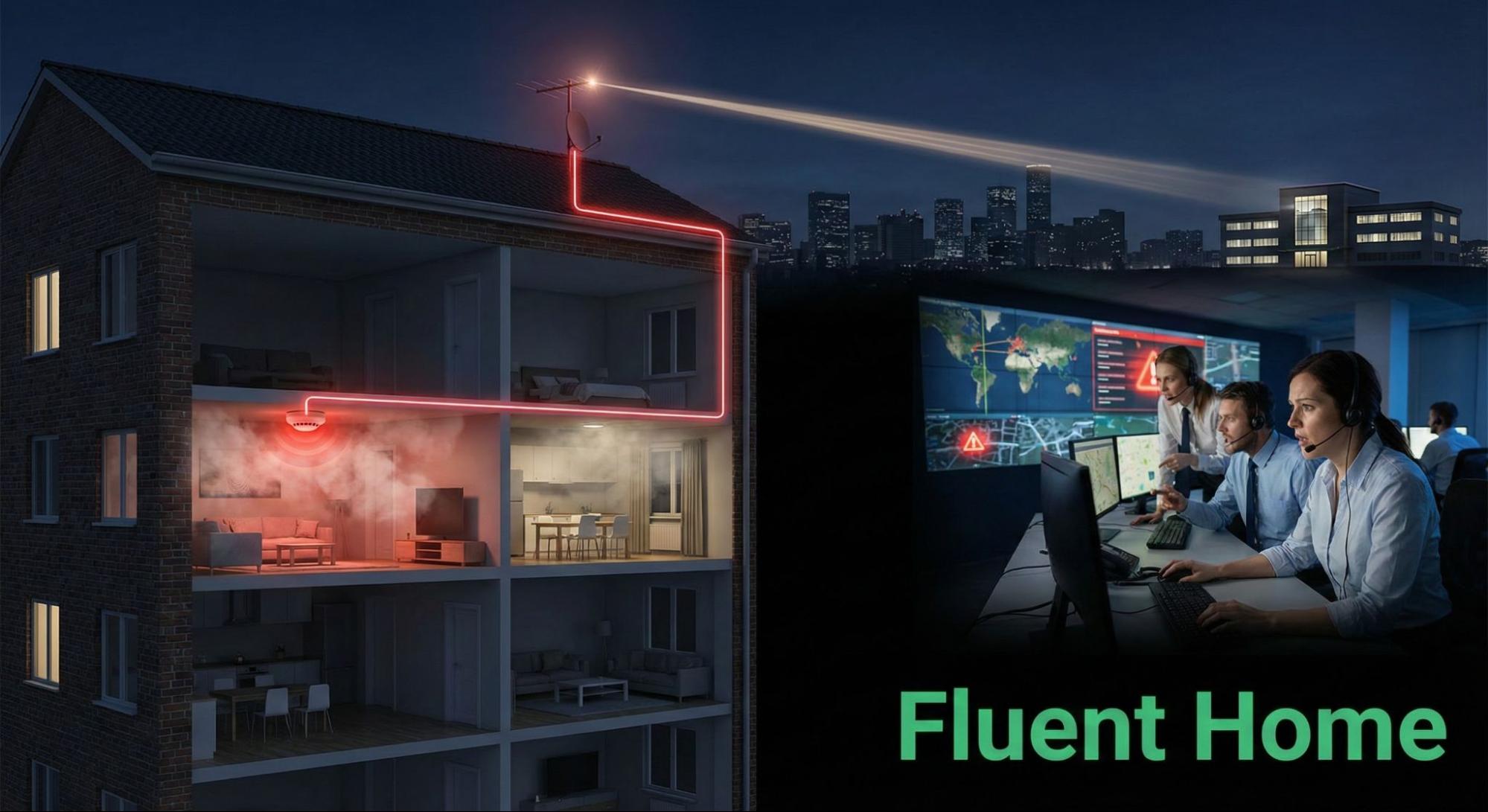
Conversely, a monitored fire alarm is part of an integrated safety ecosystem. When triggered, it also activates local alarms but simultaneously sends an automated, instantaneous signal to a 24/7 professional monitoring center. This single action sets in motion a professional emergency protocol, removing the burden and potential for delay from your employees or anyone on-site. This active communication is the key to a truly rapid-fire department dispatch.
The Anatomy of a Rapid Response: From Detection to Dispatch
The speed of monitored fire alarm systems comes from a seamless, automated communication chain that is designed to eliminate points of failure and save precious time. This process unfolds in four critical steps.
Step 1: Instantaneous Detection (Smoke, Heat, CO)
The process begins the moment a threat is identified. Advanced smoke detectors, heat sensors, and even carbon monoxide detectors are strategically placed throughout your facility. These devices are always active, scanning for the earliest signs of danger. Unlike a human who might second-guess the smell of smoke, these sensors react instantly, triggering the alarm system the second their threshold is met. This ensures the response process starts without a moment’s hesitation, also providing crucial carbon monoxide monitoring for comprehensive safety.
Step 2: Automatic Signal to the Monitoring Center
Once a detector is triggered, your fire alarm control panel doesn’t just sound the local siren—it immediately transmits a high-priority signal to a dedicated off-site monitoring center. Fluent Home utilizes reliable cellular-based technology for this communication, ensuring the signal gets through even if your building’s internet or phone lines are compromised by the fire. This automated alert is the system’s most crucial function, acting as your business’s direct line to help when you can’t make the call yourself.
Step 3: Professional Verification and Data Relay
Within seconds of receiving the signal, a trained monitoring professional is on the case. They follow a strict verification protocol to confirm the emergency, which may involve calling designated contacts for your business. This step is vital for reducing false alarms, which can be costly and strain local emergency resources. Once confirmed, the professional relays critical information—like your business’s address, the type of alarm triggered, and any other relevant data—directly to the appropriate fire department. This verified, data-rich alert is treated with higher priority by dispatchers.
Step 4: Direct Dispatch to First Responders
With the alarm verified, the monitoring center professional officially dispatches the fire department to your location. Because the call comes from a trusted professional monitoring service, it carries more weight than an unverified 911 call might. First responders know it’s a credible threat and can react accordingly. This entire sequence, from detection to dispatch, often happens faster than a person on-site could even find their phone amidst the chaos.

How Professional Monitoring Eliminates Human Delays
The single greatest advantage of professional fire monitoring services is their ability to overcome the unpredictable element of human reaction during a crisis. In a fire, even the best-trained employees can experience panic, confusion, or disorientation from smoke. A monitored system bypasses these all-too-common delays.
- It Works 24/7: A fire doesn’t care about business hours. A monitored system protects your property around the clock, whether you’re open for business or closed for the night. This 24/7 security monitoring for your business is your first line of defense against an after-hours disaster.
- It Overcomes Panic: During an emergency, people may freeze or be unable to clearly communicate with a 911 operator. An automated system never panics. It sends a clear, data-driven signal every single time.
- It Calls for Help When You Can’t: An employee might be trapped, injured, or overwhelmed by smoke, making it physically impossible to call for help. A monitored system ensures the call is made regardless of the circumstances on-site.
- It Provides a Credible Alert: Professional verification reduces false alarms, building trust with local fire departments. When a call comes from a monitoring center, first responders know the threat is likely real and respond with greater urgency.
This consistent, reliable process is central to why businesses choose Fluent Home for their protection needs. It replaces uncertainty with a guarantee that action is being taken immediately.
Tangible Business Benefits of a Faster Response
Reducing fire system response time isn’t just a safety metric; it translates directly into meaningful business outcomes that protect your bottom line and your future. For business owners in competitive markets from Denver to Toronto, these benefits are essential for long-term stability and are a core component of comprehensive commercial security systems.
A faster response leads directly to quicker fire containment. When firefighters arrive sooner, they are more likely to control the blaze before it spreads, drastically reducing the scope of property damage. This means less structural repair, less ruined inventory, and lower recovery costs. For a business in a high-traffic area like Las Vegas, minimizing physical damage is key to reopening quickly. It also plays a role in how you control who enters your facility during and after an incident.
Most importantly, a rapid response creates a safer environment for everyone. It allows more time for employees and customers to evacuate safely, reducing the risk of injury. Furthermore, by integrating fire monitoring with systems designed to protect your business from intrusion, you create a holistic safety net. Minimizing downtime is another critical benefit. The less damage your business sustains, the faster you can resume operations, retain customers, and continue generating revenue. For more insights on smart business solutions, you can explore our smart home and business blog.

Secure Your Business with a Faster Fire Response
Don’t leave your business’s safety to chance. Our 24/7 monitored fire alarm systems ensure the fastest possible dispatch when it matters most. Get a Free Quote today.
FAQs
What is the average response time for a monitored fire alarm?
While exact times vary, a signal from your alarm reaches our monitoring center within seconds. After a quick verification, we dispatch emergency services immediately, a process significantly faster than relying on a manual 911 call from the site.
Do I still need to call 911 if my monitored alarm goes off?
No. The primary benefit of a monitored system is that our professional team handles the emergency dispatch for you. Your priority should be to follow your evacuation plan and ensure everyone’s safety.
How does the monitoring center know if it’s a false alarm?
Our trained professionals follow a strict verification protocol, which may include calling your designated contact numbers. This process helps confirm real emergencies and reduces costly false alarm dispatches, making the calls we do make to first responders more credible.