Key Takeaways
- Indoor cameras monitor internal assets, cash-handling areas, and employee activity, while outdoor cameras secure perimeters and deter external threats.
- Key features to compare include weatherproofing and night vision for outdoor models, versus low-light performance and discreet design for indoor models.
- The most effective security strategy integrates both indoor and outdoor cameras into a single, professionally monitored system for comprehensive coverage.
- Advanced features like AI-powered analytics, 24/7 recording, and mobile access are critical for modern commercial video surveillance.
As a business owner, protecting your assets, employees, and customers is a top priority. A robust commercial video surveillance system is one of the most effective tools for deterring theft, monitoring operations, and ensuring a safe environment. But with so many options, the first major decision is often the most fundamental: do you need indoor cameras, outdoor cameras, or both?
Choosing the best camera system for your business isn’t a one-size-fits-all solution. The right choice depends on your specific industry, property layout, and security vulnerabilities. Understanding the distinct roles and features of indoor vs. outdoor security cameras is the first step toward building a comprehensive security strategy that works for you.
Understanding Indoor Security Cameras: Your First Line of Internal Defense
Indoor security cameras are the watchful eyes inside your establishment. Their primary purpose is to monitor internal activity, protect valuable assets, and ensure the safety of everyone within your walls. They are crucial for observing cash-handling areas, deterring internal theft, and providing clear evidence in the event of an incident like a slip-and-fall or a customer dispute.
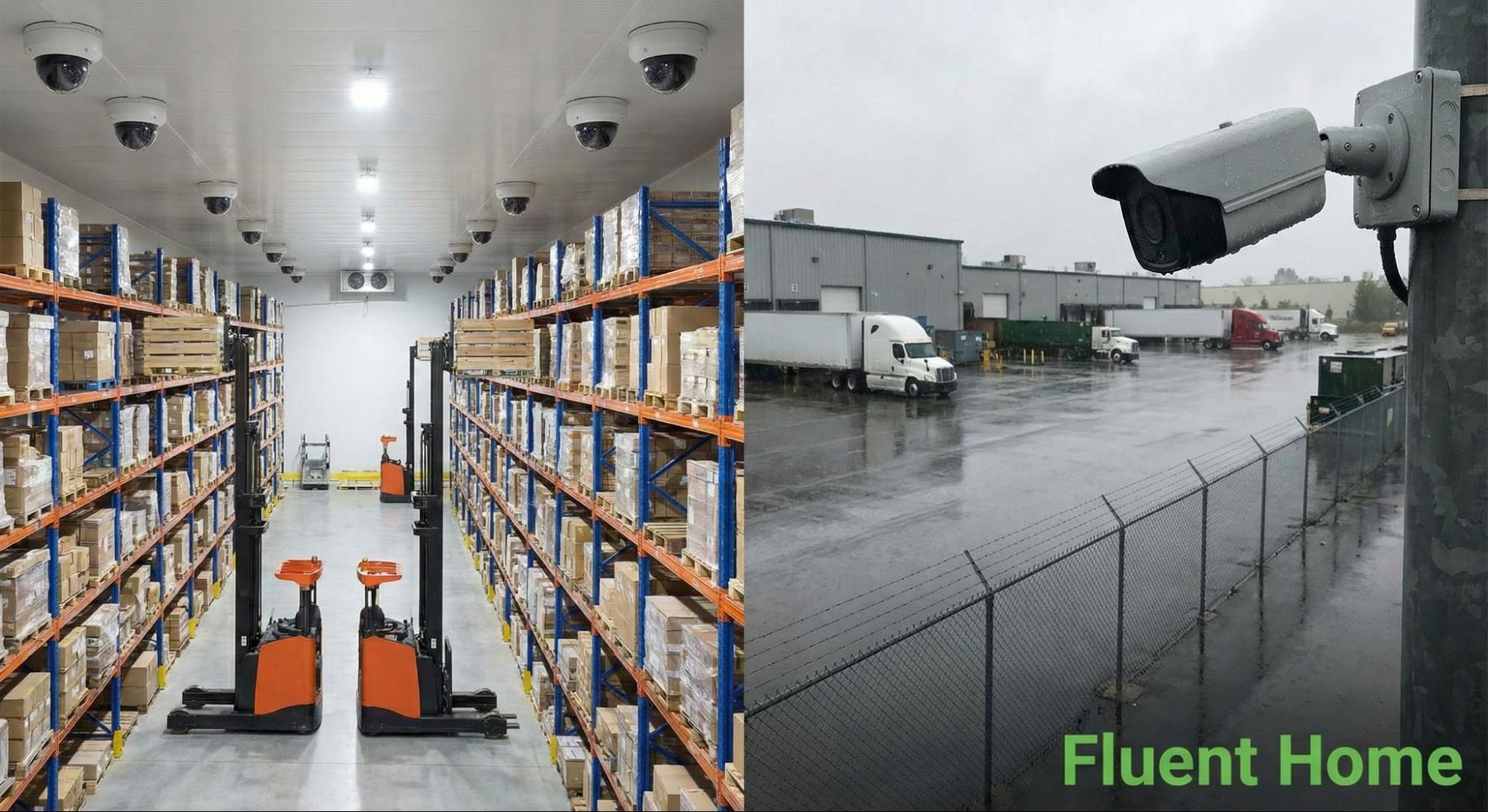
Ideal placement for indoor security cameras includes points of sale (POS), stockrooms, server rooms, main entryways, and any area where sensitive information or high-value inventory is stored. Key features to look for in business-grade indoor cameras include high-definition resolution (1080p or higher) to capture fine details, wide-angle lenses to cover broad spaces like a sales floor, and excellent low-light performance to ensure clarity even in dimly lit conditions. Discretion can also be a factor; some businesses prefer dome cameras that blend into the ceiling, while others want more visible cameras as a clear deterrent.
Securing Your Perimeter: The Role of Outdoor Security Cameras
While indoor cameras protect what’s inside, outdoor cameras are your first line of defense against external threats. Their main function is to deter potential intruders before they ever reach the door and to capture clear, actionable evidence of any activity occurring on your property’s perimeter. These are the workhorses of commercial security solutions, built to withstand the elements while keeping a vigilant watch.
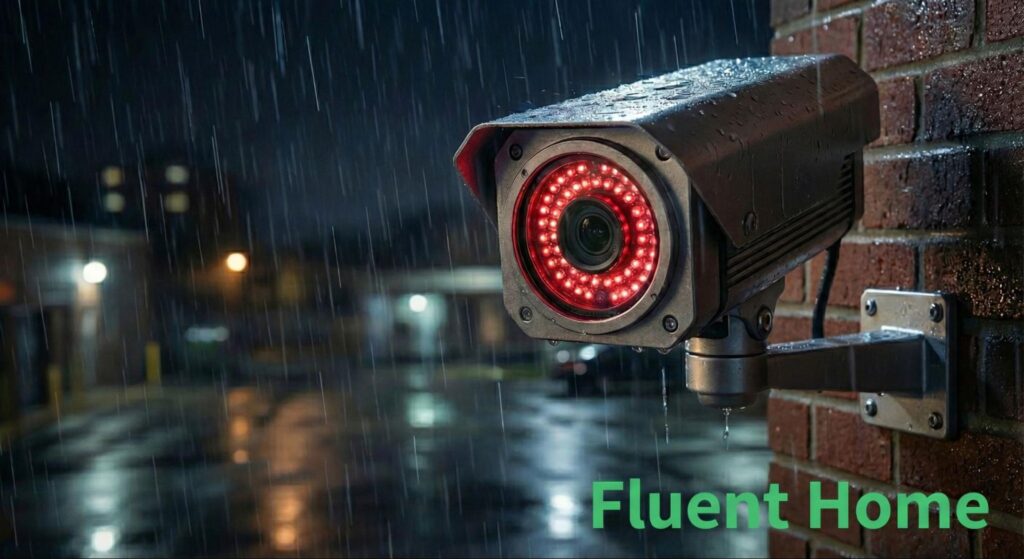
Strategic placement is critical for outdoor security cameras. They should cover all entrances and exits, parking lots, loading docks, alleyways, and any external blind spots. When selecting outdoor models, durability and performance are paramount. Look for cameras with a high IP (Ingress Protection) rating, such as IP66 or higher, which signifies they are weatherproof and sealed against dust and moisture. Powerful infrared (IR) night vision is non-negotiable for 24/7 visibility, and features like a wide dynamic range (WDR) help balance lighting in scenes with bright sunlight and deep shadows, ensuring faces and license plates are visible.
Indoor vs. Outdoor Cameras: A Head-to-Head Comparison
While both camera types aim to enhance security, they are engineered for very different environments and challenges. Here’s a direct comparison of their key features.
Durability & Weatherproofing
This is the most significant differentiator. Outdoor cameras are built with rugged, sealed casings to withstand rain, snow, extreme temperatures, and dust. Indoor cameras are not designed for these conditions and would fail quickly if exposed to the elements.
Field of View & Range
Outdoor cameras often require a longer range to monitor large areas like parking lots. They may feature more powerful lenses to capture details from a distance. Indoor cameras typically have a wider field of view to see as much of a room as possible from a corner placement.
Night Vision Technology
Both types offer night vision, but outdoor cameras usually employ more powerful IR illuminators for longer-distance visibility in complete darkness. Indoor cameras are optimized for low-light conditions but may not need to see hundreds of feet away.
Power Source Options
Many modern commercial cameras, both indoor and outdoor, use Power over Ethernet (PoE), which provides both power and data through a single cable. This offers a highly reliable connection. Wireless options exist for both, but wiring is often preferred in commercial settings to ensure a stable connection for continuous recording.
Aesthetics & Discretion
Indoor cameras are often designed to be more compact and discreet, blending seamlessly with office or retail decor. Outdoor cameras are typically larger and more visible by design, as their presence alone acts as a powerful deterrent to potential criminals.
Advanced Features Your Business Security System Needs in 2024
Today’s commercial camera systems go far beyond simple recording. Modern technology has introduced powerful features that provide proactive security and valuable business insights. When designing your system, consider incorporating these advanced capabilities.
AI-powered analytics can transform a passive camera into a smart security guard. Features like person detection can differentiate between a human and a stray animal, reducing false alarms. This technology can also be used for line-crossing alerts or identifying when someone is loitering in a restricted area, triggering an automated response or an alert to your monitoring service. This level of smart intrusion detection is a game-changer.
Furthermore, seamless integration with other systems creates a truly unified security posture. Linking your cameras with business access control systems allows you to visually verify who is entering a building. When combined with a monitored alarm system, video verification can confirm a real threat, often leading to a faster police response. And with remote access via a mobile app, you can view live and recorded footage from anywhere, ensuring you always know what’s happening at your business. Opting for a system with 24/7 security monitoring for your business ensures that professionals are always ready to respond to an alert.
How to Choose the Right Camera Mix for Your Business
The best camera system for a business is rarely just one type; it’s an integrated mix of both indoor and outdoor cameras tailored to your unique needs. A comprehensive security assessment, often best performed by a professional, is the ideal starting point.
Consider your business type. A retail store in Las Vegas, for example, would need high-resolution indoor cameras covering the sales floor and every POS station to manage liability and prevent shrinkage. At the same time, it would require robust outdoor cameras to monitor its busy parking lot and storefront. In contrast, a large warehouse in Dallas might prioritize powerful outdoor cameras with long-range night vision to secure its loading bays and expansive perimeter, supplemented by indoor cameras in the office and high-value storage cages. An office building in Denver might focus on cameras at all entrances and exits, integrated with access control, to manage employee and visitor traffic securely.
Ultimately, the goal is to eliminate blind spots and create layers of security. This comprehensive approach, supported by professional installation, ensures that your property is protected from the curb to the core. You can learn more about security strategies on the Fluent Home blog.
Protect Your Investment with a Professional Security Solution
Don’t leave your business’s safety to chance. Our experts design and install custom indoor and outdoor camera systems to protect your assets and give you complete peace of mind. Get a free quote today.
FAQs
How many security cameras does a small business need?
The number depends on your layout and risk factors. A small retail shop might need 2-4 cameras covering the entrance, sales floor, and cash register, while a larger office may require more to cover multiple entry points and common areas. We recommend a professional assessment to identify all vulnerabilities.
Can I view my business security cameras remotely?
Yes, modern commercial security systems like those from Fluent Home allow you to view live and recorded video footage from anywhere using a secure smartphone app. This provides peace of mind and allows you to monitor operations 24/7.
Is professional installation necessary for commercial cameras?
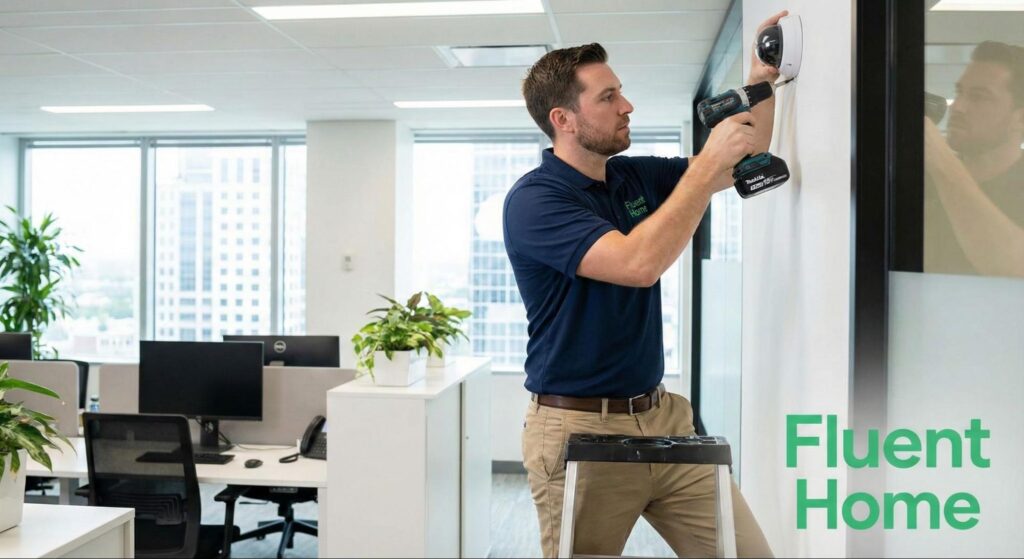
While DIY options exist, professional installation is highly recommended for businesses. A professional ensures optimal camera placement to eliminate blind spots, secures all wiring against tampering, and correctly configures the system for reliable performance and network security.