

7 Best Garage Door Controllers for Smart Security
Published
- Blog
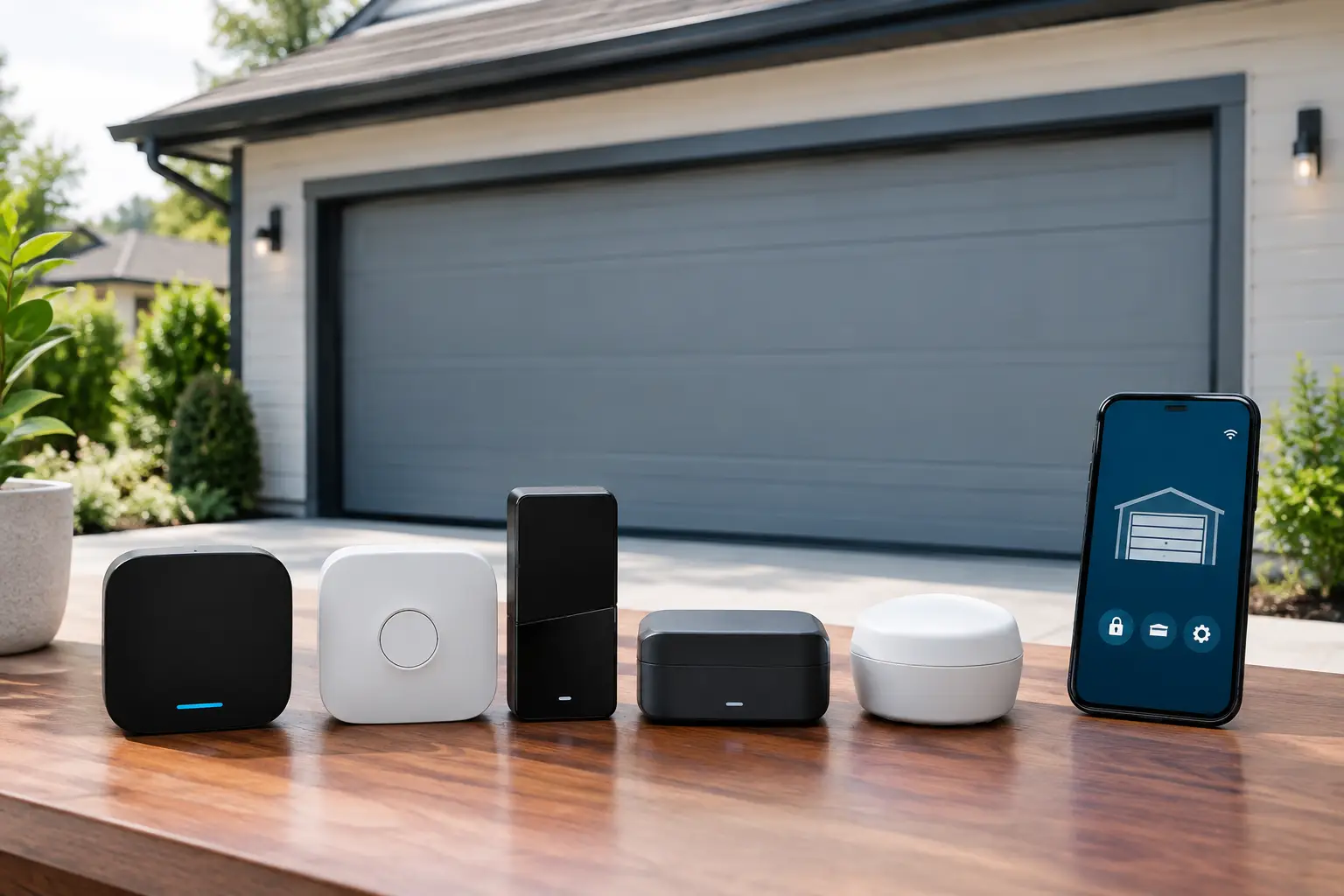
A garage door is one of the largest and most frequently used entry points in a home. The best garage door controllers do more than let you open it from a phone. They help you confirm the door is closed, receive activity alerts, manage access for family or service providers, and bring this often-overlooked entrance into your larger security plan.
The right choice depends on your opener, your daily routines, and whether you want a stand-alone convenience device or integrated protection managed through one app. For homeowners who want reliable oversight without piecing together multiple systems, professional installation and security integration can make a meaningful difference.
What Makes a Garage Door Controller Worth Buying?
A smart controller connects a compatible garage door opener to an app, giving you remote control and door-status information. Some controllers are add-on devices for existing openers, while others are built into newer garage door motors. Either way, the best option should give you confidence that the garage is secure when you are away.
Look first for dependable open-and-close status, not just a button that sends a command. A controller should tell you whether the door is open, closed, or has been left open longer than expected. Timely alerts are especially useful when a child arrives home from school, a delivery is placed near the garage, or you leave for a trip and cannot remember whether you shut the door.
Security integration is another deciding factor. A controller that works alongside a smart lock, security panel, cameras, and professional monitoring creates a more useful picture of what is happening at your property. You can check camera footage after a garage event, receive a notification when the door opens, and manage authorized access from the same mobile app.
Compatibility matters just as much. Garage door openers use different wiring methods, safety requirements, and proprietary technology. Before choosing any controller, confirm that it works with your opener model, door configuration, and home network. Older openers, commercial operators, and doors with unusual controls may require professional evaluation.
7 Best Garage Door Controllers by Need
There is no single controller that is right for every property. These are the best garage door controller options to consider based on the type of experience and protection you want.
1. Integrated Security-System Garage Door Control
Best for homeowners who want one app, one support team, and a complete security system.
An integrated garage controller connects with your security panel and mobile app rather than operating as an isolated device. This is the strongest choice for people who want garage activity to trigger meaningful awareness. For example, you can receive a notification when the door opens, check an outdoor camera, and verify that it closes after someone leaves.
It also makes everyday routines easier. You may be able to arm your system, adjust lights, lock a connected entry door, and close the garage from one place before bed. A professionally installed option reduces compatibility guesswork and helps ensure sensors, automation rules, and alerts are set up correctly.
Fluent Home can incorporate garage door control into a customized smart security system, alongside cameras, smart locks, intrusion detection, and 24/7 professional monitoring.
2. myQ Smart Garage Control
Best for households with a compatible Chamberlain, LiftMaster, or Craftsman opener.
myQ is one of the most familiar names in smart garage access. Its appeal is straightforward: users can check door status, operate a compatible garage door remotely, and receive alerts through the myQ app. Many newer Chamberlain and LiftMaster openers include myQ technology, while the Smart Garage Control can add app access to many compatible older units.
The trade-off is ecosystem fit. myQ is a practical choice if your garage equipment already supports it, but homeowners who want their garage door to work as part of a broader professionally managed security platform should confirm integration options before purchasing.
3. Tailwind iQ3 Smart Automatic Garage Controller
Best for drivers who value hands-free arrival and departure features.
The Tailwind iQ3 is known for location-based automation. Depending on configuration and phone permissions, it can respond to your arrival or departure and help reduce the chance that the garage stays open after you leave. It also supports status monitoring and app-based control.
Automation should be used thoughtfully. An automatic close rule can be helpful, but every home has different risks. Families with pets, children, frequent visitors, or an active driveway need properly functioning safety sensors and settings that fit their routines. Never rely on an app feature as a substitute for a working garage door safety system.
4. Meross Smart Wi-Fi Garage Door Opener
Best for budget-conscious DIY users with a compatible opener.
Meross offers a lower-cost route to phone control and open-close alerts. It is generally positioned for homeowners who are comfortable checking compatibility charts, mounting a sensor, running wiring to the opener terminals, and troubleshooting Wi-Fi connectivity.
For a simple residential retrofit, that approach can work well. The downside is that DIY installation puts the responsibility for correct wiring, sensor placement, and ongoing support on the homeowner. If your garage is an active security concern or part of a larger connected home, professional installation provides a more dependable path.
5. Genie Aladdin Connect
Best for homes with compatible Genie garage door openers.
Genie Aladdin Connect offers remote operation, status alerts, and user access management for supported Genie equipment. It can be a sensible choice for homeowners who already have a compatible Genie opener and prefer to stay within that manufacturer’s ecosystem.
Access controls are particularly useful when you need to provide temporary entry to a family member, house sitter, or contractor. Still, treat a digital invitation with the same care as a physical key. Remove access when it is no longer needed, and use individual accounts when available instead of sharing one household login.
6. A Smart Opener With Built-In Wi-Fi
Best for homeowners replacing an aging garage door opener.
If your existing opener is noisy, unreliable, lacks battery backup, or no longer meets your needs, replacing the motor with a smart, Wi-Fi-enabled opener can be better than adding an aftermarket controller. Built-in smart functionality can simplify setup and may offer cleaner installation than attaching a separate hub and sensor.
This choice is about more than convenience. Newer openers may offer quieter operation, battery backup during certain power outages, improved lighting, and stronger safety features. The best model depends on door weight, door type, ceiling clearance, and whether you need a belt drive, chain drive, or wall-mount design.
7. Professionally Installed Commercial Garage and Bay Door Control
Best for small businesses, workshops, and properties with commercial operators.
A shop bay, warehouse door, or commercial garage is not simply a larger residential door. Commercial operators can have different control requirements, safety obligations, and access needs. Business owners may need employee-specific permissions, event logs, camera verification, and the ability to manage multiple entry points.
A professionally designed system is the safer choice here. It can connect access control, video surveillance, intrusion detection, and garage or bay door activity into one security strategy. That helps an owner investigate an after-hours opening event instead of discovering it long after the fact.
Features That Matter More Than a Remote Button
Remote opening is convenient, but it should not be the only reason to choose a controller. Start with real-time status alerts. Knowing that a garage door opened is useful; knowing whether it closed again is even better.
Auto-close options can add peace of mind when used carefully. A scheduled or delayed close can protect against simple forgetfulness, but it must be configured around your family’s schedule and the door’s safety sensors. Test the system regularly, and never disable photo-eye sensors or other built-in safety protections.
User management deserves close attention. Choose a system that makes it easy to control who can enter and when. This is valuable for teenagers, cleaners, dog walkers, contractors, and short-term guests. For businesses, permissions and event records can help establish accountability across staff.
Finally, consider verification. A controller can tell you the door changed position, but a camera near the driveway or inside the garage can help you see why. Combined with a monitored security system, video verification and instant alerts give you a clearer way to respond when something does not look right.
Installation and Safety Considerations
Do not install a smart controller on a garage door that already has mechanical or safety problems. The door should move smoothly, reverse correctly when its safety sensors are triggered, and have properly aligned photo eyes. A controller cannot fix worn springs, damaged tracks, broken cables, or an unreliable opener.
Wi-Fi strength is another common issue. Garages are often separated from the main living area by exterior walls, metal doors, and storage items that can weaken the signal. A professional installer can identify whether placement, network improvements, or a different system configuration will provide more reliable operation.
For properties with an attached garage, treat the garage-to-home door as part of the security plan as well. Keep it locked when appropriate, use a smart lock if it suits your household, and make sure motion, camera, and intrusion devices cover the areas that matter most.
A garage door controller should give you more than another app notification. It should give you a practical way to know that one of your home’s biggest access points is protected, managed, and ready for the moments when you are not there to check it yourself.
Talk with Fluent Home
Tell us about your home. A Fluent Home specialist can help you plan a residential security system.